
The Simple Seed Baby: $6.6M in Shopify Sales, With Meta’s Top Campaigns at 5.3x ROAS
This baby clothing brand Meta ads case study shows the real numbers behind The Simple Seed Baby, a US D2C brand making premium bamboo clothing for newborns and toddlers. We run its Meta Ads management alongside Klaviyo email and Google Search. The store took $6.63M in total sales from January 2025 to August 2026, and the Meta campaigns that each drove 250+ purchases returned 5.30x on $331K of spend.
- $6.63MShopify sales, Jan 2025 to Aug 2026
- 5.30xROAS, Meta campaigns with 250+ purchases
- 22,606Meta purchases at $14.65 each
- $534KMeta spend managed, 121 campaigns
What It Says on the Label
Simple Seed already had what most brands are chasing: product-market fit, strong reviews and parents who came back to buy again.
It is a classic Shopify brand: $6.18M of the $6.63M in sales from January 2025 to August 2026 came through the online store itself. See how we approach ecommerce marketing for D2C brands. Baby clothing is a repeat category by nature. Babies outgrow sizes fast, so a happy customer is a future order. The job was to scale paid spend without breaking the economics that made the brand work.
- Client
- The Simple Seed Baby
- Made for
- Newborns and toddlers: premium bamboo clothing
- Market
- United States, D2C ecommerce
- Channels
- Meta Ads, Klaviyo email, Google Search
- Services
- Paid ads, email flows, cross-channel reporting
- Meta spend
- $534,212 across 121 campaigns
- Timeframe
- Meta account history Jan 2023 to Feb 2026; Shopify data to Aug 2026
The Brief: More Budget, Less Return
Scaling ad spend beyond a certain point was making ROAS slide. The classic D2C scaling problem: each extra dollar worked a little less hard than the last. Three things were missing.
Fix only one of these and scaling still stalls. All three had to grow together.
How We Approached It: From Seed to Tree
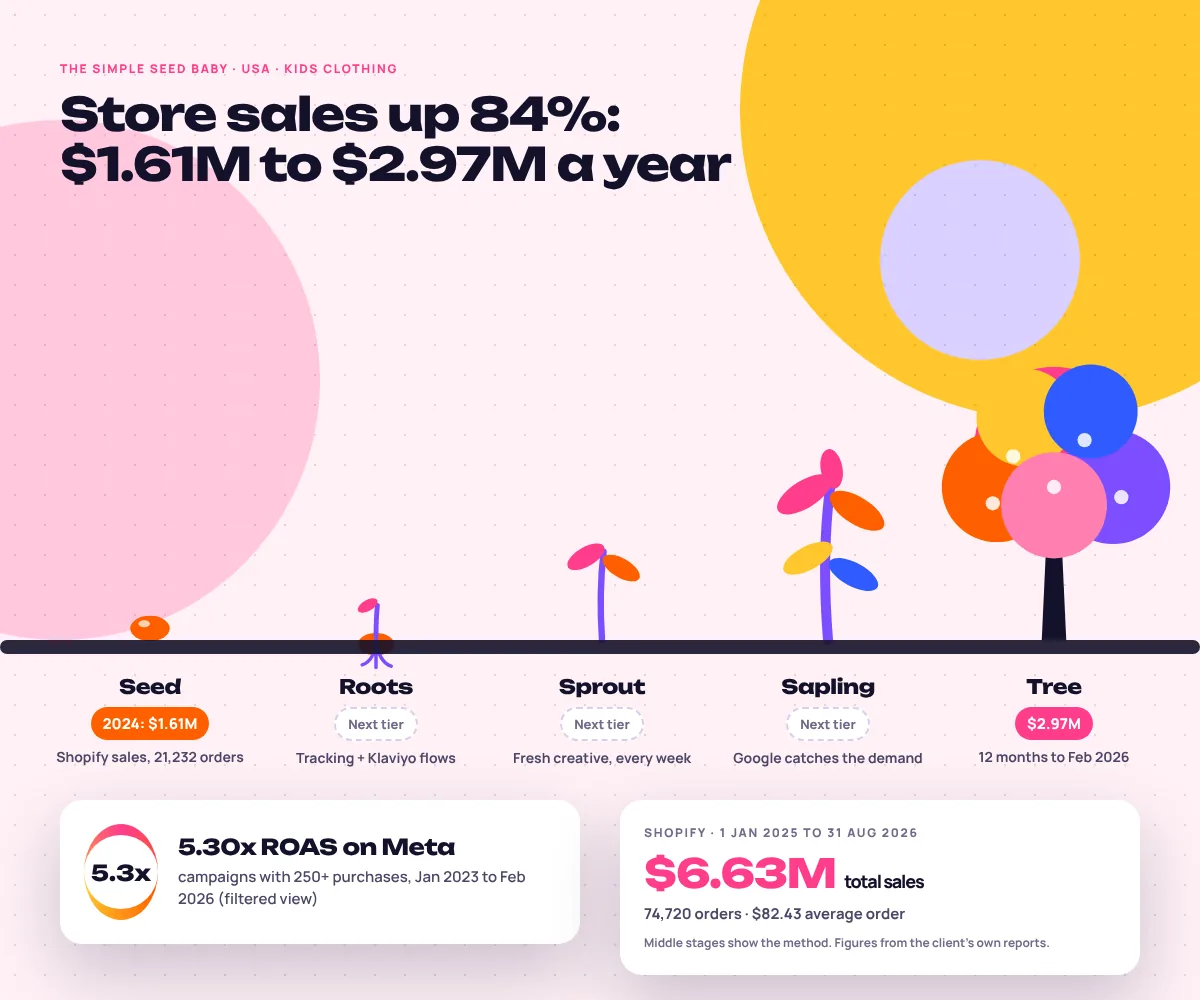
Each stage is a tier of growth. The rule was simple: move up a tier only when the one below holds its ROAS. The first and last tiers carry verified store figures; the stages between describe the method.
-
1Seed2024: $1.61M store sales
Check the soil before planting more
Before adding budget, make sure every sale is counted properly. If Meta, Google and Shopify disagree, you cannot tell which dollar is working.
- Meta pixel plus Conversions API, deduplicated
- Google Ads enhanced conversions and clean Shopify purchase data
- A blended ROAS target agreed for the whole business, not per platform
Move up whenTracking matches the store’s own sales closely enough to make budget calls on. -
2RootsNext tier
Klaviyo email flows for a baby brand, so every first order grows a second
Roots go in before the plant gets tall. Email is what lets you pay more for a first order, because you know more orders follow. This is the core of our email marketing service.
- Welcome flow with a sizing guide and why bamboo matters
- Browse and cart reminders
- Post-purchase care tips and a review request
- Size-up emails timed to when babies usually outgrow a size
Move up whenFlows are live and repeat orders are being tracked, so ad decisions can include them. -
3SproutNext tier
Kids clothing Facebook ads: a creative supply that grows with the budget
On Meta in 2026, creative does most of the targeting. More budget needs more ads, or the same ones wear out faster.
- Parent-shot video, real reviews and unboxings
- Fabric close-ups: softness, stretch and sizing on a real baby
- New concepts tested every week, losers cut early
- Broad audiences, with the creative telling Meta who it is for
Move up whenThere are more proven ads than the next tier of budget needs. -
4SaplingNext tier
Google Search catches what Meta plants
When Meta reaches more parents, more of them search for the brand and for bamboo baby clothes. Google Ads search and Shopping is where you catch them before a competitor does.
- Brand terms covered, so competitors cannot buy your searches cheaply
- Product searches like bamboo baby pajamas and toddler sleep sets
- Shopping feed titles with fabric, size and colour
Move up whenBrand search grows with Meta spend and Google holds the same ROAS target. -
5Tree12 months to Feb 2026: $2.97M
Scale steadily, judge the whole system
At this size, the biggest risk is a panicked budget change. Steady steps and one shared view of results keep ROAS where it is.
- Budgets raised in steady steps on proven campaigns, not doubled overnight
- One weekly view of Meta, Google and Klaviyo together
- Creative, email and search plans set a month ahead of spend changes
Holds whenAll three channels pull together. Store sales grew 84% year on year while the Meta campaigns that carried volume kept returning more than 5x.
The tier figures come from the client’s Shopify analytics (screenshots below). The stage detail is how we build this kind of scale-up, not extra published results.

Before & After EmergingAds: Shopify Sales Growth Chart
Twelve months of store sales measured against the calendar year before. Same store, same Shopify report, no overlap between the two periods.
Store sales, year on year
From $1,611,792 in 2024 to $2,971,538 in the 12 months to February 2026. Average order value rose from $70.38 to $82.82 and the returning customer rate from 21.62% to 34.81%, which is the email side doing its job.
Meta ads ROAS on the campaigns that carried volume
Campaigns with 250+ purchases each, January 2023 to February 2026: $331,221 spent, 22,606 purchases, $1,755,099 in purchase value. A filtered view, not the whole account.
“Generating over $500k+ per month for my Kids clothing brand.”
Shopify figures are total store sales across every channel, not only sales Meta claims. Meta figures are Meta-attributed purchase value.
The Grower’s Log: Baby Clothing Brand Meta Ads Case Study Screenshots
A Shopify Meta ads case study is only as good as its proof. Here are two screenshots from the accounts we work in, cleaned up for the web. Click either one to open it full size and check the numbers yourself.
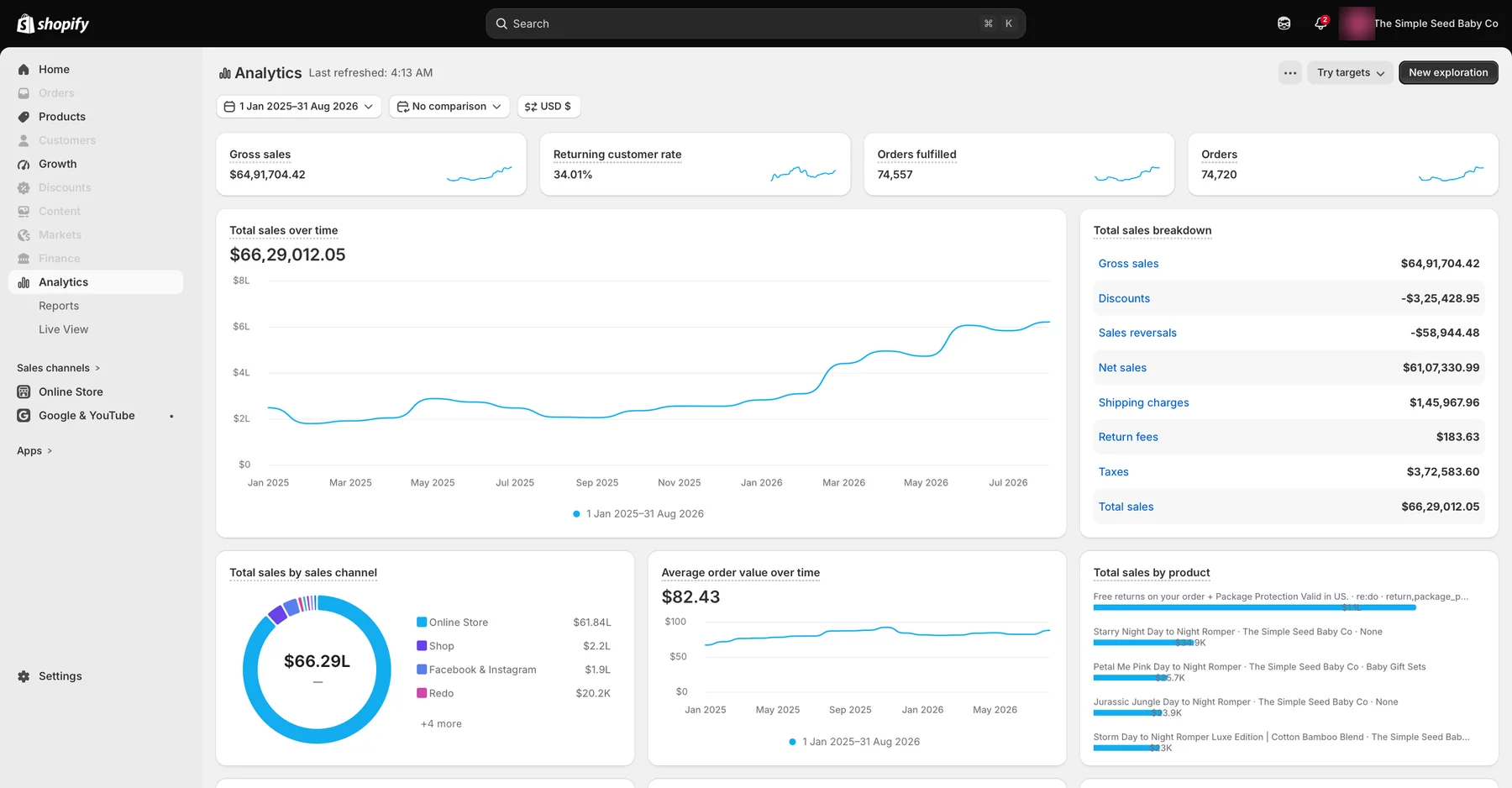
- $6,629,012total sales
- 74,720orders
- $82.43average order value
- 34.01%returning customer rate
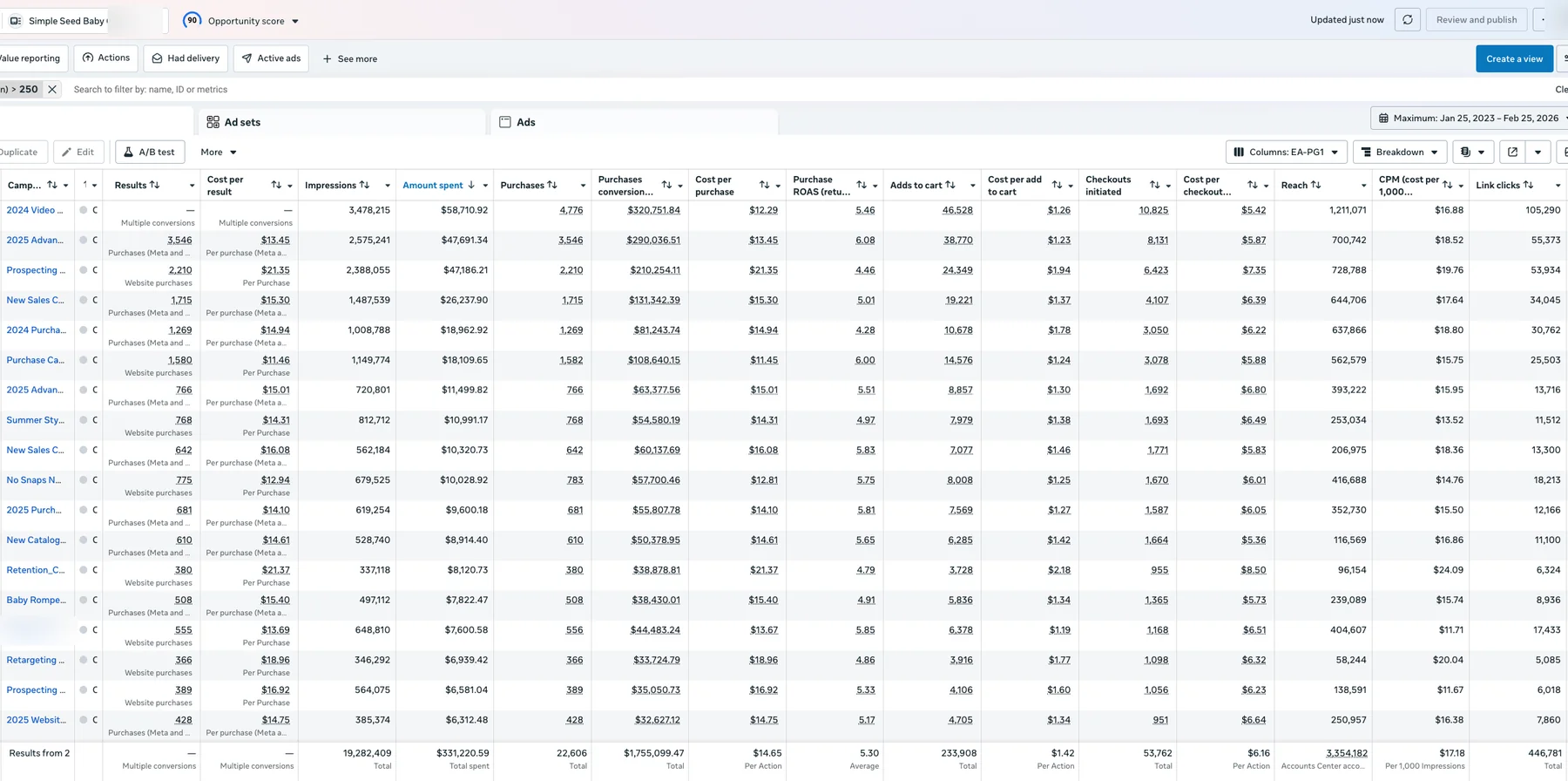
- $331,221spend, 250+ purchase campaigns
- 22,606purchases at $14.65
- $1,755,099purchase value
- 5.30xpurchase ROAS
Shopify counts every sale in the store, from any channel. Meta counts the purchases it attributes to its own ads. The two are not added together anywhere on this page.
Four Seed Packets for Scaling Founders
If your ROAS drops every time you raise the budget, start here. For more D2C ecommerce case studies, browse our client portfolio or the full list of EmergingAds success stories.
Measure before you scale
If the platforms and your store disagree on sales, fix that first. Scaling on bad data just scales the mistake.
- Plant:
- before any budget increase
- Harvest:
- budget calls you can trust
Build email before you need it
Flows turn one paid order into several. That is what lets you afford a higher cost per new customer.
- Plant:
- welcome, cart, post-purchase
- Harvest:
- repeat orders without ad spend
Feed Meta new creative
Budget without fresh ads means higher frequency and falling returns. Plan creative output to match spend.
- Plant:
- new concepts every week
- Harvest:
- ROAS that holds at scale
Judge the whole garden
Each platform claims credit. Set one blended target for the business and review all channels together.
- Plant:
- one weekly cross-channel view
- Harvest:
- decisions on real profit
Questions About Scaling Meta Ads for Kids Clothing Brands
How do you scale Meta ads for a baby clothing brand without losing ROAS?
Raise budgets in steady steps on campaigns that are already proven, keep a weekly supply of new creative, and only move to the next spend tier when the current one holds its target. On The Simple Seed Baby’s account, the campaigns that each drove 250+ purchases returned 5.30x on $331K of spend over three years.
What is a good ROAS for a kids clothing brand on Facebook ads?
It depends on your margins and how often customers reorder. Simple Seed’s high-volume Meta campaigns returned 5.30x, and its returning customer rate reached 34.81%, which lets a brand accept a lower first-order ROAS. We work out your break-even and target ROAS during the audit, rather than borrowing someone else’s number.
Why do Shopify sales and Meta’s reported revenue not match?
Shopify counts every order in the store, whether it came from an ad, an email, a search or a repeat visit. Meta only counts purchases it attributes to its own ads, inside its attribution window. That is why we show both reports separately on this page and never add them together.
Do Klaviyo email flows improve Facebook ads results?
Yes, especially for repeat categories like kids clothing. Flows turn first orders into repeat orders, so each paid customer is worth more and you can afford to keep buying new ones as you scale. Simple Seed’s returning customer rate rose from 21.62% in 2024 to 34.81% in the 12 months to February 2026.
Should a Shopify brand run Google Ads as well as Meta ads?
In most cases, yes. Meta creates demand and Google Search catches people who then look for your brand or product. Covering your brand terms also stops competitors picking up searches your Meta ads started.
What is involved in working with EmergingAds?
It starts with a free ad audit. If we work together, there is a 3-month minimum commitment, then month to month. Most accounts launch in around 14 days, depending on what needs building first.
Ready to Build Your Own Success Story?
Book a free audit and we will show you what is stopping your ROAS from holding as you scale, across ads, email and tracking.