
Amazon Vendor Central Management That Protects Your Margin
Updated
Selling to Amazon as a vendor looks simple: Amazon sends purchase orders, you ship, Amazon pays. Then the deductions start. Co-op, damage allowances, shortage claims, late-shipment chargebacks and price drops you did not approve. We run Vendor Central so more of each purchase order turns into profit, and we tell you honestly when parts of your range belong in Seller Central instead.
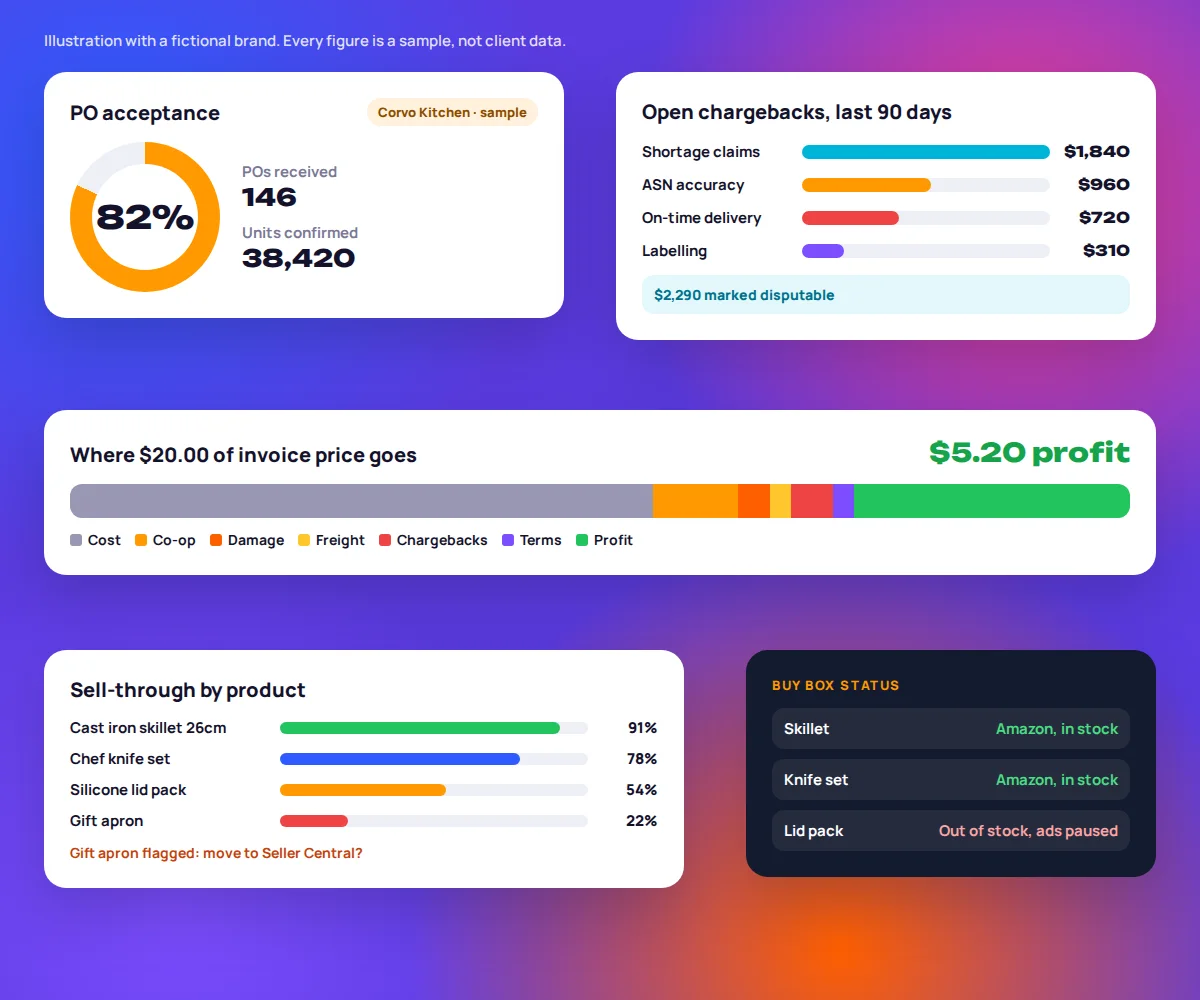 1Pvendor
What Is Amazon Vendor Central?
Amazon Vendor Central is the platform manufacturers and distributors use to sell to Amazon wholesale, known as first-party or 1P selling. Amazon issues purchase orders, you ship stock to its warehouses, and Amazon becomes the retailer: it sets the selling price, handles customers and pays you on agreed terms, minus agreed allowances and any chargebacks.
Access is by invitation. Amazon usually invites established brands whose products already sell well, often after seeing them on Seller Central or in other retailers.
The attraction is real: “Ships from and sold by Amazon” builds trust, and large purchase orders can mean big volume without running a marketplace operation. The catch is control. You no longer set the retail price, and margin leaks quietly through terms and deductions that few people read closely.
EmergingAds is a performance marketing agency founded in 2021, based in Gurugram, India, working with brands in the US, UK, UAE, India and Australia, with 85+ brands served. Vendor Central management sits inside our Amazon Ads service, alongside Seller Central management for brands that sell both ways.
Vendor Central vs Seller Central: Which Is Better?
Neither is better for every brand. Vendor Central suits brands that want volume and can live with less price control. Seller Central suits brands that want to own pricing, customer data and margin. Many established brands now run a hybrid: core high-volume products through Vendor Central, and new, niche or low-margin products through Seller Central.
Vendor Central
You sell to Amazon. Amazon sells to customers.
- Pricing
- Amazon sets the retail price
- Payment
- On terms, minus allowances
- Logistics
- Ship to Amazon by PO
- Data
- Retail Analytics, limited customer data
- Access
- Invitation only
Best for established brands with strong demand and wholesale margins built for retail.
Seller Central
You sell directly to customers on Amazon.
- Pricing
- You set it
- Payment
- Every two weeks, minus fees
- Logistics
- FBA or your own fulfilment
- Data
- Fuller sales and ad data
- Access
- Open to any business
Best for brands that want control of price, margin and launches.
Hybrid
Some products through each, by design.
- Pricing
- Mixed, needs clear rules
- Payment
- Two cash cycles
- Logistics
- PO shipments plus FBA
- Data
- Both sets of reports
- Access
- Vendors who also open 3P
Best for larger ranges where some products are not profitable as 1P.
Already on Seller Central? See how we manage Seller Central accounts.
Vendor Margin Calculator
Your invoice price is not what you earn. Enter your numbers to see what is left of each unit after Amazon’s allowances, chargebacks and the cost of waiting to be paid. Everything stays in your browser.
net profit per unit
Allowance names and percentages vary by vendor agreement and are negotiated, often each year. The defaults are illustrative, not typical terms.
What Are Amazon Vendor Chargebacks and How Do You Reduce Them?
Chargebacks are fees Amazon deducts when a shipment does not follow its supply chain rules: late or early arrival, wrong labels, inaccurate advance shipment notices, or packaging problems. Shortage claims are deductions when Amazon records fewer units than you invoiced. Most are preventable, and many incorrect ones can be disputed within Amazon’s time limits.
On-time and PO issues
Shipments that arrive outside the delivery window, or quantities that do not match the PO.
Fix: confirm only what you can ship on timeASN accuracy
The advance shipment notice does not match what is actually inside the cartons.
Fix: build ASNs from scanned cartonsLabelling and packaging
Missing or unreadable carton labels, wrong pallet build or products not prepared to Amazon’s standard.
Fix: a packing checklist for your 3PLShortage claims
Amazon receives fewer units than invoiced. Often a receiving error at the warehouse, not your mistake.
Fix: proof of delivery, then disputeHow Do You Prepare for Amazon’s Annual Vendor Negotiations?
Start three months early with your own numbers: true margin per product after every allowance, chargeback history, sell-through and advertising spend. Amazon arrives at the annual vendor negotiation with detailed data and a list of asks. Vendors who arrive with only a price list usually give away margin they did not need to.
We prepare a negotiation pack for every vendor client: which allowances are worth trading, which products cannot carry more cost, and where Amazon’s own data shows your brand is performing well. That last part matters. Growth you have driven through advertising and content is a bargaining chip, but only if you can show it.
Sometimes the honest answer is that a product cannot work as 1P at the terms on the table. Moving it to Seller Central, or adjusting pack size and price, is often better than accepting a loss on every unit.
out
Margin by product
True profit per ASIN after every deduction, using the calculator logic above.
out
Performance story
Sales growth, ad-driven traffic, content improvements and in-stock rate, from Retail Analytics.
out
Asks and trades
What you will give, what you need in return, and your walk-away point for each term.
Stay to the plan
Answer every ask with numbers, not feelings. Agree nothing on the first call.
Check the paperwork
Make sure agreed terms appear correctly in the contract and on later invoices.
How Does Amazon Advertising Work for Vendors?
Vendors can run Sponsored Products, Sponsored Brands and Sponsored Display ads, plus Amazon DSP, just like sellers. The difference is that Amazon controls the price, so you advertise products whose retail price and stock you do not set. We watch Buy Box status and stock daily, pausing ads the moment a product goes out of stock or loses its price competitiveness.
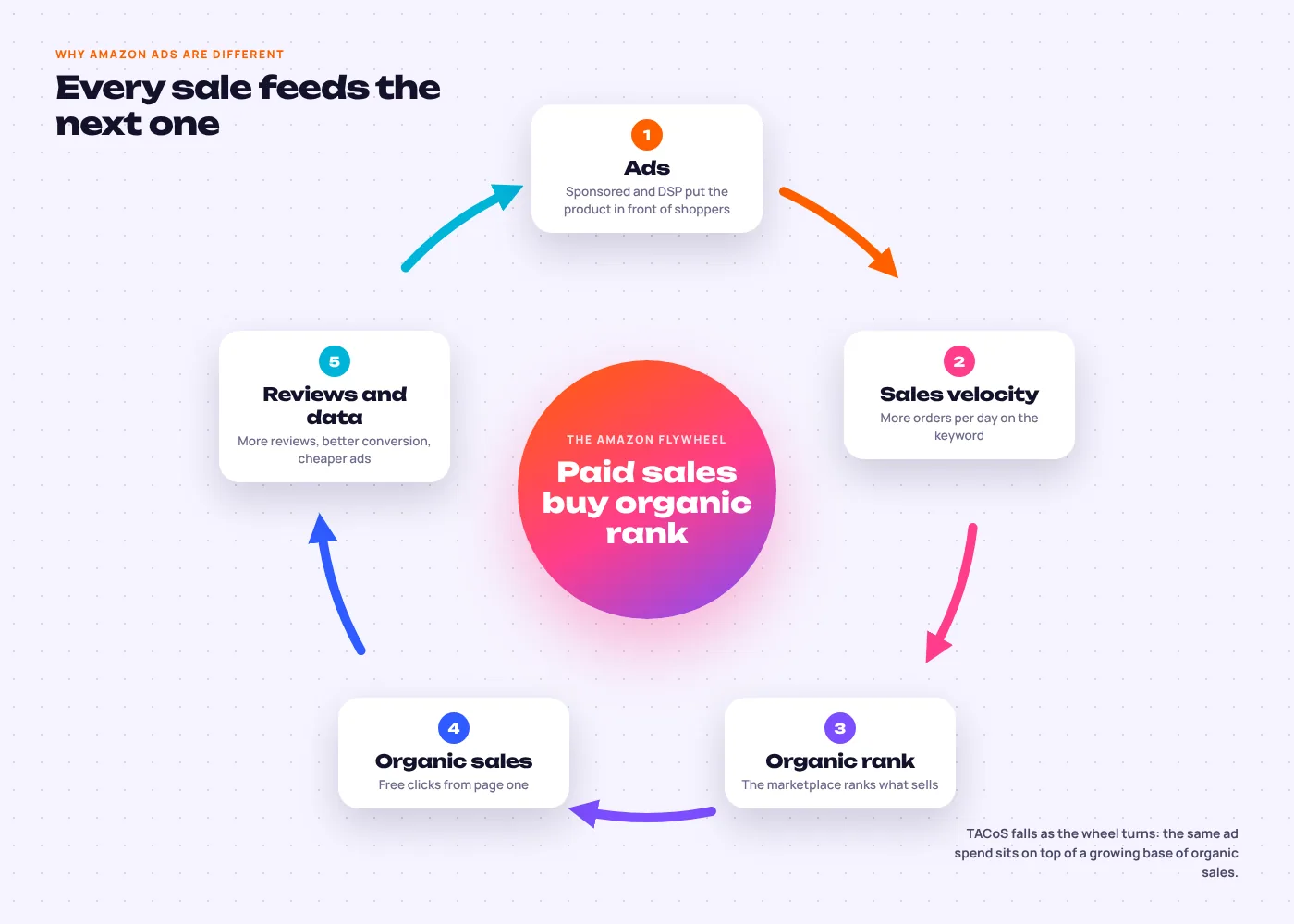
From our Amazon advertising work
The same team runs vendor and seller accounts, using the search term and placement data behind our Amazon PPC management.
How Our Vendor Central Management Works
A thirty-day reset first, then a monthly rhythm built around purchase orders, deductions and growth.
Margin audit
Twelve months of invoices, remittances, chargebacks and allowances turned into true profit per product.
Days 1 to 10Recover and prevent
Dispute recoverable shortages and chargebacks, and fix the processes that caused them.
Days 10 to 30Catalogue and content
Listings, A+ Content, images and variations cleaned up so traffic converts.
OngoingAds and forecasting
Advertising tied to stock and Buy Box, and forecasts shared so POs match demand.
Weekly and monthlyAmazon Vendor Central Questions
What is the difference between Vendor Central and Seller Central?
On Vendor Central you sell wholesale to Amazon and Amazon sets the retail price. On Seller Central you sell directly to customers on Amazon and keep control of pricing, while paying selling and fulfilment fees.
How do you get a Vendor Central account?
Vendor Central is invitation only. Amazon typically invites brands with proven demand, often based on their sales through Seller Central or other retailers.
What are chargebacks in Vendor Central?
Fees Amazon deducts when shipments break its supply chain requirements, such as late delivery, inaccurate shipment notices or labelling and packaging problems.
Can you dispute shortage claims and chargebacks?
Yes, within the time limits Amazon sets. Disputes need evidence such as proof of delivery, carrier documents and carton details, so good record keeping matters.
What is co-op in Amazon Vendor Central?
Co-op refers to marketing and other allowances agreed in your vendor terms, usually deducted as a percentage of what Amazon pays you. They are negotiated, often during annual vendor negotiations.
Can a brand use Vendor Central and Seller Central at the same time?
Yes. Many brands run a hybrid model, keeping core products on Vendor Central and selling others through Seller Central, with clear rules to avoid competing against Amazon on the same products.
Can vendors run Amazon ads?
Yes. Vendors can use Sponsored Products, Sponsored Brands, Sponsored Display and Amazon DSP. Ads should be managed alongside stock and Buy Box status, since vendors do not control the retail price.
How long does it take to see results from Vendor Central management?
Chargeback and shortage improvements often show within one to two months. Sales growth from content and advertising usually builds over three to six months.
Find Out Where Your Vendor Margin Is Going
Share read access to Vendor Central. We will show you your true margin by product, your biggest deduction types and what we think is recoverable.
