The short answer
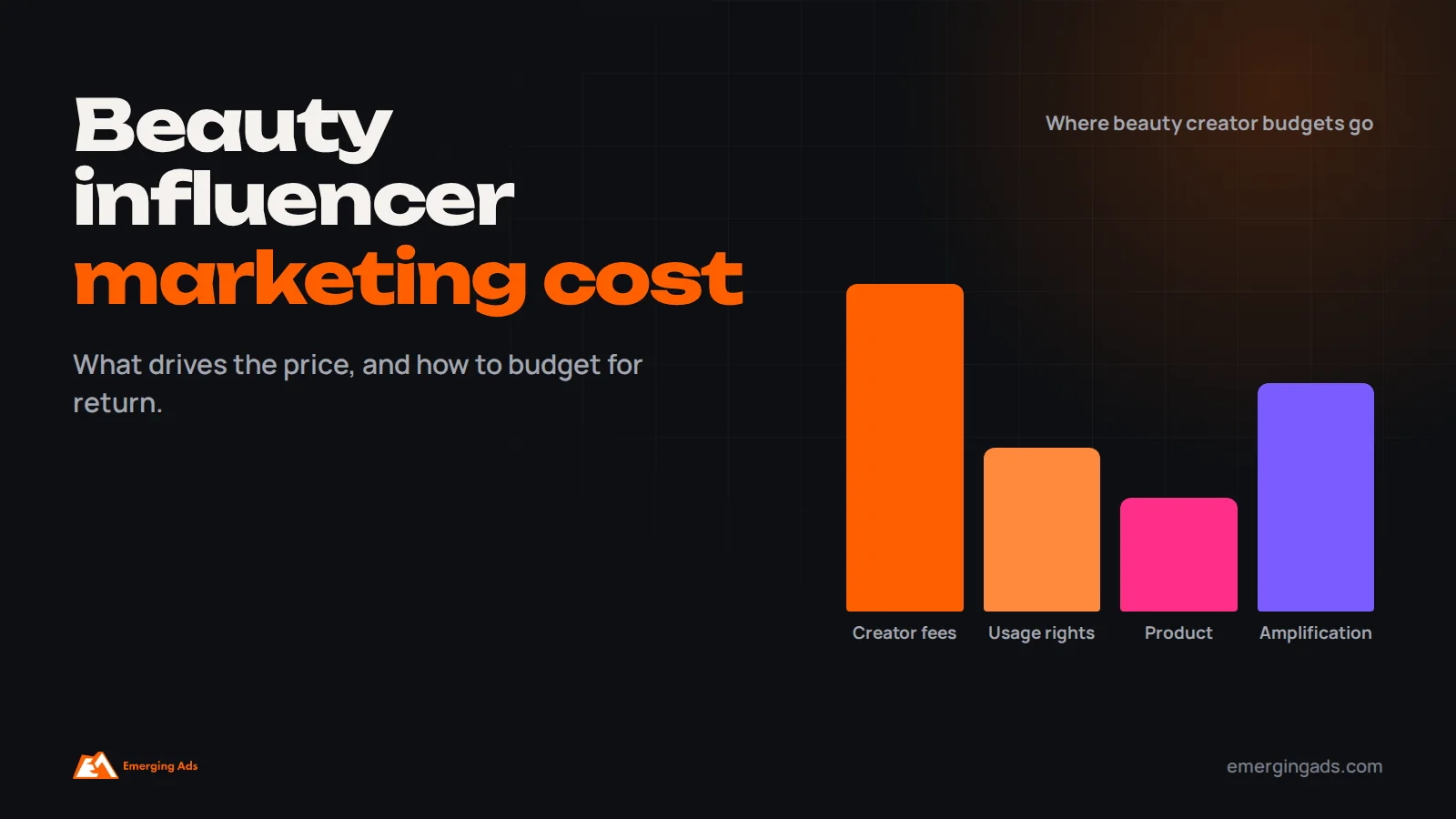
Beauty brand influencer marketing costs depend on creator size and engagement, platform, content format, the number of posts, usage rights for ads, exclusivity, product costs and how much management and paid amplification you add. Small creators may work for products or modest fees, while established beauty creators charge significantly more, especially for video, multiple deliverables and long usage rights. The total budget should be set from what a new customer is worth to you, and judged on sales, new customers and content performance rather than reach alone.
Beauty is one of the most creator-driven categories in marketing. People watch tutorials before buying makeup, read skincare reviews before trying a serum, and follow creators whose skin type, tone or style matches their own. For beauty brands, creators are often the most trusted route to new customers.
That also makes beauty creator marketing competitive and, at the top end, expensive. Brands can spend heavily on a single campaign with little to show for it, or build a steady, profitable program with the right mix of creators and structures. This guide explains what drives the cost, the pricing models used, hidden costs, how to set budgets and how to measure return. We avoid quoting universal rate cards, because rates vary widely by market, platform and creator, but we explain how to judge any quote.

What drives the cost
Two quotes for similar-sounding work can differ widely. These factors explain most of the gap.
- Creator size: nano and micro creators usually cost far less than established beauty creators and celebrities.
- Engagement and audience quality: creators with highly engaged, relevant audiences command higher fees.
- Platform and format: video, especially longer YouTube tutorials, usually costs more than a single image or Story.
- Number of deliverables: a package of Reels, Stories and a tutorial costs more than one post.
- Usage rights: using creator content in your own ads, website or retail displays adds cost, especially for longer periods.
- Exclusivity: asking a creator not to work with competing brands for a period raises the fee.
- Market: rates differ significantly between countries.
- Timing: fees can rise around peak seasons when creators are in demand.
Cost by creator tier
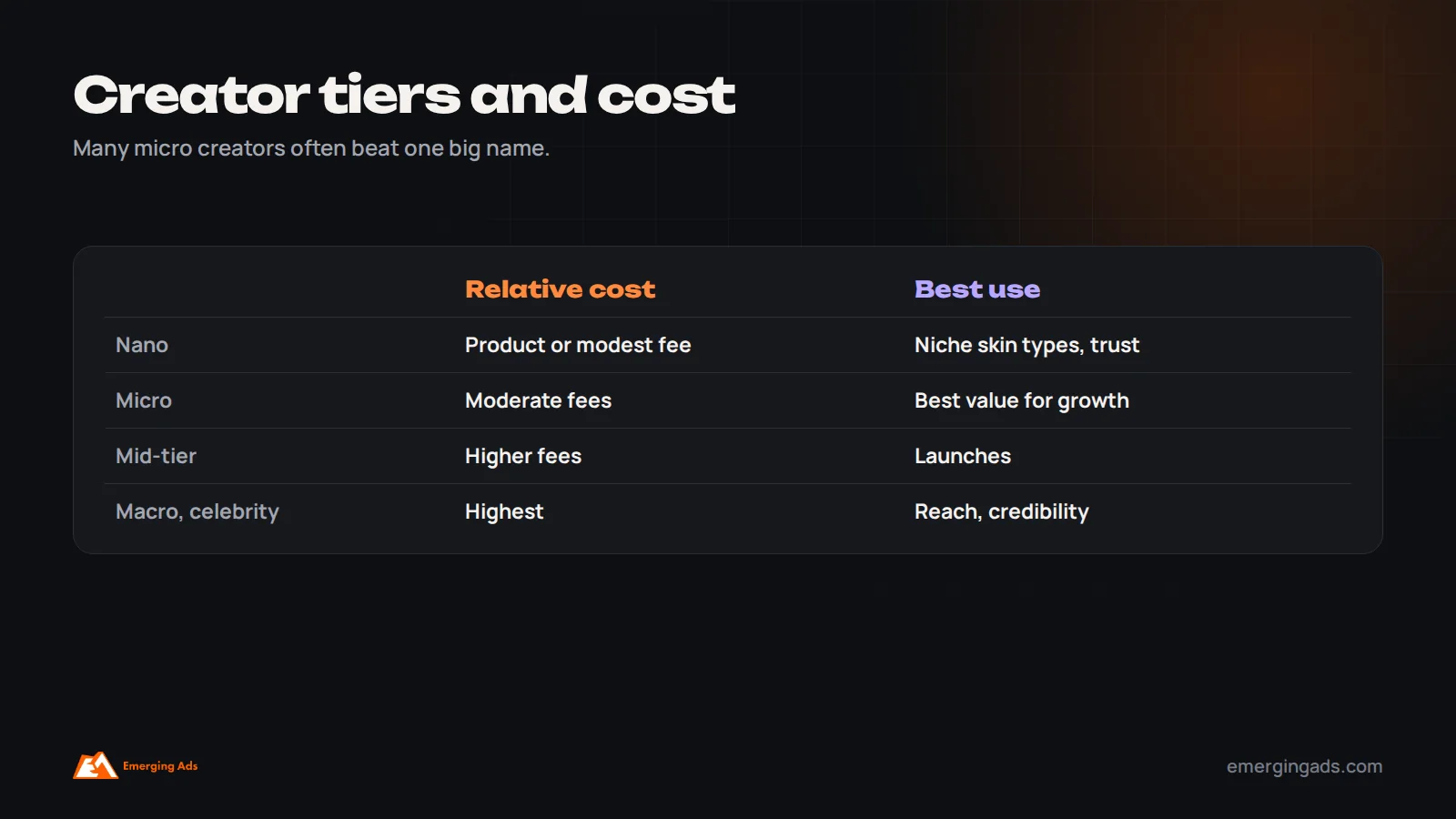
Creator size is the single biggest driver of fees, but bigger is not always better. The right tier depends on your goal, budget and how narrowly your product fits a particular audience.
Nano creators (roughly 1,000 to 10,000 followers) often accept gifted products or modest fees, and can be very persuasive for niche audiences, such as specific skin concerns or tones. Micro creators (roughly 10,000 to 100,000) usually charge fees, with strong engagement and more polished content, and are often the best value for growing brands. Mid-tier creators (roughly 100,000 to 500,000) charge more and suit launches. Macro creators and celebrities charge the most, offering reach and credibility, but returns are less predictable. Many brands get better results from twenty micro creators than one large name.

Pricing models
Beauty brands usually combine several models across a creator program, depending on creator size and goals.
- Gifting: free product in exchange for honest consideration, with no guaranteed post.
- Flat fee per deliverable or package.
- Affiliate commission on sales through codes or links.
- Hybrid: a lower fee plus commission.
- Ambassador retainers: monthly fees for ongoing content and promotion.
- Usage and whitelisting fees for running content as ads from the creator’s account.

Hidden costs
Creator fees are only part of the total. These costs are easy to overlook when planning a budget.
- Product and shipping, often several products per creator, including shade ranges.
- Agency or platform fees for creator discovery and management.
- Content review and compliance time.
- Paid amplification to get the most from top content.
- Discount costs from creator codes.
- Internal time for briefing, contracts, payments and reporting.

Costs differ across beauty categories
Makeup campaigns often need tutorials and swatches across shades and skin tones, which means more products per creator and more video content, raising costs but producing highly persuasive material. Skincare campaigns depend on creators showing results over weeks, so longer partnerships with progress updates tend to work better than one-off posts, and claims need careful review. Haircare benefits from before-and-after content and creators with relevant hair types. Fragrance is hard to convey on screen, so creators who tell stories and describe scents vividly matter more than reach. Nails and tools suit quick demonstrations and tutorials. Men’s grooming often works through lifestyle and fitness creators as well as beauty specialists. Planning the creator mix and deliverables by category gives more realistic budgets than applying one rate across everything.
Why video costs more and is often worth it
Video deliverables, especially tutorials and get-ready-with-me content, take more time to plan, film and edit, so creators charge more for them. They are also usually the most effective format for beauty, because viewers see application, texture, finish and results in motion. A single strong tutorial can serve as an organic post, an ad, product page content and email material. When comparing quotes, consider the reusable value of the content as well as the organic reach of the post.
Usage rights and whitelisting in detail
Usage rights determine how long and where you can reuse a creator’s content. Short rights limited to organic sharing on your own social channels cost little or nothing extra; rights to run content as paid ads, on your website, in emails and in retail for many months cost more. Whitelisting, where ads run from the creator’s own account through partnership ads or Spark Ads, often performs better than brand-account ads and usually needs explicit permission and a fee. Agree rights in writing before content is created, specifying channels, duration and territories. Brands that negotiate usage rights upfront often get far more value from each partnership.
Ambassador programs and long-term partnerships
Beauty audiences trust creators who use a product consistently over time, so long-term ambassador relationships tend to outperform one-off posts. Ambassadors may receive monthly retainers, product, early access to launches, commission and sometimes input on new products. Costs are predictable, content becomes more authentic, and the creator’s audience sees the product repeatedly. Start with short trial partnerships, then offer ambassador terms to creators whose content and results stand out.
Regional differences in beauty creator costs
Beauty creator rates and norms vary between markets. In the Gulf, beauty creators are highly influential, Arabic content and local creators reach wide audiences, and regulations require appropriate permits for paid influencer advertising in some countries. In India, beauty creators span many languages and regions, with costs varying widely, and affordable creator programs can reach large audiences. In the UK and US, the beauty creator market is mature and competitive, with strict advertising rules on disclosure and claims. Adjust budgets and expectations to the market rather than applying rates from another region.
Setting a budget
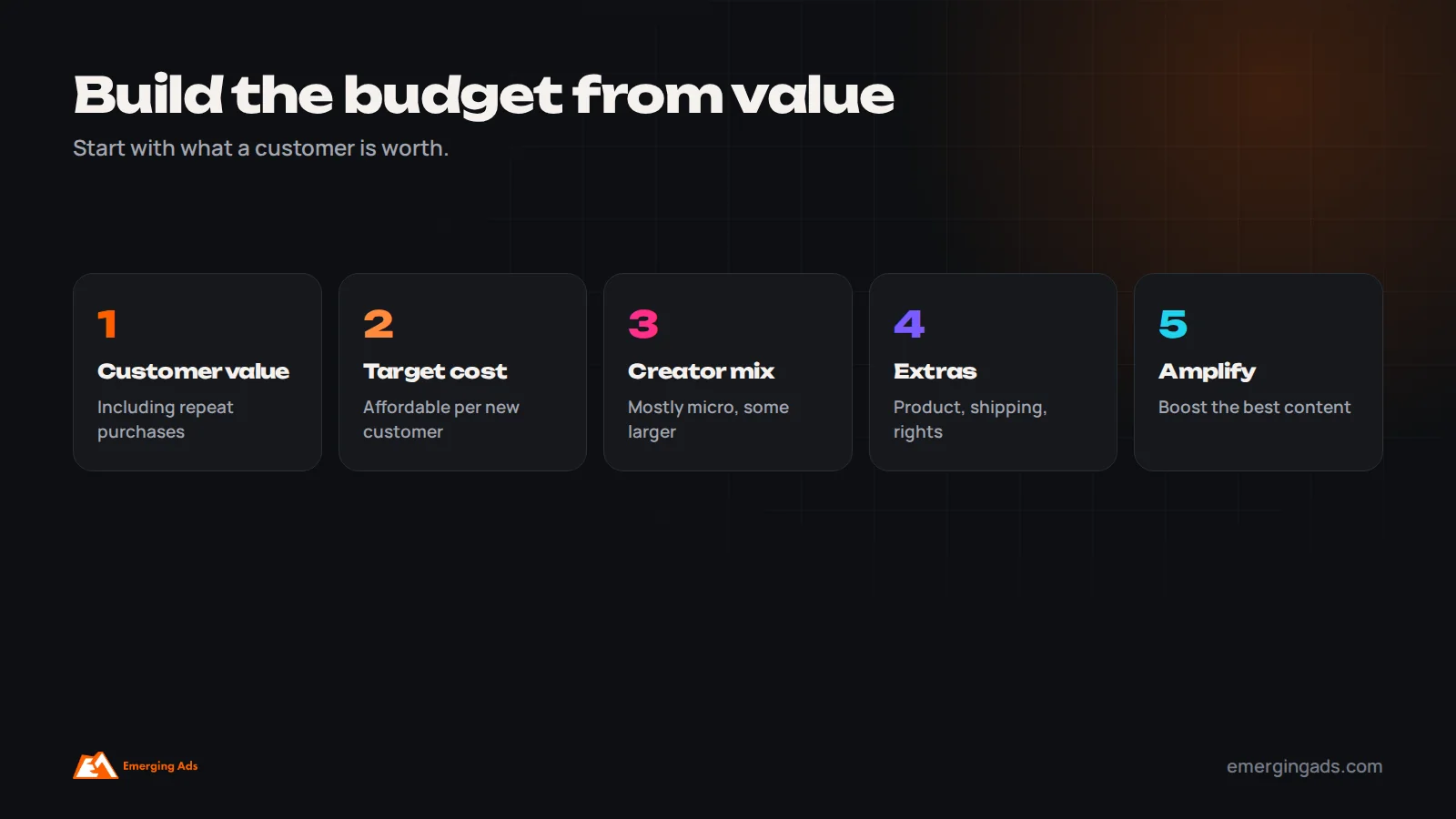
The right budget is the one that acquires new customers at a cost your margins and repeat purchases can comfortably support.
Start from your economics. Estimate the value of a new customer, including repeat purchases, which is often high in skincare and replenishable products. Decide what you can afford to pay to acquire one. Then plan a creator mix and paid amplification budget that should deliver enough new customers at that cost, with a test phase to learn which creators and formats work. Many beauty brands allocate a meaningful share of their creator budget to paid amplification of the best content, since that often produces more sales than the organic posts alone.
A worked budget example
Consider a growing skincare brand selling online, with a hero serum and a small range of complementary products. Its data shows that new customers often buy again within three months, so a new customer is worth considerably more than their first order. The brand decides what it can afford to pay to acquire a customer, then plans a three-month creator program. It works with fifteen micro creators who focus on skincare for specific concerns, such as sensitive skin and acne-prone skin, paying a modest fee plus commission for a tutorial video and two Stories each, with three months of ad usage rights. It adds two mid-tier creators for a launch moment. It budgets for product kits and shipping, a small discovery platform fee, and a paid amplification budget to run the best creator videos as partnership ads. After the first month, it compares cost per new customer by creator and finds that the micro creators focused on sensitive skin deliver the best results, so it shifts budget toward them and invites the top three into ambassador relationships.
Negotiating fairly with beauty creators
Good negotiation focuses on clarity and fairness rather than squeezing fees. Be specific about what you need: platforms, formats, number of deliverables, posting dates, usage rights, exclusivity and approval steps, because each affects price. If a creator’s rate is above budget, adjust the scope, such as fewer deliverables or shorter usage rights, or propose a hybrid with commission, rather than simply asking for a discount. Offering longer-term partnerships can justify better rates. Pay on time and respect creators’ expertise; beauty creators talk to each other, and a reputation as a fair, organized brand attracts better partners.
Vetting creators before paying
Before paying any fee, check that a creator’s audience matches your customers by location, age, skin type or concern and interests, that engagement looks genuine rather than inflated, that their content quality and style fit your brand, that past sponsored posts performed well and were properly disclosed, and that their values and content history are compatible with yours. Ask for audience insights and examples of past results. A small amount of vetting prevents most wasted spend in beauty creator marketing.
Creator content versus UGC production
Some beauty brands also pay creators to produce user-generated-style content for the brand’s own ads, without posting to their own audiences. This content is typically cheaper than full influencer partnerships because it does not include reach, and it provides a steady supply of authentic-looking ad creative such as tutorials, reviews and before-and-after content. Many brands combine both: influencers for reach and credibility, UGC creators for a volume of ad creative. Budget for each separately, since they serve different purposes.
Getting the most from amplification
The organic post is often only the beginning of a creator partnership’s value. Running the best creator content as ads, especially through partnership ads on Meta or Spark Ads on TikTok, frequently produces more sales than the original post. Test several creators’ content in the same campaign, keep the winners running, and refresh creative regularly as audiences tire of ads. Our guide to scaling Meta ads explains how creator content fits into paid campaigns.
Budgeting for product launches
Launches are where beauty brands often concentrate creator spend. A launch campaign typically combines product seeding to a wide group of creators before release, paid partnerships with a smaller group to guarantee content on launch day, a few larger creators or celebrities for reach where budget allows, and paid amplification of the strongest content in the weeks after. Budget for more product than usual, since seeding kits go to many creators, and for faster turnaround on content approvals. Plan launch timing around peak shopping periods carefully, since creator demand and ad costs rise then. Measure launch success over several weeks, including repeat purchases, rather than on launch-day buzz alone.
Agency, platform or in-house?
Beauty brands can manage creator programs in-house, use creator discovery and management platforms, or work with agencies. In-house programs keep relationships close and costs low but need dedicated time. Platforms help with discovery, outreach, contracts, payments and reporting for a subscription or fee. Agencies bring relationships, negotiation experience, compliance processes and often paid amplification skills, for a management fee. Many brands start in-house or with a platform, then add agency support as programs grow or for major launches. Whatever the setup, make sure your brand owns the relationships, content rights and data.
Creators and customer retention
The value of a beauty customer usually comes from repeat purchases, especially for skincare, haircare and replenishable products. Creator campaigns should be connected to retention: capture new customers’ email or phone opt-ins, send helpful onboarding content explaining how to use products, follow up when products are likely to run out, and invite customers to share their own results. Customers acquired through trusted creators often stay longer, but only if the post-purchase experience lives up to what they saw. Our guide to ecommerce email flows covers the essentials.
What good reporting looks like
Useful creator reports show, for each creator, what was delivered and when, reach and engagement, clicks and sales from codes and links, new customers acquired, cost per new customer including product and fees, and ad performance when content was amplified. At program level, they show total cost, total new customers and repeat purchase rates, plus recommendations on which creators to continue with. Reports focused only on reach and likes make it impossible to know whether spend is paying back.
Advice for small and new beauty brands
Small beauty brands can compete effectively with modest budgets by focusing. Start with a group of nano and micro creators who genuinely match your customers, such as people with the specific skin concerns your products address. Send product with a friendly, personal note and a short brief, and offer commission on sales so creators benefit as you grow. Engage personally with every piece of content they create, and reshare it with permission. Run small paid tests with the best content. Invest in a strong product page and welcome email sequence so new customers convert and return. As results become clear, increase fees and offer ambassador terms to the creators who perform best. Many successful beauty brands grew this way before ever working with a large creator.
Timing and seasonal costs
Creator rates and availability shift through the year. Demand peaks around major gifting and shopping periods, such as the holiday season, Black Friday, Valentine’s Day, Mother’s Day, Ramadan and Eid in the Gulf, and Diwali in India. Creators book up early, fees can rise and ad costs increase. Brands that plan creator campaigns well ahead, or run strong campaigns in quieter months when attention is cheaper, often get better value. Summer skincare, back-to-school routines and new-year self-care themes also create opportunities outside the biggest peaks.
What to include in creator agreements
Even small partnerships deserve a written agreement covering deliverables and posting dates, fees and payment terms, commission rates and tracking, usage rights with channels and duration, exclusivity, disclosure requirements, claims to avoid and rules on filters, approval process and revision rounds, and what happens if deliverables are missed. Clear agreements prevent most disputes, protect both sides and make it easy to reuse strong content.
Representation and inclusivity
Beauty customers want to see products on people like them: their skin tone, skin type, age, gender and concerns. Working with a diverse range of creators widens a brand’s appeal, builds trust with underrepresented audiences and often uncovers profitable customer segments that larger brands overlook. It can also affect costs: creators who specialize in specific concerns or communities may have smaller but highly loyal audiences, offering excellent value. Make sure products are suitable for the audiences you target, such as full shade ranges for foundation, before investing in creators who serve those communities; otherwise the campaign will create disappointment rather than customers.
Planning your first campaign
For a first beauty creator campaign, keep the scope focused. Choose one hero product, one market and one goal, such as online sales of a new serum. Shortlist thirty creators, vet them carefully and work with ten to fifteen, mostly micro creators, with a mix of gifting, fees and commission. Agree simple deliverables, such as one video and a few Stories, with short usage rights for ads. Send product with a clear brief, track every creator with a unique code, amplify the best content with a modest paid budget, and review results after four to six weeks. That first round will tell you which creators, formats and audiences work, and what a realistic cost per customer looks like for your brand.
What makes beauty creator content effective
The beauty creator content that drives sales shares a few qualities. It shows the product being used, so viewers see texture, application and finish. It is honest, including how long results take and who the product suits. It addresses a specific concern or routine, such as oily skin, dark circles, a quick work look or a sensitive-skin routine, rather than generic praise. It hooks attention in the first seconds with a visible result or relatable problem. And it ends with a clear reason to try the product, such as a code, a link or an offer. When reviewing drafts, look for these qualities rather than how many times the brand name is mentioned.
AI search and beauty recommendations
Shoppers increasingly ask AI assistants for product suggestions, such as the best moisturizer for sensitive skin or a long-lasting foundation for oily skin. These answers draw on reviews, editorial content, creator content, retailer listings and brand websites. Strong reviews, detailed and accurate product information, creator coverage that explains real results and consistent product descriptions across retailers all improve the chances of being recommended. Our guide to ChatGPT SEO explains what helps.
A quick budgeting checklist
Before committing budget, confirm that you know what a new customer is worth, that creators are vetted for audience fit and genuine engagement, that the mix favors creators who reach your best customers, that usage rights and exclusivity are agreed in writing, that product, shipping and platform costs are included, that a paid amplification budget is reserved, that claims and filter rules are briefed, and that every creator has tracking in place.
Managing risk in beauty partnerships
Beauty creator partnerships carry specific risks: a creator may have a reaction to a product, make a claim that breaches advertising rules, use filters that misrepresent results, or become involved in controversy. Reduce risk by checking ingredient suitability with creators who have sensitive skin or allergies, providing patch-test guidance, briefing clearly on claims and filters, reviewing drafts before publishing, keeping records of approvals, and spreading budget across several creators. If a problem arises, respond quickly and transparently, pause any paid amplification and work with the creator to correct the content.
Disclosure and beauty claims
Paid partnerships must be disclosed clearly. Beauty brands also face rules on product claims, such as promising results, using filters that misrepresent effects, or making medical claims for cosmetics. Advertising regulators have acted against beauty content that used filters to exaggerate product results. Brief creators on approved claims, ask them not to use filters that change the product’s apparent effect, and review content before publishing. Our guide to influencer collaborations covers contracts and disclosure.
Measuring return
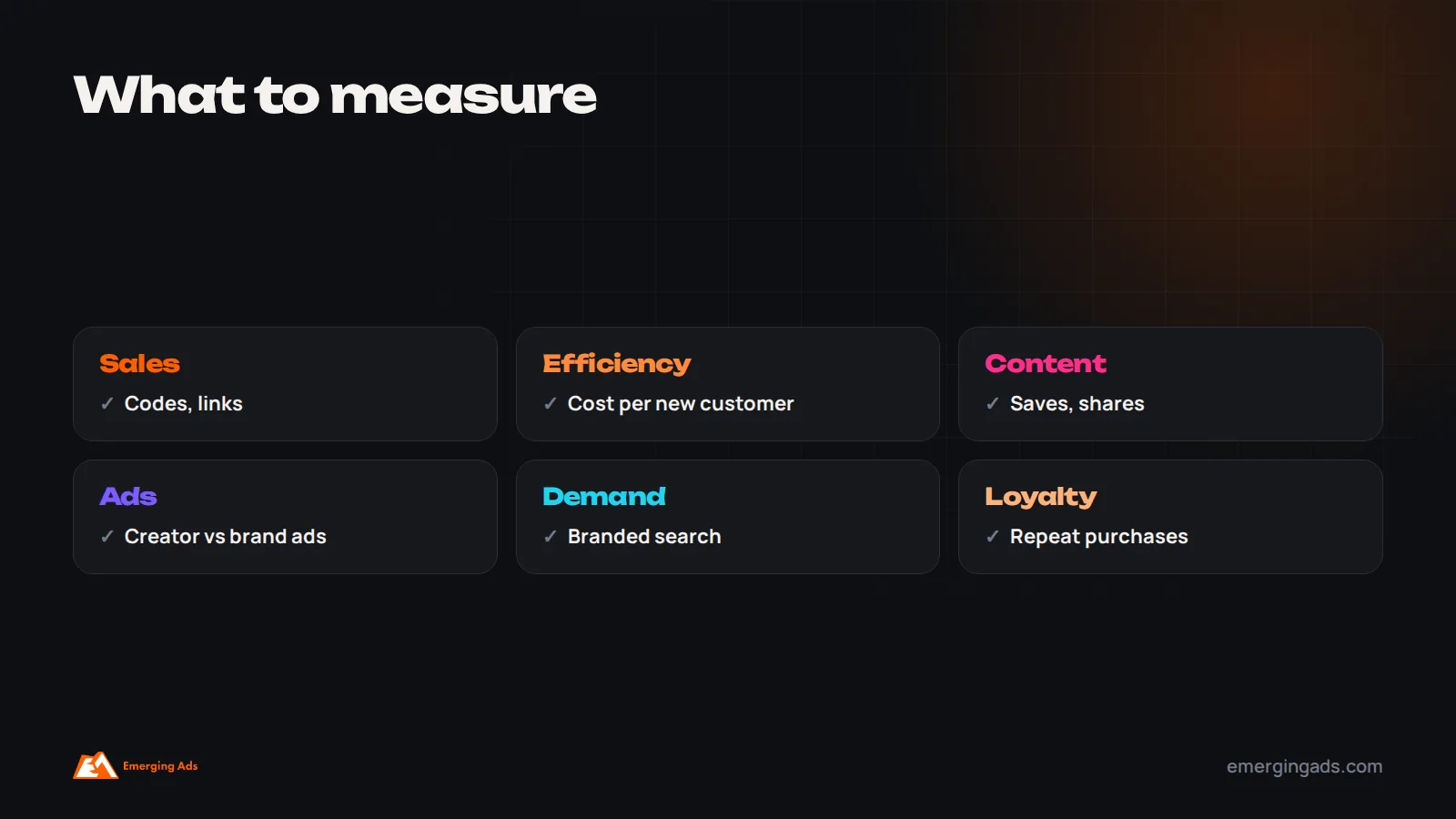
Judge beauty creator spend on new customers and their value over time, not on reach and likes alone.
- Sales and new customers through codes and affiliate links.
- Cost per new customer by creator.
- Content performance: saves, shares, comments and views.
- Ad performance of creator content compared with brand content.
- Branded search and site traffic during campaigns.
- Repeat purchase rate of customers acquired through creators.
Common mistakes
These are the patterns that most often make beauty creator programs expensive without paying back.
- Spending most of the budget on one large creator.
- Paying for reach without checking audience fit.
- Forgetting usage rights, then being unable to reuse great content.
- Ignoring product, shipping and amplification costs.
- Allowing filtered or exaggerated results in content.
- Measuring likes instead of sales and repeat customers.
Frequently asked questions
How much does beauty influencer marketing cost?
It depends on creator size, engagement, platform, format, deliverables, usage rights, exclusivity and market, plus product, shipping, management and amplification costs.
Are micro influencers worth it for beauty brands?
Often yes. Micro creators usually offer strong engagement, relevant audiences and better value than large names.
What are usage rights?
Permission to reuse creator content in your ads, website or other channels for an agreed period, usually for an extra fee.
Should beauty brands pay influencers or gift products?
Gifting can work with small creators, but posts are not guaranteed. Fees or hybrids with commission give more control.
How should beauty brands set an influencer budget?
Start from the value of a new customer and acceptable acquisition cost, then plan creator mix, product costs and paid amplification accordingly.
Can beauty influencers use filters?
Filters that exaggerate a product’s effect can mislead consumers and have drawn regulatory action. Ask creators to show real results.
How do I measure beauty influencer ROI?
Track sales and new customers by code or link, cost per customer, content and ad performance, branded search and repeat purchases.
Is paid amplification necessary?
Not always, but running top creator content as ads often produces more sales than organic posts alone.