Best Influencer Collaborations Strategy for Small Business
Key Takeaways
- Micro influencers with smaller, tighter-knit audiences usually outperform big names on engagement rate and cost efficiency for small business budgets.
- A collaboration works best when it’s structured as a genuine product fit, not a generic paid post with the brand name inserted.
- Usage rights need to be negotiated upfront, not after the content performs well, or the brand loses the ability to reuse it in paid campaigns.
- Seeding product to a wider pool of smaller creators before committing to paid deals reveals who actually creates content worth amplifying.
- Tracking needs to go beyond likes and comments, a unique discount code or landing page is what connects a collaboration to actual revenue.
Why Influencer Collaborations Work Differently for Small Businesses
A small business rarely has the budget to compete for a celebrity-tier influencer, and the good news is that’s not actually where the best return lives anyway. Audiences have grown visibly skeptical of obviously paid celebrity endorsements, while a smaller creator with a genuinely engaged following often converts better precisely because the audience trusts their recommendations as real opinions rather than scripted ad reads. For a small business, this means the influencer budget can go further than the follower count math would suggest.
The goal isn’t reach for its own sake, it’s borrowed trust. A creator’s audience already believes what that creator says, and a well-matched collaboration transfers a slice of that trust to the brand, which is a very different mechanism than a cold ad trying to build trust from zero. That’s also why influencer collaborations tend to work particularly well as a complement to paid advertising rather than a replacement for it, one channel builds credibility while the other scales the message once it’s proven.
Micro vs. Macro: Where Small Budgets Perform Best
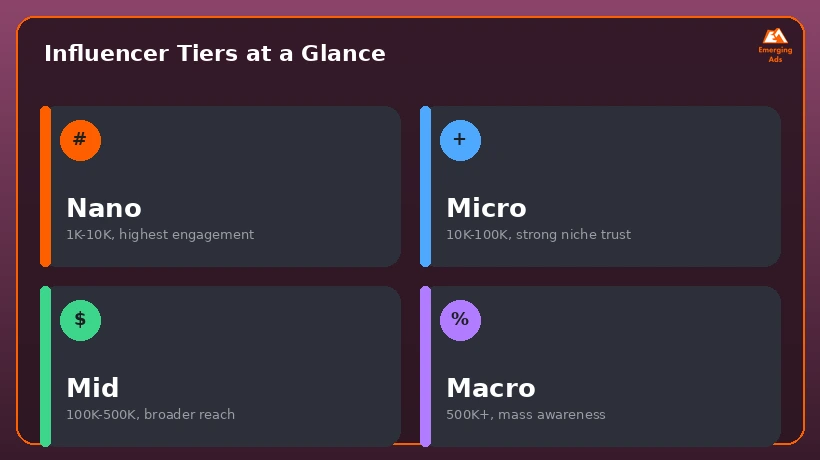
Micro influencers, roughly in the 10,000 to 100,000 follower range, consistently post higher engagement rates than accounts with millions of followers, because their audience is smaller, more niche, and more likely to actually see and react to a post rather than scroll past it. For a small business testing influencer collaborations for the first time, working with several micro creators instead of one large name spreads risk and provides much better data about what content style and messaging actually resonates.
| Tier | Follower Range | Typical Strength |
|---|---|---|
| Nano | 1,000-10,000 | Highest trust, very engaged niche audience |
| Micro | 10,000-100,000 | Strong balance of reach and engagement |
| Macro | 100,000-1,000,000 | Broad reach, lower engagement rate |
A useful approach for a first campaign is running several nano and micro collaborations in parallel rather than betting the entire budget on one larger name. This also builds a library of comparison data on which creator style actually drove results, which single-influencer campaigns can’t provide, and that comparison data is what makes the second and third rounds of a program noticeably more efficient than the first.
Finding the Right Creators Instead of the Biggest Ones
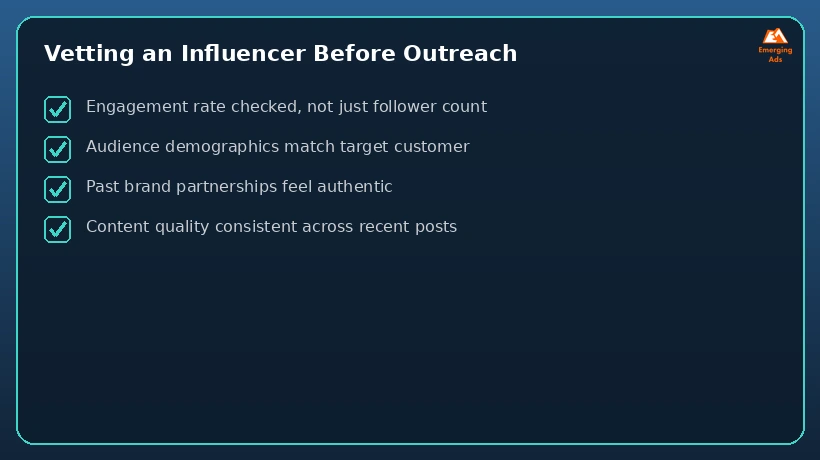
Fit matters more than follower count. Look for creators whose existing content already aligns naturally with the product category, someone posting home organization content is a far better fit for a storage product than a general lifestyle influencer with a bigger following but no relevant context. Check the comment section, not just the follower count, since genuine back-and-forth in the comments is a stronger signal of an engaged audience than the count on the profile.
- Review the last ten to fifteen posts for content style and tone consistency
- Check comments for genuine engagement, not just emoji spam or bot activity
- Confirm the creator’s audience demographics roughly match the target customer
- Look for previous brand collaborations and how they were received by followers
How to Structure an Outreach Message That Gets Replies
Generic mass outreach gets ignored, and most creators can tell within the first sentence whether a message was personalized or copy-pasted to a hundred other accounts. A message that references a specific recent post, explains clearly why the product fits their existing content, and states plainly what’s being offered, product only, paid collaboration, or both, gets dramatically higher response rates than a vague ‘we love your content, let’s collaborate’ opener.
- Reference a specific post that shows you actually looked at their content
- State clearly and briefly what you’re offering and what you’re asking for
- Avoid vague language like ‘partnership opportunity’ without specifics
- Make it easy to say yes with a simple next step, not a long form to fill out
Negotiating Rates and Usage Rights
Rates vary enormously by niche and platform, but the more important negotiation point small businesses tend to miss is usage rights. Without an explicit agreement, a brand technically can’t repost or repurpose a creator’s content in its own paid ads or on its own channels beyond a simple share. Negotiating usage rights upfront, even for a modest additional fee, turns a single collaboration into reusable ad creative that can run in paid campaigns for months afterward.
This is one of the most overlooked parts of influencer collaboration strategy. A piece of content that performed well organically on the creator’s page often performs just as well, sometimes better, when run as paid ad creative, because it doesn’t look like a traditional ad. Small businesses that skip this step end up rebuilding creative from scratch for every campaign instead of compounding value from the collaborations they’ve already paid for.
Seeding Before Paying: A Lower-Risk First Step
Sending free product to a wider pool of smaller creators, without a paid commitment attached, is a lower-risk way to see who genuinely likes the product enough to create content about it unprompted. This approach surfaces authentic advocates before any money changes hands, and those advocates are usually the strongest candidates for a paid, ongoing collaboration afterward.
Seeding won’t produce content from everyone who receives product, and that’s fine, the point is identifying the subset who create something genuinely good, then building a paid relationship with that smaller group rather than guessing upfront who will perform. A reasonable expectation for a first seeding round is that a fraction of recipients will post organically without any further prompting, and that fraction is exactly where the best paid opportunities usually come from.
Turning Creator Content Into Paid Ad Creative
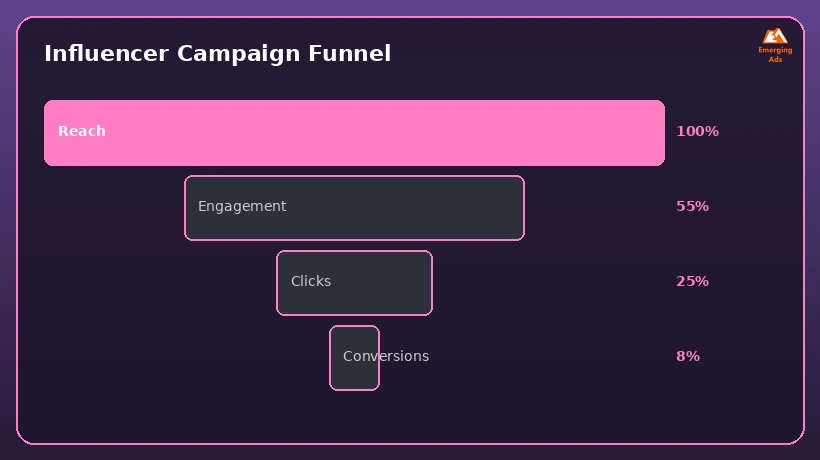
Once usage rights are secured, creator content often becomes some of the strongest performing paid ad creative available, because it reads as a genuine recommendation from a real person rather than brand-produced advertising. This works particularly well on Meta and Instagram placements, where feed content and ad content sit side by side and creator-style ads blend in naturally rather than announcing themselves as advertising.
A broader social media management strategy should treat this pipeline, seeding, organic performance, paid amplification, as one continuous system rather than three disconnected activities handled by different people.
Building a Repeatable Outreach and Tracking System
Ad hoc outreach, messaging a handful of creators whenever someone remembers to, produces ad hoc results. A repeatable system, a running spreadsheet of prospective creators with fit notes, outreach status, agreed rates and usage terms, and performance results after posting, turns influencer work into a channel the business can actually forecast and improve rather than a one-off experiment repeated occasionally.
This is also where influencer work benefits from sitting inside a broader content strategy rather than living as an isolated activity owned by whoever has time that week. When content themes, seasonal campaigns, and creator collaborations are planned together, the creator content reinforces what’s already running elsewhere instead of feeling disconnected from the rest of the brand’s marketing, and the tracking system makes it far easier to prove that connection with real numbers rather than a general sense that it’s helping.
What a First 60-Day Influencer Program Looks Like
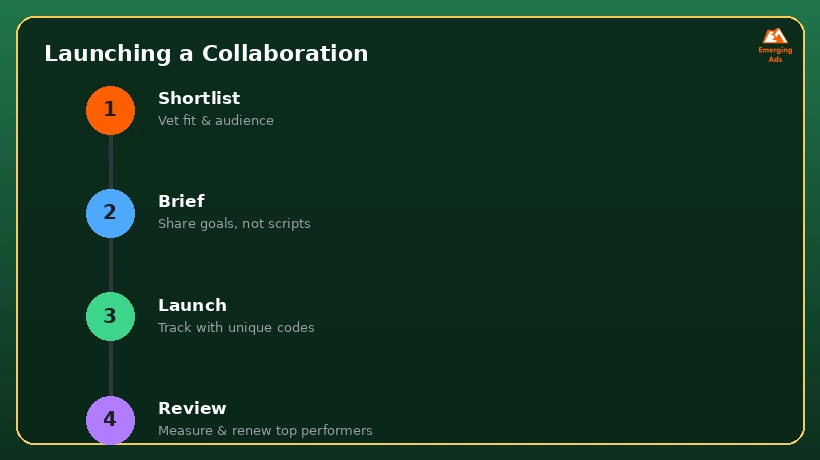
The first two to three weeks should focus on research and outreach, building a list of twenty to thirty well-matched creators and sending personalized messages rather than a mass blast. Weeks three through six typically involve product seeding and the first wave of paid collaborations with the creators who responded and fit best, while tracking links and codes are set up from day one so results are measurable from the very first post rather than reconstructed after the fact.
| Weeks | Focus | Output |
|---|---|---|
| 1-2 | Research and personalized outreach | List of 20-30 matched creators, outreach sent |
| 3-4 | Seeding and first paid collaborations | First content live with tracking links/codes |
| 5-6 | Review results, negotiate usage rights on winners | Reusable ad creative from top performers |
| 7-8 | Amplify best content as paid ads | Paid campaigns running creator-style creative |
By the end of the second month, the goal is a clear shortlist of creators worth an ongoing relationship and at least a few pieces of content already proven to work when reused as paid creative on Meta or Instagram placements.
Measuring What Actually Matters
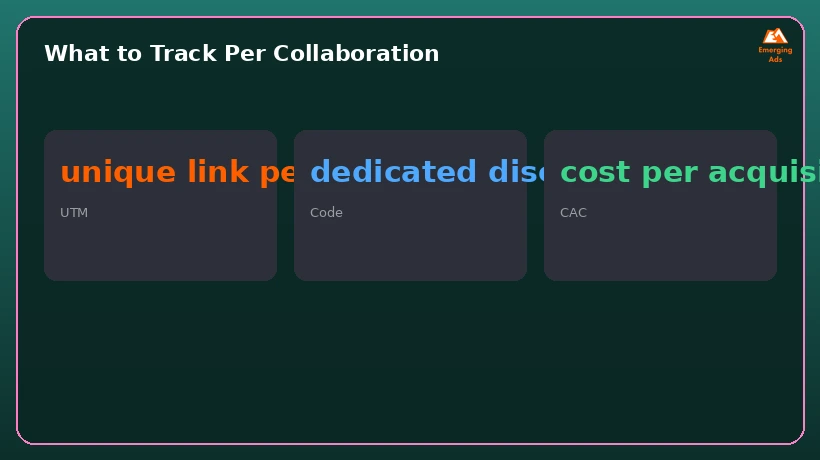
Likes and comments are visible but incomplete. A unique discount code or a dedicated landing link per creator connects the collaboration directly to actual revenue, which is the only number that ultimately justifies continuing or expanding a relationship. Watch engagement rate relative to that creator’s own average, not against an arbitrary industry benchmark, since a strong result for one creator’s audience might be mediocre for another.
- Unique discount codes or trackable links assigned per creator
- Engagement rate compared against that creator’s own historical average
- Follower growth on the brand’s own account following the collaboration
- Whether the content performs when reused as paid ad creative
Mistakes That Waste an Influencer Budget
- Chasing follower count instead of audience fit and engagement quality
- Skipping the usage rights conversation and losing the ability to reuse strong content
- Giving creators an overly scripted brief that strips out their natural voice
- Running one collaboration and judging the entire strategy off a single data point
- Ignoring smaller nano creators in favor of only chasing bigger, more expensive names
Influencer collaboration works best as an ongoing, tested program rather than a one-off campaign, and pairing it with a coordinated social strategy makes the results compound over time instead of resetting with every new attempt.
How Influencer Work Fits Alongside Paid Social
Influencer collaborations and paid social shouldn’t run as two separate budgets managed by two separate people who never compare notes. The strongest setup treats organic creator content as a creative pipeline feeding the paid program: whichever posts earn the highest organic engagement become the first candidates to test as paid ads, since they’ve already been validated by a real audience before a single ad dollar gets spent on them.
This also changes how a Facebook page or Instagram account gets managed day to day, since the team needs to be watching creator content performance closely enough to spot a breakout post quickly and move it into paid rotation before the moment passes. Small businesses that treat influencer and paid social as one connected system consistently get more out of both budgets than businesses running them in isolation. If you’re not sure where your current setup is leaking value between the two, a free audit is a straightforward way to find out before spending more on the next round of collaborations.
Frequently Asked Questions
How many followers does a creator need to be worth working with?
There’s no strict minimum, nano creators with a couple thousand highly engaged followers can outperform accounts with ten times the audience on both engagement and cost efficiency. Fit and engagement quality matter more than the raw follower number, and for a first campaign it’s often smarter to work with several smaller creators than to spend an entire budget chasing one bigger name.
Should small businesses pay creators or only offer free product?
Both models work depending on the creator and the goal. Free product seeding is a good low-risk first step to identify genuine advocates, while paid collaborations make sense once a creator has proven their content performs and usage rights are needed for reuse. Many programs blend the two, seeding widely first, then moving the strongest performers into a paid, ongoing relationship.
How long should an influencer collaboration campaign run before judging results?
At least four to six weeks and several creators, since a single post is too small a sample to draw conclusions from. Running multiple collaborations in parallel gives a much clearer read on what’s actually working, and gives the business a fairer comparison across creator styles rather than judging the entire channel off one result.
What’s the difference between UGC and influencer marketing?
Influencer marketing involves an established creator with their own audience posting about the brand, usually on their own channel. UGC, user-generated content, is authentic-style content created for the brand’s own use, sometimes by the same creators, without necessarily posting to their personal following. Both can be produced from the same collaboration if the terms are negotiated upfront.
Do I need a formal contract for influencer collaborations?
Yes, even a simple one-page agreement covering deliverables, timeline, payment, and usage rights protects both sides and avoids the common dispute over whether the brand can reuse the content in paid ads later. It also sets clear expectations on posting deadlines and disclosure requirements upfront.
How do I avoid influencer fraud or fake followers?
Check engagement rate relative to follower count, review the comment section for genuine back-and-forth rather than generic emoji spam, and use a fake follower checking tool for larger collaborations where more budget is at stake. A sudden, unexplained follower spike in a creator’s growth history is also worth investigating before committing budget.
Can influencer content really work as paid ad creative?
Yes, often exceptionally well, since it reads as a genuine recommendation rather than traditional brand advertising, particularly in feed-based placements where organic and paid content sit side by side. Many advertisers now see creator-style content consistently outperform polished, studio-produced ads on cost per result.
What’s a reasonable budget to start testing influencer collaborations?
Starting with product seeding to a handful of well-matched nano and micro creators costs little beyond the product itself, making it a low-risk way to test the channel before committing a paid budget to a larger program. A modest paid test budget on top of seeding is usually enough to see early signal within a couple of months, before deciding how much further to expand the program.
Should the brand or the creator write the content?
The creator should write and produce the content in their own authentic voice with a clear brief on key points to cover, rather than a fully scripted post, since audiences can usually tell when a creator is reading from a script. A short list of must-mention points works better than a full script handed over word for word.
How often should a small business run influencer collaborations?
Treating it as an ongoing program, a steady cadence of smaller collaborations throughout the year, tends to outperform a single large seasonal push, since it keeps building a library of authentic content and relationships over time rather than starting from scratch with every campaign, and it gives the business a much richer pool of proven creators to call on when a bigger seasonal moment does come around.