The 5 Email Flows Every E-Commerce Brand Should Have Live by Week Two
Most e-commerce brands treat email as an afterthought, a newsletter sent sporadically when someone remembers to write one. Meanwhile, five automated flows, built once and left running, typically generate 25 to 35% of total email revenue with zero ongoing manual effort once they’re live.
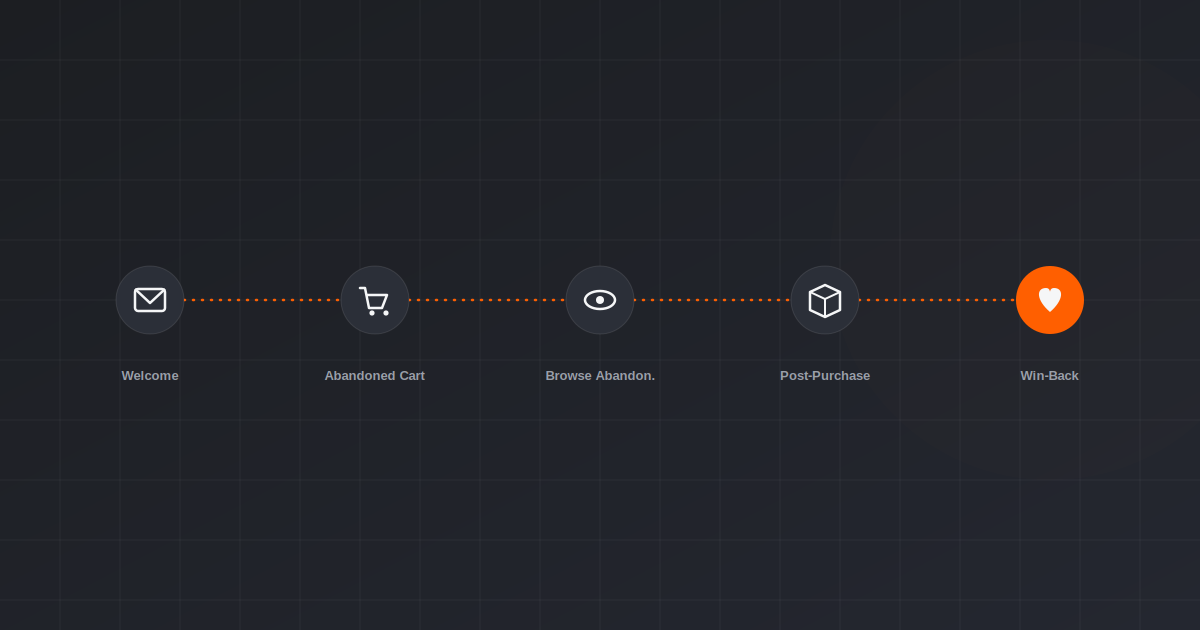
These five flows cover the full customer lifecycle: new subscriber, abandoned cart, browsed but didn’t add to cart, just purchased, and gone quiet. Here’s what each one needs to actually work, in the order we build them for new clients.
- These five flows together typically drive 25-35% of total email-attributed revenue for e-commerce brands.
- Welcome and abandoned cart should launch first; they have the highest intent and fastest payback.
- Post-purchase flows matter as much for retention and reviews as for immediate repeat revenue.
- Browse abandonment is the most commonly skipped flow, despite often converting well.
- Win-back flows should re-engage before unsubscribing, not just before a customer disappears entirely.
Flow 1: Welcome Series
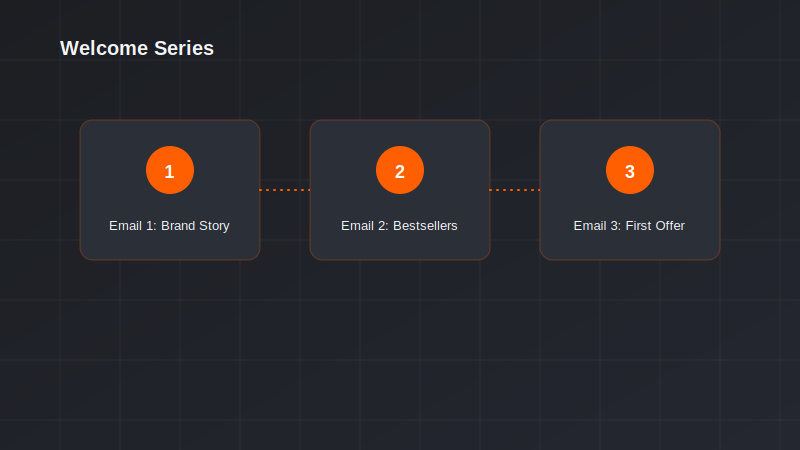
Triggered the moment someone subscribes, before they’ve necessarily purchased anything. This is the highest-intent audience on your list, they just raised their hand, and a 3 to 4 email sequence over the first week (brand story, bestsellers, a first-purchase incentive) consistently produces some of the highest open and click rates of any flow.
The mistake we see most often: a single generic “thanks for subscribing, here’s 10% off” email instead of a proper sequence. One email captures a fraction of the value a full welcome series delivers over the first week.
Flow 2: Abandoned Cart
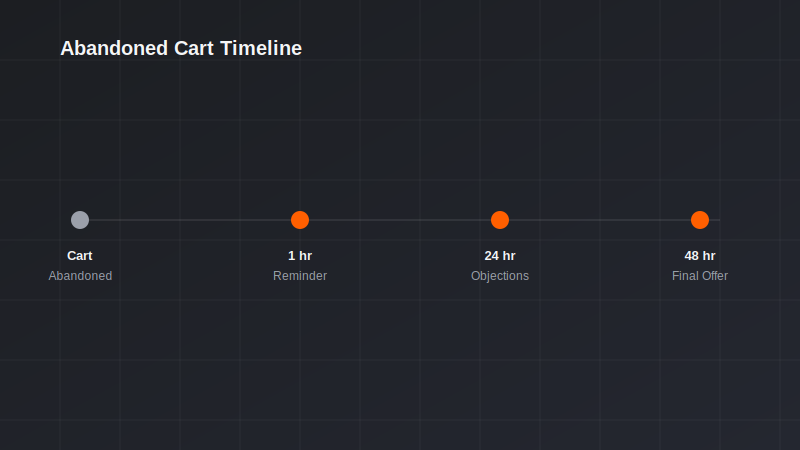
Triggered when someone adds a product to cart and leaves without completing checkout. This is the closest thing to guaranteed revenue in email marketing, since intent is already extremely high, they were one step from buying.
A 3-email sequence over 24 to 48 hours (a gentle reminder, a nudge addressing common objections like shipping cost, and a final incentive-driven email) recovers a meaningful share of otherwise-lost sales. Speed matters here more than almost any other flow: the first email should send within an hour of abandonment, not the next day.
Flow 3: Browse Abandonment
Triggered when someone views a product page (or several) without adding anything to cart. This flow gets skipped constantly, since it requires tracking browse behavior rather than just cart events, but it captures a genuinely different, earlier-intent audience than abandoned cart.
One or two emails referencing the specific products viewed, without being overly aggressive since intent here is lower than cart abandonment, typically performs well as a lightweight addition once the higher-priority flows are live.
Flow 4: Post-Purchase
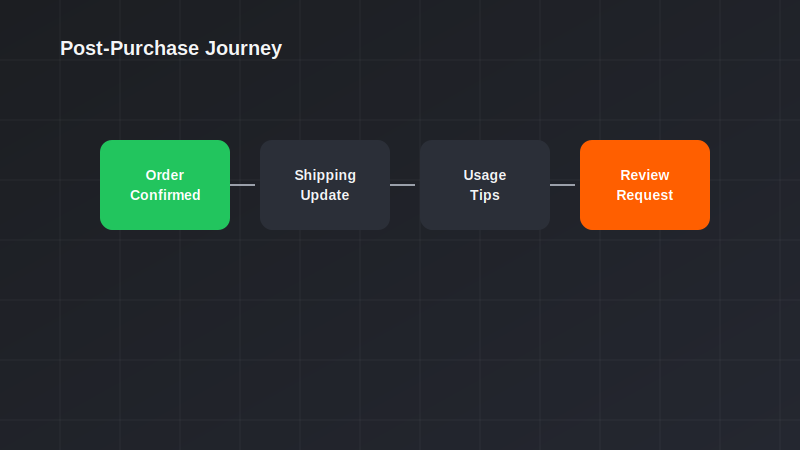
Triggered immediately after a purchase completes. Beyond the standard order confirmation, this flow should include shipping updates, a product education or usage email, and a review request timed to arrive after the product has likely been used, not the day it ships.
This flow does double duty: it reduces support inquiries by proactively answering common questions, and it’s the primary driver of the reviews that new customers rely on before their own first purchase.
Flow 5: Win-Back
Triggered when a previously active customer or subscriber goes quiet, typically 60 to 90 days without opening emails or making a purchase, depending on your typical purchase cycle. The goal is re-engagement before they’ve mentally checked out entirely, not a last-ditch effort right before unsubscribing them.
A 2 to 3 email sequence, often including a stronger incentive than other flows since the relationship needs rebuilding, either wins the customer back or cleanly identifies who to stop emailing, protecting your sender reputation from a stale, unengaged list segment.
What Order to Build Them In
Build Welcome and Abandoned Cart first, they have the highest intent, the fastest payback, and are typically the two highest-revenue flows per subscriber. Both should be live within the first two weeks of setting up email marketing seriously.
Post-Purchase follows next, since it starts affecting reviews and repeat purchase behavior from your very first sale. Browse Abandonment and Win-Back can follow once the first three are stable and generating consistent data, since they’re valuable but lower-priority additions to an already-working foundation.
FAQs
How much revenue do these flows typically generate?
Across the e-commerce accounts we manage, these five flows combined typically produce 25 to 35% of total email-attributed revenue, despite requiring no ongoing manual sending once built.
Which email platform should I use to build these?
Klaviyo is what we typically recommend for e-commerce specifically, due to its deep Shopify integration and behavior-based triggering, though ActiveCampaign and Brevo can also support these flows well.
How fast should the first abandoned cart email send?
Within an hour of abandonment performs meaningfully better than a next-day send, since purchase intent decays quickly once someone leaves your site.
Do I need all 5 flows before I start, or can I add them gradually?
Gradually is fine and often recommended. Start with Welcome and Abandoned Cart, get those performing well, then layer in the rest over the following weeks.
Should win-back emails offer a discount?
Often yes, since the goal is re-engagement with a relationship that’s already cooled. A stronger incentive than your standard flows is common here, balanced against your margins.
How do I know if my abandoned cart flow is working well?
Track recovered revenue as a percentage of total abandoned cart value. Benchmarks vary by industry, but a well-optimized flow typically recovers a meaningful double-digit percentage of otherwise-lost cart value.