
How to Launch Performance-Based Affiliate Deals in 2026

Key Takeaways
- Performance-based affiliate deals pay only on results, sales, leads, or another defined action, which makes them one of the lowest-risk channels a brand can test.
- The commission structure has to be generous enough to attract quality partners while still leaving healthy margin once the full cost of the sale is accounted for.
- Recruiting the right partners matters more than recruiting the most partners, a handful of engaged affiliates in the right niche outperforms a long inactive roster.
- Tracking has to be airtight before launch, disputed attribution is the single fastest way to lose trust with serious affiliate partners.
- 2026’s affiliate landscape leans heavily on content creators and niche publishers alongside traditional coupon and deal sites, and each type needs a different pitch.
What ‘Performance-Based’ Actually Means in an Affiliate Deal
A performance-based affiliate deal pays a partner only when a specific, defined action happens, a completed sale, a qualified lead, an app install, rather than paying for exposure, clicks, or impressions regardless of outcome. This is what separates affiliate marketing from most other paid channels: the brand isn’t paying for the possibility of a result, it’s paying for the result itself, which is exactly why it remains one of the most budget-efficient channels available when structured correctly.
That efficiency comes with a tradeoff worth naming upfront. Because affiliates only get paid on results, the best partners are selective about which programs they’ll promote, and a program with an unclear structure, a low commission relative to the category, or a bad tracking reputation will simply get ignored by the partners capable of driving real volume, no matter how good the product is.
It also means the program has to be genuinely worth an affiliate’s time relative to every other option competing for the same placement on their site or in their newsletter. Affiliates are, functionally, running their own small businesses, weighing which programs to feature based on conversion rate, payout reliability, and how easy the brand is to work with, so treating recruitment as a sales pitch rather than an afterthought materially changes which partners a program is able to attract.
Why Performance-Based Structures Fit 2026’s Environment So Well
Rising acquisition costs across paid social and search have pushed more brands toward channels where spend is directly tied to outcome, and affiliate marketing sits near the top of that list. Unlike a paid social campaign where budget gets spent whether or not it converts, an affiliate program’s cost scales exactly with results, which makes it an easier line item to defend internally, especially for finance teams scrutinizing every channel’s actual return.
The partner landscape has also shifted meaningfully. Traditional coupon and cashback sites are still relevant, but content creators, niche newsletter writers, and comparison-site publishers now make up a much larger share of high-performing affiliate traffic than they did a few years ago, and they typically expect a more collaborative relationship than a purely transactional coupon-site partnership.
Step 1: Decide What Action You’re Actually Paying For
Before setting a single commission rate, define the exact action that triggers payment, and be specific. ‘A sale’ is not specific enough once returns, cancellations, and partial refunds enter the picture. Most well-run programs pay on a completed and unreturned sale after a defined holding period, typically 30 to 45 days, which protects the brand from paying commission on an order that gets refunded a week later.
Lead-generation businesses need an even tighter definition: a form submission is not the same thing as a qualified lead, and paying affiliates on raw submissions without a qualification filter is one of the fastest ways to attract low-quality traffic that technically hits the metric but never converts into real revenue.
Step 2: Set a Commission Structure That Attracts Real Partners

| Model | How It Works | Best Fit |
|---|---|---|
| Flat CPA | Fixed dollar amount per qualifying action | Lead-gen businesses with a predictable deal value |
| Percentage of sale | Commission scales with order value | E-commerce with variable cart sizes |
| Tiered structure | Rate increases as an affiliate hits volume thresholds | Programs trying to reward and retain top performers |
| Hybrid (base + bonus) | Smaller base rate plus performance bonuses | Programs balancing predictability with upside |
Benchmark against the category before finalizing a number. A commission that’s meaningfully below what competitors are already paying rarely gets promoted by serious affiliates, since they have no shortage of other programs competing for the same placement. Running the math backward from full margin, accounting for product cost, fulfillment, and the affiliate network’s own platform fee, before settling on a rate, prevents the uncomfortable situation of a program that technically works but quietly erodes margin every month. Pairing the commission model with a clear attribution approach also helps settle internal debate about how much credit affiliate-driven sales should get when a customer also interacted with paid or email touchpoints along the way.
Step 3: Build the Tracking Infrastructure Before Recruiting Anyone
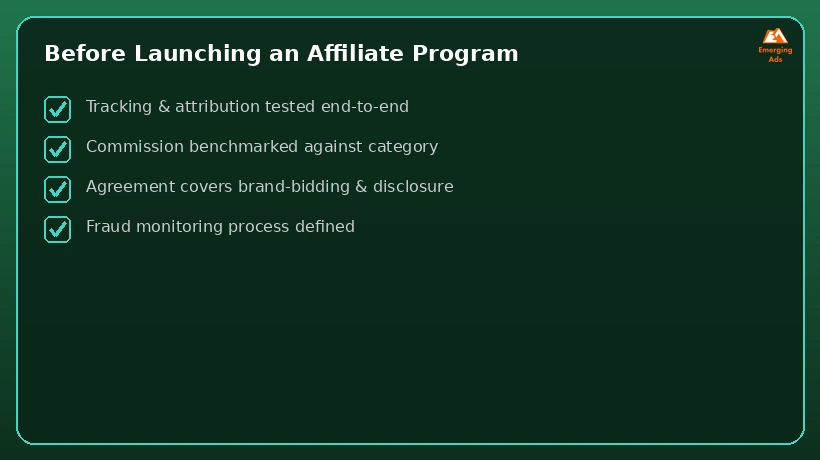
Tracking has to be reliable before a single affiliate is recruited, not fixed after disputes start rolling in. A properly configured setup includes accurate conversion tracking, a defined cookie or click-attribution window, and a clear process for handling cross-device conversions, since a growing share of purchase journeys now start on one device and finish on another.
Disputed attribution is the single fastest way to lose a good affiliate partner’s trust. If a partner sends real, documented traffic that isn’t credited correctly because of a tracking gap, that relationship rarely recovers, and word travels fast inside affiliate communities about programs with unreliable tracking. Investing in solid tracking infrastructure upfront is cheaper than the reputational damage of getting this wrong after launch.
Step 4: Recruit the Right Type of Partner for Your Category
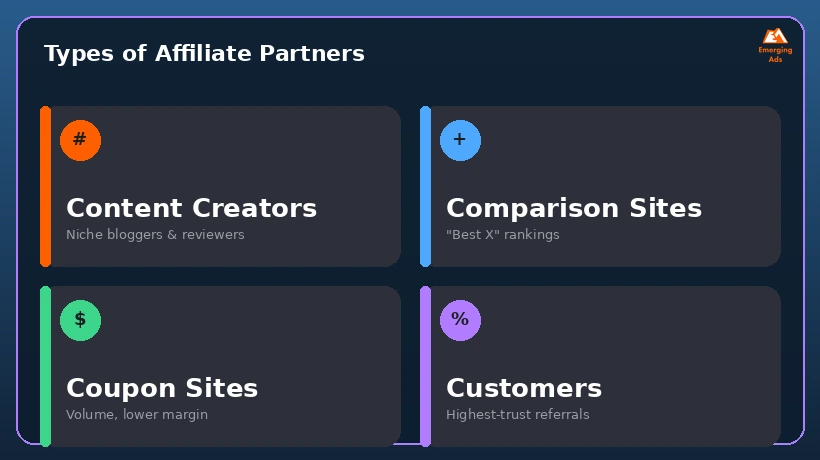
- Content creators and niche bloggers who already write about the product category, often the strongest source of genuinely qualified traffic
- Comparison and review sites that rank for ‘best X’ and ‘X vs Y’ queries relevant to the product
- Coupon and deal sites, still valuable for volume, though typically lower margin per conversion than content-driven traffic
- Existing customers with an audience, sometimes the highest-trust affiliate relationship a brand can build
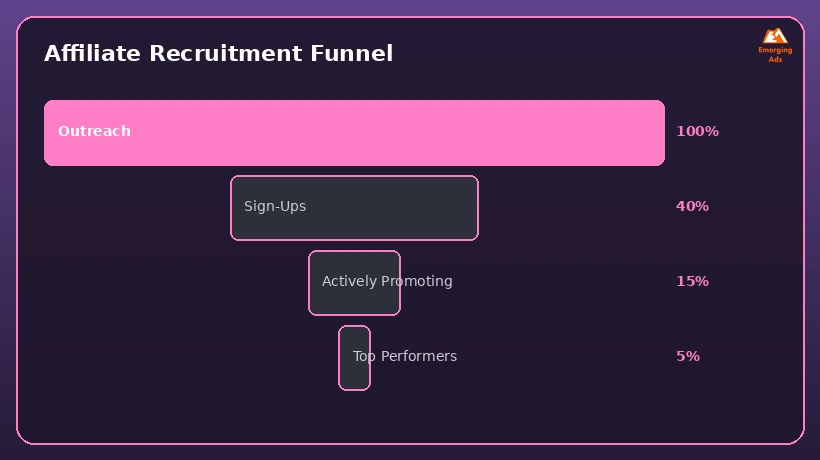
Recruiting the right handful of engaged affiliates beats recruiting a long roster of inactive ones every time. A program with 300 signed-up affiliates and 12 actually promoting is functionally a 12-affiliate program with a lot of unused overhead, so recruitment effort is better spent on direct, personalized outreach to a shorter list of genuinely relevant partners than on mass sign-up campaigns.
Step 5: Write an Affiliate Agreement That Protects Both Sides
A clear agreement covers the commission structure, the payment schedule, the attribution window, brand guidelines for how the product can and can’t be represented, and grounds for termination. Vague agreements create disputes down the line, particularly around edge cases like self-referrals, coupon-code misuse, or an affiliate bidding on the brand’s own name in paid search without permission, which undercuts the brand’s own paid search campaigns if left unaddressed.
Brand bidding restrictions deserve explicit attention in the agreement. Without a clear clause, some affiliates will bid on branded search terms, effectively competing with the brand’s own paid campaigns for the same click while collecting commission on a sale that likely would have happened anyway, which quietly inflates program cost without adding incremental value.
Managing Relationships After Launch
Launch is the easy part, ongoing management is where programs actually succeed or stall. Top-performing affiliates respond well to genuine relationship management, early access to new products, custom creative assets, occasional bonus incentives for hitting milestones, treated as partners rather than a set-and-forget line item in a spreadsheet.
Regular performance reviews matter too. A quarterly look at which partners are driving real, high-quality traffic versus which ones are technically active but contributing marginal volume helps focus recruitment and relationship-management effort where it actually pays off, rather than spreading attention evenly across a roster with very uneven real performance.
Communication cadence is worth planning deliberately rather than leaving to chance. A monthly newsletter to active affiliates covering new products, upcoming promotions, and any policy updates keeps the program visible without requiring one-on-one outreach to every partner, while top performers still warrant individual check-ins a few times a year to strengthen the relationship and surface any friction before it turns into an affiliate quietly deprioritizing the program in favor of a competitor’s.
Common Mistakes That Sink New Affiliate Programs
- Launching with unreliable tracking and losing partner trust in the first month before it can be fixed
- Setting commission rates without benchmarking the competitive category first
- Treating recruitment as a numbers game instead of prioritizing quality partners in the right niche
- No clear brand-bidding or coupon-misuse policy, leading to disputes and margin leakage later
- Going quiet after launch instead of actively managing and communicating with top affiliates
Payout Timing, Fraud Prevention, and Compliance
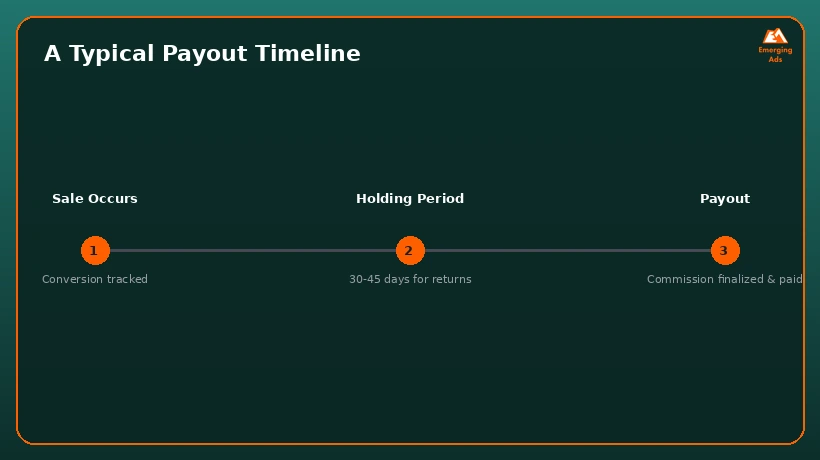
Payment timing deserves its own clear policy, separate from the attribution window. Most programs pay 30 to 45 days after the holding period closes, giving enough buffer for returns and chargebacks to clear before commission is finalized. Paying too early, before a return window has closed, exposes the brand to clawback disputes that damage trust just as much as a tracking error would, so it’s worth erring toward a slightly longer, clearly communicated payout schedule rather than a fast one that creates friction later. Communicating that schedule clearly in onboarding materials, rather than leaving affiliates to guess when they’ll actually get paid, also meaningfully reduces support tickets and frustration once the program is live and running at full scale and volume, and it’s worth revisiting that communication periodically as the program grows to make sure newer affiliates receive the same clarity the founding cohort did.
Fraud prevention is a real operational cost of running any performance-based program, not an edge case to handle reactively. Cookie stuffing, fake lead submissions, and self-referral abuse are the most common patterns, and most established affiliate networks include some baseline fraud detection, but relying entirely on the network’s default settings without periodic manual review of top-performing affiliates leaves real money on the table. A quick monthly check of unusually high-converting affiliates, comparing their traffic patterns against typical category benchmarks, catches most abuse before it compounds into a meaningful cost.
- Review top-earning affiliates monthly for conversion rates that look statistically implausible for the traffic source
- Watch for a spike in leads or sales concentrated in a narrow time window, a common signature of automated or fraudulent activity
- Confirm coupon codes issued to a single affiliate aren’t being shared publicly on unaffiliated deal-aggregator sites
- Keep a documented process for clawing back commission on confirmed fraudulent activity, communicated clearly in the affiliate agreement upfront
Disclosure compliance matters as well, particularly for affiliates publishing content aimed at a general consumer audience, since regulators in most major markets require clear disclosure of a paid or commission-based relationship. This isn’t just a legal formality, a brand whose affiliates are found publishing undisclosed paid content risks reputational damage that extends well beyond the specific piece of content in question, so including a disclosure requirement directly in the affiliate agreement, rather than assuming partners already know the rules, is worth the extra sentence and the occasional reminder in program updates.
How This Fits Alongside Paid and Organic Channels
Affiliate marketing works best as one channel inside a coordinated strategy, not an isolated experiment. Affiliates who write comparison or review content often work best when the brand’s own content and SEO presence is also strong, since a prospect who reads an affiliate review frequently cross-checks it against the brand’s own site before buying, and a thin or inconsistent brand presence undermines even a strong affiliate pitch. For deeper reading on how affiliate programs compare across e-commerce categories specifically, our related piece on affiliate marketing for e-commerce brands covers channel-specific considerations this guide doesn’t go deep on.
If an existing program is underperforming, or a brand is unsure whether affiliate marketing is even the right next channel to test given current budget and goals, a free audit is a useful way to see how the existing marketing mix is actually performing before committing budget to a new channel launch.
Frequently Asked Questions
What’s a reasonable commission rate to start an affiliate program with?
It depends heavily on category and margin, but benchmarking against direct competitors’ public affiliate program terms is the fastest way to land on a competitive starting number, then adjusting after a few months of real performance data.
How long should the attribution window be for an affiliate program?
Most programs use a 30-day cookie or click window, though considered-purchase categories with longer sales cycles sometimes extend to 60 or 90 days. Shorter windows reduce cost but can undercredit affiliates whose content influences a purchase made weeks later.
Do I need affiliate software or a network to launch a program?
Not strictly, but most brands find a dedicated affiliate platform or network worth the fee, since it handles tracking, payouts, and partner discovery in one place rather than building and maintaining that infrastructure independently.
How many affiliates does a new program need to succeed?
Far fewer than most people assume. A dozen genuinely engaged, relevant affiliates who actively promote consistently outperform hundreds of inactive sign-ups, so recruitment quality matters more than raw partner count.
Can performance-based affiliate marketing work for a service business, not just e-commerce?
Yes, service businesses commonly use it for lead generation, paying a flat CPA on a qualified lead or booked consultation rather than a percentage of an order, provided the lead-qualification definition is tight enough to avoid paying for low-quality submissions.
What’s the biggest risk in launching an affiliate program?
Unreliable tracking at launch. Even a strong commission structure and good partner recruitment can’t recover from an early reputation for disputed or inaccurate attribution, since that trust is difficult to rebuild once lost.
Should affiliates be allowed to bid on my brand name in Google Ads?
Most established programs restrict or prohibit this explicitly in the affiliate agreement, since brand-term bidding by affiliates typically just competes with the brand’s own paid search campaigns for clicks that would likely have converted organically anyway.
How is performance-based affiliate marketing different from influencer marketing?
Influencer marketing typically pays for content creation and exposure regardless of direct sales outcome, while performance-based affiliate marketing pays only when a defined action actually happens, though many programs today blend both, a smaller flat fee plus an affiliate commission on top.
Do affiliates need to disclose that they’re being paid?
In most major markets, yes, regulators generally require a clear disclosure whenever content includes a paid or commission-based relationship. Building this requirement directly into the affiliate agreement, rather than assuming partners already understand the rules, protects the brand from reputational fallout tied to an individual affiliate’s undisclosed content.
How often should an affiliate program’s commission structure be reviewed?
A quarterly review is a reasonable cadence for most programs, checking the rate against current competitor benchmarks, actual program margin, and which tiers or bonuses are genuinely motivating top affiliates versus sitting unused, then adjusting before the structure quietly becomes uncompetitive or unprofitable relative to what other brands in the category are actively offering. If you are weighing affiliate spend against other channels, our breakdown of what content marketing typically costs is a useful side-by-side reference.