
The short answer
The best donor acquisition strategy for nonprofits in 2026 combines a clear, specific story of impact, a strong website donation experience, search ads (including Google Ad Grants where eligible) to capture people already looking to help, social video to reach new supporters, email and SMS or WhatsApp to turn first-time donors into regular givers, and peer-to-peer fundraising and partnerships to extend reach. Measure cost per new donor, donor retention and lifetime value, not just one-off gifts.
Nonprofits face a difficult equation. Acquiring new donors is expensive, many first-time donors never give again, and supporters are bombarded with requests from many causes. Organizations that grow sustainably focus not only on finding new donors but on turning them into loyal, regular supporters.
Digital channels have made donor acquisition more measurable than ever. Charities can see which campaigns bring donors, what each donor costs and how many give again. This guide sets out a practical donor acquisition strategy for 2026, covering storytelling, channels, the donation experience, retention and measurement, for charities, foundations, NGOs and community organizations.
Start with a clear, specific story
People give to people and to outcomes they can picture. “Support our work” rarely moves anyone; “Your gift provides a month of clean water for a family in this village” does. Define the specific problem, who is affected, what your organization does and what difference a gift makes. Use real stories, with consent and dignity, photos and short videos of the people and places you serve, and clear explanations of impact. Transparency about how funds are used builds trust, which matters more than ever.
Make giving easy
Every extra field, slow load or confusing step on a donation page costs gifts. Small improvements here raise results across every channel at once.
Many donors abandon donation forms that are long, slow or confusing. A strong donation page loads quickly on mobile, shows a clear appeal and impact statement, offers suggested amounts tied to outcomes, makes monthly giving the default option or a prominent choice, accepts common payment methods including digital wallets, asks for only essential information, and explains tax relief options where relevant, such as Gift Aid in the UK. Test the form on a phone, and remove every unnecessary step. Our guide to conversion rate optimization explains how to test and improve pages.

Search ads and Google Ad Grants
People search for ways to help when they are moved by events, holidays or personal experiences. Search ads capture them at that moment. Eligible nonprofits can apply for Google Ad Grants, which provide in-kind search advertising, subject to Google’s program policies and account requirements. Paid search can complement grants for competitive terms. Campaigns should target specific causes, appeals and actions, lead to focused landing pages and track donations as conversions. Our guide to lowering Google Ads CPA covers efficient search campaigns.
Social media and video
Social platforms reach people who are not yet searching. Short videos showing real impact, beneficiary stories told with consent, behind-the-scenes looks at programs and urgent appeals perform well on Meta, Instagram, YouTube and TikTok where available. Lead generation campaigns can build email lists with petitions, pledges, quizzes or event signups before asking for donations. Meta also offers fundraising tools for eligible nonprofits. Retargeting brings back visitors who did not donate.

Email and messaging for donor journeys
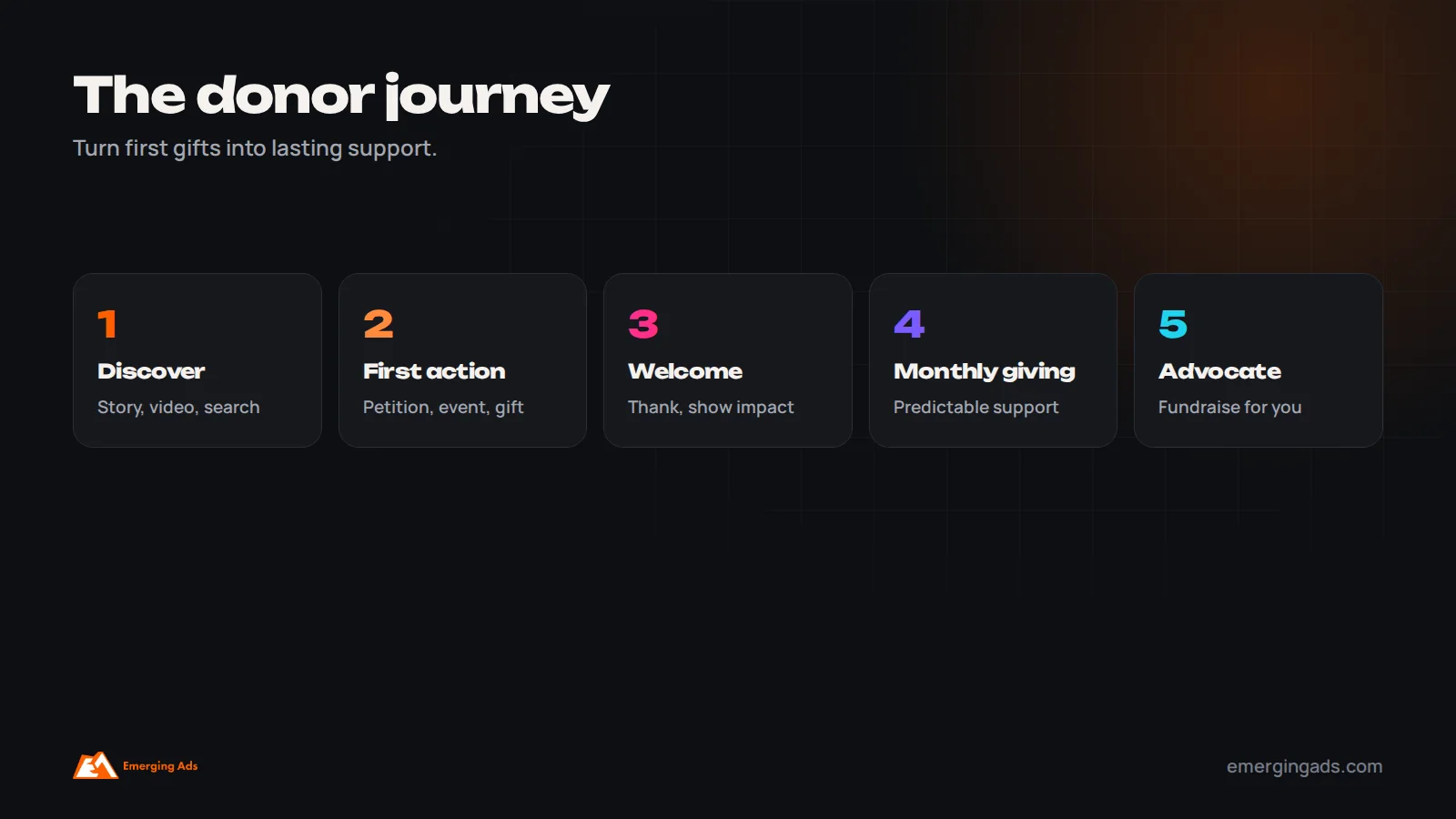
The first gift is the beginning, not the end. A strong welcome journey thanks donors immediately, shows them what their gift achieved, introduces the organization’s wider work, invites them into regular giving and keeps them informed. Regular updates with stories and results maintain engagement between appeals. In markets where WhatsApp is widely used, such as the Gulf and India, messaging can complement email for thank-yous, updates and appeals, with proper consent. Our guide to nurture automation explains how to structure journeys.
Building trust and transparency
Donors are increasingly careful about where their money goes. Trust is built by being open about finances, programs and results: publishing clear annual reports and accounts, showing what share of income goes to programs, explaining how outcomes are measured, displaying charity registration details and relevant accreditations, and sharing honest updates, including challenges. Reviews and ratings on charity evaluation platforms, where they exist, also influence donors. Every acquisition campaign should link to this information, because skeptical first-time donors often look for it before giving.
Building a supporter list before asking for money
Asking cold audiences for donations immediately can be expensive. Many nonprofits acquire supporters more efficiently by first inviting them to take a free action: signing a petition, pledging support for a cause, downloading a guide, taking a quiz, registering for an event or joining a challenge. These actions build an email or messaging list of people who care about the cause. A welcome journey then shares stories and impact, and asks for a first gift once trust is established. Track the cost per supporter and the share who go on to donate, so you can compare this approach with direct donation campaigns.
Data, consent and supporter privacy
Nonprofits hold sensitive data about supporters and beneficiaries, and donors expect it to be handled carefully. Collect clear consent for email, SMS and other communications, follow data protection and fundraising regulations in each country, respect communication preferences, avoid excessive asks, and protect beneficiary dignity and privacy in stories and images. Good data practices protect reputation and keep supporters engaged longer.
Corporate partnerships and matching gifts
Businesses can multiply donor acquisition through cause partnerships, employee giving programs, matched giving and sponsorship of events or campaigns. Matching gift offers, where a company doubles donations up to a limit, often increase response because donors feel their gift goes further. Choose partners whose values fit the organization, agree clear terms on how the brand and cause are presented, and report back on results to keep partnerships going.
Advice for smaller nonprofits
Small organizations can grow donors without large budgets by focusing on what they do well: authentic local stories, close community relationships and personal thank-yous. Apply for Google Ad Grants if eligible, make the donation page fast and simple, build an email list from events and volunteers, encourage supporters to run peer-to-peer fundraisers, and thank every donor personally. Personal attention often produces higher retention than larger organizations achieve.
Storytelling that respects dignity
Powerful stories drive giving, but how they are told matters. The most effective and ethical nonprofit storytelling presents people as individuals with agency rather than objects of pity, obtains informed consent for photos, videos and personal details, avoids images that exploit suffering, explains the root problem and the solution together, and shows real outcomes rather than only needs. Let beneficiaries speak in their own words where possible, and update supporters on what happened next. Donors respond to hope and evidence of change as well as urgency, and organizations known for respectful storytelling build deeper, longer-lasting support.
Video that moves supporters
Short video is one of the most effective formats for donor acquisition. A good fundraising video shows a specific person or community, explains a clear problem and what the organization does about it, shows the change a gift creates, and ends with a simple call to action. Vertical videos under a minute work well on social platforms, while longer documentary-style pieces suit YouTube and the website. Footage does not need to be polished; authentic field footage from staff and partners often feels more credible than studio production. Caption every video, since many people watch without sound.
Getting the most from Google Ad Grants
Google Ad Grants can provide a meaningful volume of search visibility for eligible nonprofits, but many organizations use only a fraction of the value. Accounts must meet Google’s program requirements, such as relevant keywords, account structure and conversion tracking, to stay compliant. Effective grant accounts target a wide range of searches related to the cause, not just donations: information about the issue, volunteering, services offered, events and advocacy. Each campaign should lead to a relevant page with a clear action, such as signing up, volunteering or donating, and conversions should be tracked so the account can optimize. Many organizations combine grants with a small paid search budget for highly competitive donation keywords that grant accounts struggle to win.
The first 90 days after a first gift
The period immediately after a first donation largely determines whether a donor gives again. A strong first-90-days journey includes an immediate, warm thank-you that confirms the gift; a short welcome message within a few days explaining who the organization is and what happens next; an impact update within weeks showing what gifts like theirs achieve; an invitation to engage in a non-financial way, such as following updates, attending an event or volunteering; and only then a carefully timed invitation to monthly giving or a second gift. Organizations that implement journeys like this typically see noticeably better second-gift rates.
Fundraising in different markets
Giving culture and regulation vary by country. In the UK, tax relief through Gift Aid, strong fundraising regulation and well-established peer-to-peer events shape strategy. In the US, tax-deductible giving, year-end campaigns and Giving Tuesday dominate, with major donor programs alongside digital acquisition. In the Gulf, Ramadan and Zakat drive the largest giving periods, Arabic content and trusted institutional relationships matter, and charities must follow local fundraising rules and permits. In India, digital payments have made small online donations easier, and corporate social responsibility partnerships are significant. Adapt messaging, timing, payment options and compliance to each market.
Regular giving: the foundation of sustainability
For most nonprofits, growing monthly giving is the single most valuable outcome of any donor acquisition program.
Monthly donors provide predictable income and usually give far more over time than one-off donors. Promote monthly giving prominently on donation pages, ask one-off donors to upgrade after a positive experience, explain the specific impact of ongoing support, and thank monthly donors regularly. Retention matters enormously: a small improvement in how many donors stay can increase lifetime value more than finding new ones.

Peer-to-peer and community fundraising
Supporters can reach people you cannot. Peer-to-peer campaigns, such as sponsored challenges, birthday fundraisers, events and team fundraising, let supporters ask their own networks. Provide easy fundraising pages, ready-made social posts and stories, and encouragement throughout. Partnerships with businesses, schools, faith groups and community organizations extend reach further.
Seasonal giving moments
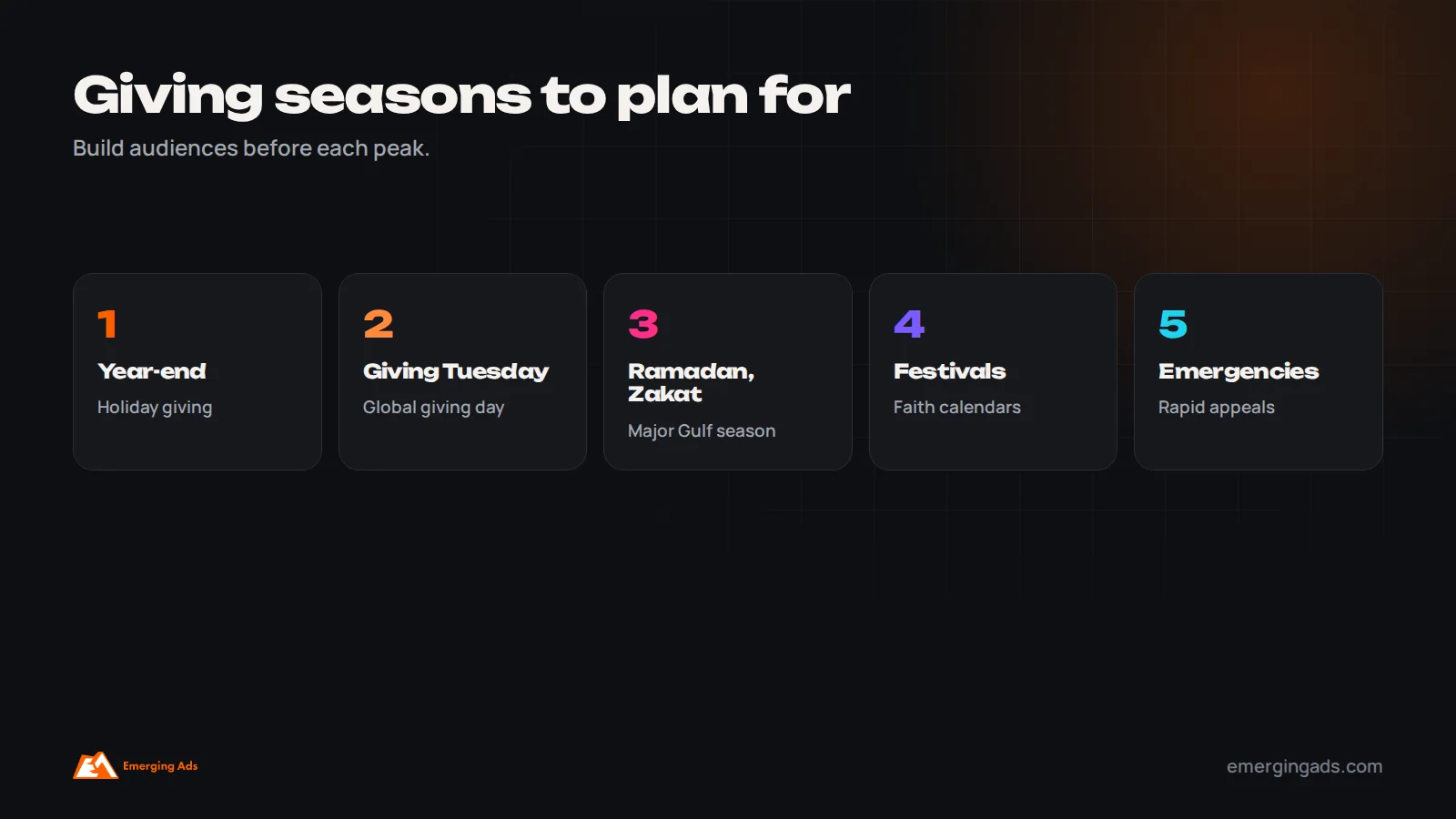
Giving peaks at certain times: year-end and holiday seasons, Giving Tuesday, Ramadan and Zakat in Muslim communities, religious festivals and emergencies. Plan campaigns and budgets around these moments, build audiences beforehand and prepare stories and matching gift offers in advance. Our guide to Ramadan marketing covers planning for the most important giving season in the Gulf.
Setting a donor acquisition budget
Donor acquisition often costs more than the first gift brings in, which is normal and acceptable when donors are retained. Set budgets based on lifetime value rather than first gifts. Estimate average first gift, the share of donors who give again or convert to monthly giving, average monthly gift and typical retention. From these, calculate the lifetime value of a new donor and the acquisition cost you can sustain, often accepting a payback period of a year or more for monthly donors. Then allocate budget across channels, test, and shift spend toward campaigns that bring donors who stay. Boards and finance teams may need help understanding this logic, so present acquisition as an investment with a measured return over time.
Campaign landing pages
Each major appeal deserves its own landing page rather than a generic donate page. Effective appeal pages lead with a specific story and need, show a clear photo or short video, explain exactly what different gift amounts achieve, include proof of impact and trust signals, and keep the donation form on the same page where possible. Matching gift offers, progress bars toward a goal and deadlines for emergency appeals can increase response when genuine. Test headlines, images, suggested amounts and the default between one-off and monthly giving, and measure conversion and average gift.
Retargeting and audience building
Most people who visit a nonprofit website or watch a video do not give immediately. Retargeting keeps the cause in front of them with follow-up stories, impact updates and gentle asks. Build audiences from website visitors, video viewers, social engagers and email subscribers, and show each group content suited to where they are: inspiration and stories for new audiences, specific appeals for engaged visitors, and monthly giving invitations for one-off donors. Exclude recent donors from acquisition ads to avoid wasting budget and annoying supporters.
Volunteers and events as acquisition channels
Volunteers and event participants often become some of the most loyal donors, because they have experienced the organization directly. Promote volunteering opportunities, community events, charity runs and challenges as entry points, capture participants’ contact details with consent, and include them in welcome journeys that share impact and invite financial support at the right time. Events also create stories, photos and video for wider campaigns.
An example donor acquisition program
Consider a mid-sized charity providing education programs for children. It rewrites its donation page with a clear impact statement, suggested amounts tied to outcomes such as books or a term of tutoring, and a prominent monthly option, and makes it fast on mobile. It restructures its Google Ad Grants account around searches about education inequality, volunteering and supporting children’s education, with conversions tracked. It runs short social videos of students and teachers, with consent, inviting viewers to sign a pledge, then shares stories by email before asking for a first gift. Every new donor receives a thank-you within minutes, a welcome message from a program manager and an impact update within a month, followed by a monthly giving invitation. Ahead of year-end and Giving Tuesday, it secures a corporate matching gift. It tracks cost per new donor, monthly conversion and twelve-month retention, and shifts budget toward the campaigns that bring donors who stay.
Identifying future major donors
Digital acquisition usually brings smaller gifts, but some of those donors have capacity and interest to give much more over time. Watch for signals such as larger-than-average first gifts, repeat giving, event attendance, volunteering and personal engagement with updates. Invite promising supporters to deeper experiences, such as project visits, briefings with program leaders or exclusive updates, and introduce them to major gift or legacy giving conversations when the relationship is ready. Connecting digital acquisition with relationship fundraising lets the organization grow both donor numbers and the value of its strongest relationships.
AI search and how donors research causes
Potential donors increasingly ask AI assistants which charities to support for a cause, how effective an organization is, or how donations are used. These answers draw on charity websites, annual reports, evaluator ratings, news coverage and reviews. Clear impact reporting, transparent financial information, consistent descriptions of programs across the web and credible third-party coverage all improve the chances of being recommended and described accurately. Our guide to ChatGPT SEO explains what helps.
What good fundraising reporting looks like
Useful monthly reports for donor acquisition show spend, new donors and cost per new donor by channel and campaign; average first gift; monthly giving conversion; donation page conversion rate; early retention and second-gift rates; supporter list growth from non-financial actions; and lessons learned. Quarterly and annual reviews should add retention and lifetime value by acquisition source, so the organization invests in channels that bring the most valuable, loyal supporters rather than those with the cheapest first gift.
A quick donor acquisition checklist
Check that appeals describe a specific impact, that the donation page is fast, simple and mobile-friendly with a prominent monthly option, that donations are tracked by source, that Google Ad Grants are applied for and used well if eligible, that social video tells real stories with consent, that every donor receives a fast thank-you and a welcome journey, that monthly giving is actively promoted, that seasonal campaigns are planned ahead, and that you measure retention and lifetime value as well as first gifts.
Testing appeals and offers
Small changes in appeals can make large differences in response. Useful tests include the main story or beneficiary featured, the headline, suggested gift amounts and the default amount, whether monthly or one-off giving is selected by default, the use of matching gifts or deadlines, images versus video, and the length of the donation form. Test one element at a time with enough traffic to see a clear result, and measure not just conversion rate but average gift and later retention, since an appeal that brings many small one-off gifts may be worth less than one that brings fewer, more committed donors.
SMS, WhatsApp and text giving
Text-based channels can work well for urgent appeals, event reminders, thank-yous and quick updates. In some countries, text-to-donate services let supporters give a small amount by sending a keyword. In the Gulf and India, WhatsApp is often the preferred channel for updates and appeals, especially during Ramadan and emergencies. Use these channels sparingly and with clear consent, since they feel personal and overuse quickly leads to opt-outs. Keep messages short, specific and linked to impact.
Working with a fundraising or marketing partner
If you work with an agency, choose one with nonprofit experience, an understanding of fundraising regulations and Google Ad Grants requirements, respect for ethical storytelling, and reporting focused on donor retention and lifetime value rather than only first gifts. Ask for examples of campaigns that grew monthly giving or improved retention, and make sure your organization owns all accounts and supporter data.
Legacy and planned giving
Some of the most significant gifts nonprofits receive come through wills and planned giving. Digital acquisition can start these relationships years in advance. Supporters who have given regularly, volunteered or attended events are the most likely to consider a gift in their will. Offer clear, sensitive information about legacy giving on the website, mention it occasionally in supporter communications, and train staff to respond thoughtfully to enquiries. While results take years, legacy giving can become one of the most valuable outcomes of a strong donor acquisition and retention program.
Emergency appeals
Emergencies, such as natural disasters, conflicts and health crises, bring sudden surges of public generosity. Organizations that respond well have plans ready: pre-approved messaging templates, a fast-loading emergency donation page, ad accounts and audiences ready to launch, clear information about how funds will be used, and capacity to thank and update new donors quickly. Emergency donors often give once, so a thoughtful welcome journey that shows impact and introduces the wider work is essential for turning some of them into long-term supporters.
Aligning fundraising, communications and programs
Donor acquisition works best when fundraising, communications and program teams work together. Program staff provide the stories, data and photos that make appeals credible; communications teams shape them into compelling content; fundraising teams plan campaigns, journeys and measurement. Regular coordination, such as a shared content calendar, a simple process for collecting stories with consent and monthly reviews of results, prevents duplicated asks, keeps messages consistent and ensures donors hear about real impact.
Measuring donor acquisition
Judge acquisition by the long-term value of the donors it brings in, not just by the size of the first gift.
- Cost per new donor by channel and campaign.
- Average first gift and monthly giving conversion.
- Donor retention after one year.
- Donor lifetime value.
- Donation page conversion rate.
- Return on fundraising investment over time, not just at first gift.

Common mistakes
These are the patterns we see most often in fundraising programs that struggle to grow.
- Vague appeals without specific impact.
- Long, slow donation forms.
- Judging campaigns only on first gift value.
- No welcome journey or thank-you.
- Neglecting monthly giving.
- Asking without reporting back on impact.

Frequently asked questions
What is the best way to acquire new donors?
Combine a clear impact story, an easy donation page, search ads including Ad Grants where eligible, social video, peer-to-peer fundraising and strong welcome journeys that turn first-time donors into regular supporters.
What are Google Ad Grants?
A Google program offering in-kind search advertising to eligible nonprofits, subject to policies and account requirements.
How do I improve donor retention?
Thank donors quickly, show the impact of their gift, keep them informed, invite them into monthly giving and ask thoughtfully.
Why is monthly giving important?
Monthly donors provide predictable income and usually give much more over time than one-off donors.
Which social platforms work for nonprofits?
Meta, Instagram, YouTube and TikTok where available, using short videos of real impact and lead generation before donation asks.
How should nonprofits measure fundraising campaigns?
By cost per new donor, first gift, monthly conversion, retention, lifetime value and long-term return, not first gift alone.
When do donors give most?
Around year-end, Giving Tuesday, religious seasons such as Ramadan, and emergencies, so plan campaigns around these moments.
What makes a good donation page?
Fast mobile loading, clear impact, suggested amounts, prominent monthly giving, simple forms and common payment options.