
The short answer
A strong Ramadan marketing strategy for the UAE and Saudi Arabia starts planning months ahead, follows how daily routines shift (later evenings, activity after iftar and late into the night), and adapts to the phases of the month: preparation, the first weeks, the last ten nights and Eid. Use culturally respectful, Arabic-first creative focused on family, generosity, reflection and togetherness, schedule ads and messages for evening and late-night peaks, plan budgets for higher ad costs, and make sure delivery, stock and customer service can handle demand before Eid. Ramadan 2027 is expected to begin in early to mid February, subject to moon sighting.
Ramadan is the most important season of the year for many brands in the UAE and Saudi Arabia. Daily routines change, media consumption rises, family and social gatherings increase, and spending patterns shift across food, fashion, gifts, electronics, travel and charity. For brands that understand the season, it is a period of meaningful connection and strong results. For brands that treat it as just another sale, it can be expensive and, at worst, feel culturally tone-deaf.
We plan Ramadan campaigns for brands across the Gulf every year, including localized Arabic campaigns on Meta, Snapchat, TikTok and Google. This guide covers how behavior changes during the month, how to plan by phase, the channels and creative that work, timing, offers, operations and the mistakes to avoid.

How consumer behavior changes during Ramadan
During Ramadan, people fast from dawn to sunset, and daily life reorganizes around suhoor before dawn and iftar at sunset. Working hours are often shorter. Evenings and late nights become the most social and active times of day, with family gatherings, prayers, visits and shopping. Many people spend more time on their phones, watching series, browsing social media and shopping online, particularly after iftar and late into the night.
Spending also shifts. Food and grocery purchases rise, especially for iftar and suhoor. Restaurants and delivery services see different peaks. Gifting grows as Eid approaches, with fashion, beauty, fragrances, electronics, toys and sweets in high demand. Charitable giving increases significantly. Travel and home purchases often rise around Eid.
Values matter too. Ramadan emphasizes reflection, generosity, family, community and gratitude. Marketing that respects and reflects those values tends to resonate; marketing that ignores them can feel out of place.
Start planning early
Because Ramadan moves about eleven days earlier each year in the Gregorian calendar, its dates change annually. Ramadan 2027 is expected to start in early to mid February 2027, with Eid al-Fitr about a month later, but exact dates depend on moon sighting. Build plans with some flexibility around start and end dates.
A practical timeline:
- Three to four months before: set objectives, budgets and key offers; brief creative; plan stock and logistics.
- Six to eight weeks before: produce creative, build audiences, test messages and finalize partnerships with creators.
- Two to four weeks before: launch pre-Ramadan campaigns, warm up email and WhatsApp audiences, and prepare customer service.
- During Ramadan: run phased campaigns, monitor daily and adjust timing and budgets.
- After Eid: review results, retain new customers and record lessons for next year.

Plan by phase, not as one campaign
Pre-Ramadan
Shoppers prepare: groceries, home items, new clothes, decorations and planning for gatherings. Brands can help with preparation guides, early offers and gift planning. This is also the time to build awareness before costs peak.
The first weeks
Routines settle. Content around iftar, family time, recipes, reflection, community and entertainment performs well. Food, grocery and delivery brands are especially active.
The last ten nights
Spiritual focus intensifies, charitable giving peaks, and Eid shopping accelerates. Gifting, fashion, beauty and electronics campaigns ramp up, along with delivery deadlines for Eid.
Eid al-Fitr
A time of celebration, gifts, new clothes, visits and travel. Campaigns shift to celebration, gifting, family experiences and travel, followed by post-Eid offers.
Content ideas for each phase
Pre-Ramadan: preparation checklists, home and kitchen essentials, early gift planning, Ramadan calendars and schedules, and “getting ready” stories from customers or staff. This is a good time for useful, shareable content that builds familiarity before competition intensifies.
The first weeks: iftar recipes and hosting ideas, family moments, behind-the-scenes content from your team, community stories, daily or weekly series that give people a reason to come back, and practical tips such as healthy eating, sleep or exercise during fasting.
The last ten nights: generosity and charity stories, reflective content, Eid gift guides by recipient and budget, outfit ideas, delivery deadline reminders and last-chance gifting offers.
Eid: celebratory content, greetings from the brand and team, family experiences, travel and outing ideas, and thank-you messages to customers. After Eid, shift to post-season offers and helpful content for new customers.
Series work particularly well during Ramadan because people are in a rhythm of daily viewing. A short daily recipe, a nightly tip, or a weekly story from your community gives audiences a reason to follow along through the month.
Ramadan for B2B and service businesses
Ramadan is not only a consumer season. B2B companies and service businesses in the Gulf also need to adapt. Working hours are often shorter, decision-making can slow, and meetings shift to different times of day. Plan major launches, campaigns and sales pushes around these changes rather than against them. Use the month for relationship-building rather than hard selling: Ramadan greetings to clients, helpful content, invitations to suhoor or iftar gatherings where appropriate, and thoughtful corporate gifting before Eid. Lead generation campaigns can continue, but expect longer response times and adjust follow-up expectations. Many B2B companies see activity pick up again strongly after Eid, so plan campaigns that build pipeline for that period.
Channels that matter in the UAE and Saudi Arabia
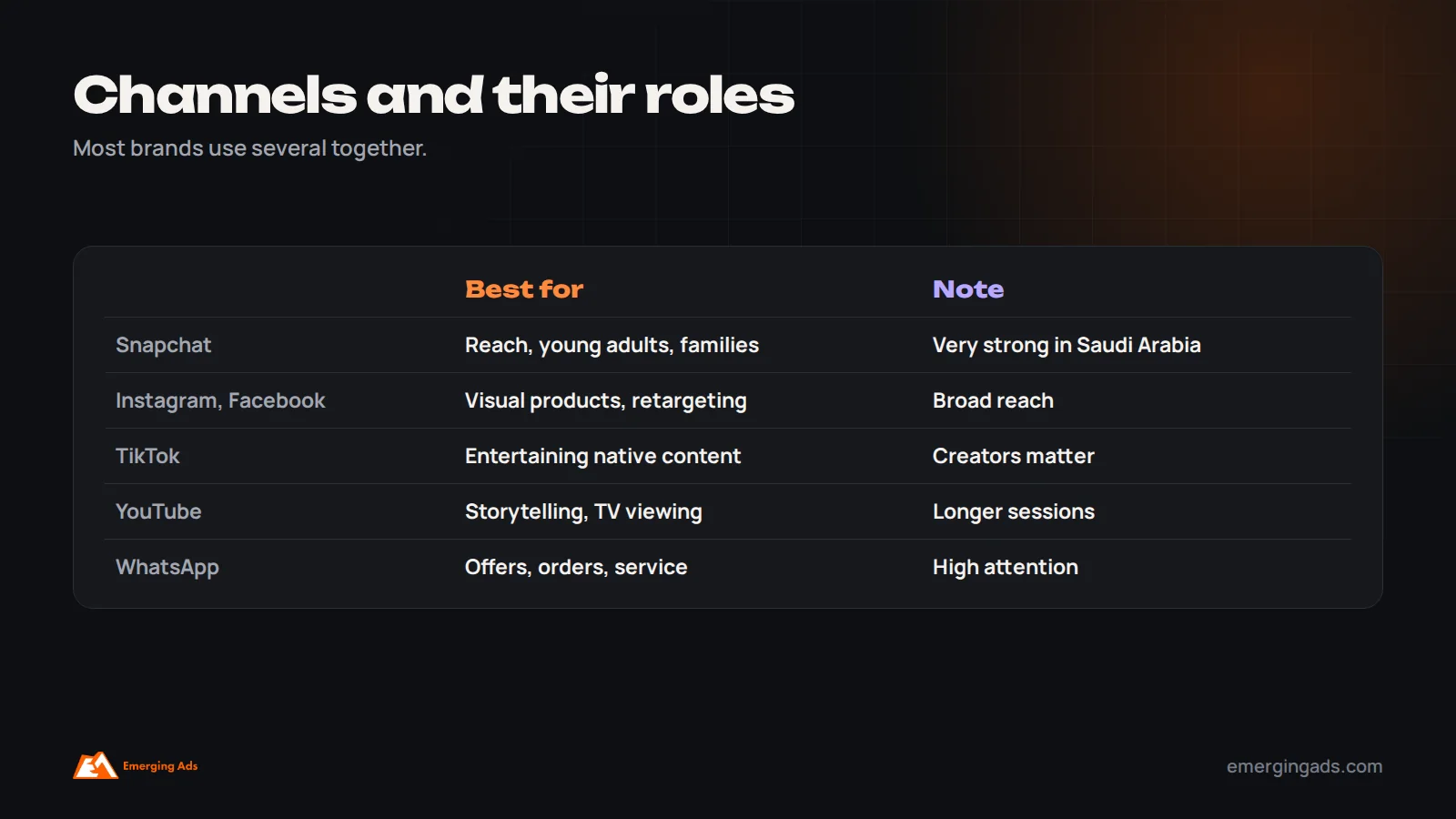
- Snapchat: extremely widely used in Saudi Arabia and across the Gulf, strong for reach among young adults and families. See our guide to Snapchat Story Ads.
- Instagram and Facebook: broad reach, strong for visual products, gifting and retargeting.
- TikTok: high engagement with entertaining, native content and creators.
- YouTube: long viewing sessions during Ramadan, including on TV screens, suited to storytelling and series.
- Google Search and Shopping: capture intent as people search for gifts, recipes, offers and services.
- WhatsApp: personal, high-attention messaging for offers, order updates and customer service. See our guide to WhatsApp broadcast campaigns.
- Email: useful for loyal customers, gift guides and Eid offers.
Creative that resonates
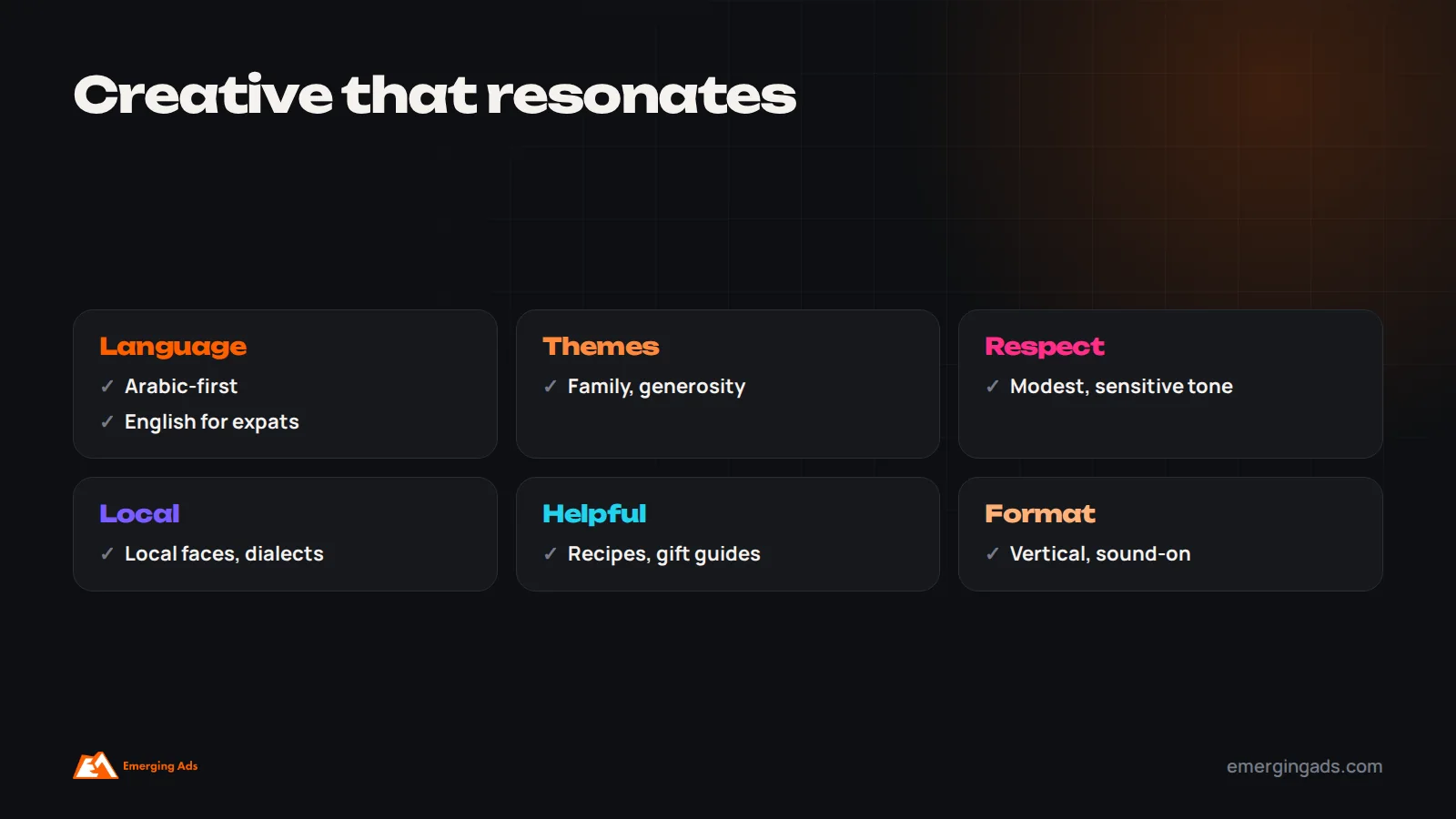
- Arabic-first: create in Arabic rather than translating English campaigns, with English versions for expatriate audiences in the UAE.
- Family and togetherness: gatherings, shared meals and generosity are central themes.
- Respectful imagery: modest styling, appropriate music choices and sensitivity to the spiritual nature of the month.
- Local faces and places: local talent, settings and dialects feel more authentic than generic regional content.
- Helpful content: recipes, gift guides, hosting tips, schedules and reminders.
- Storytelling: short series and emotional stories perform well during a month of increased viewing.
- Native formats: vertical, sound-on video for Snapchat, TikTok and Reels.
Avoid showing people eating or drinking during daylight in ways that could feel insensitive, and avoid humor that might clash with the spiritual tone of the month.
Timing: when to run ads and send messages
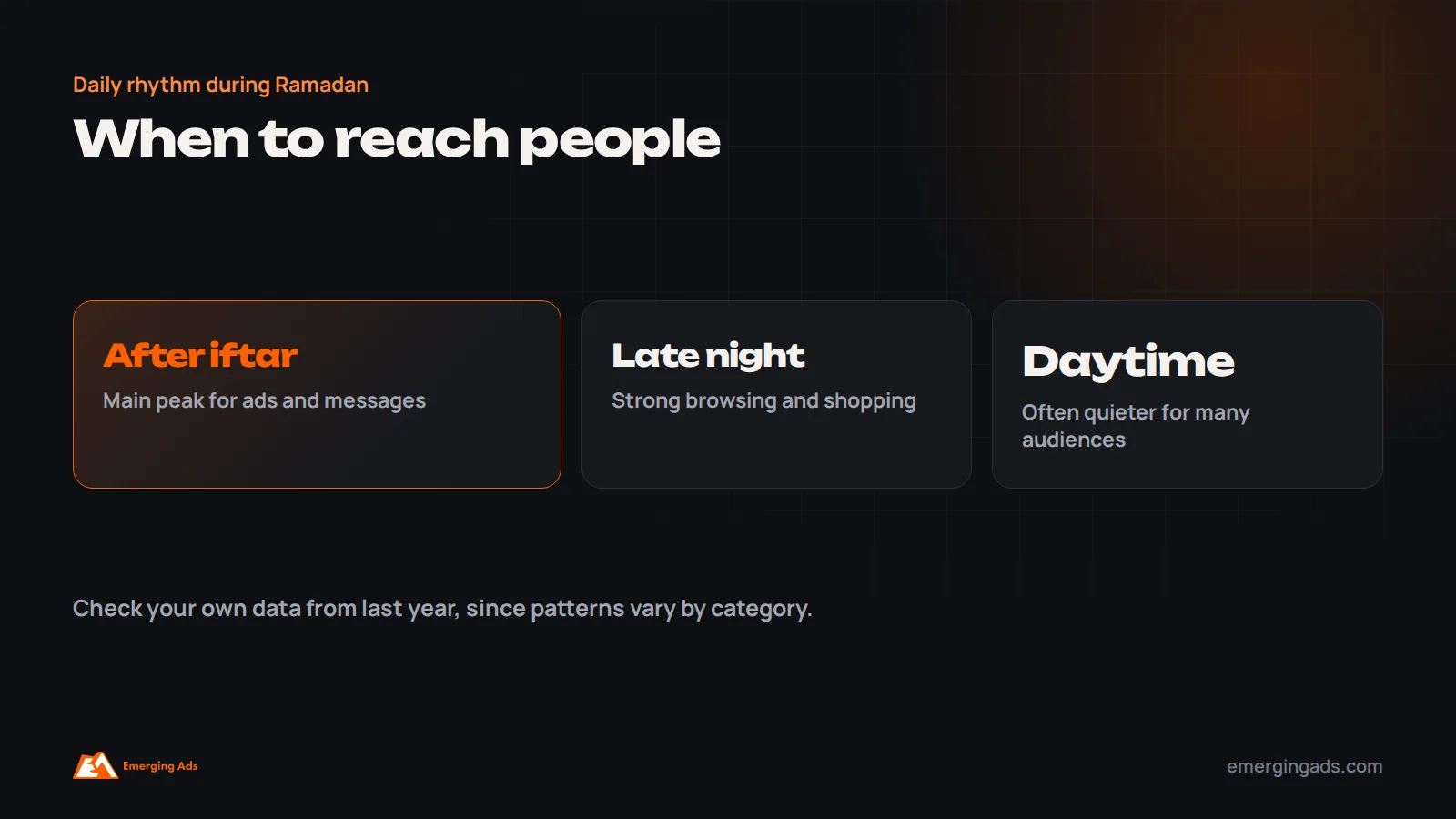
Online activity during Ramadan typically shifts later. Peaks often occur after iftar and continue late into the night, with some activity around suhoor. Daytime engagement can be lower for many audiences. Practical implications:
- Use ad scheduling or budget rules to weight spend towards evenings and late nights where your data supports it.
- Schedule emails, WhatsApp messages and social posts for after iftar rather than morning.
- Staff customer service and live chat for evening and late-night peaks.
- Check your own data from last Ramadan, since patterns vary by audience and category.
Budgets and advertising costs
Ad costs often rise during Ramadan as many brands compete for attention, particularly in the last ten nights and before Eid. Plan budgets accordingly, front-load awareness and audience building before Ramadan when costs are lower, and keep budget in reserve for the peak gifting period. Judge campaigns on profit and new customer value, not just revenue. Our guide to performance marketing covers channel budgeting more broadly.
Offers and promotions
- Ramadan bundles: iftar boxes, family packs, hosting sets and gift bundles.
- Eid gifting: gift guides, gift wrapping, gift cards and delivery guarantees before Eid.
- Charity tie-ins: donating a share of sales to recognized causes, done transparently.
- Loyalty rewards: extra points or early access for existing customers.
- Late-night offers: time-limited deals aligned with evening peaks.
Keep offers clear and honest, and avoid aggressive discounting that clashes with the tone of the month.
Operations: stock, delivery and service
Marketing only works if operations keep up. Forecast demand for Ramadan and Eid bestsellers early, confirm courier capacity and delivery cut-off dates before Eid, communicate those dates clearly in campaigns, adjust customer service hours to evening peaks, and prepare for cash on delivery confirmation where relevant. Many brands lose Eid sales simply because delivery promises could not be met.
Category notes
Food, grocery and restaurants: iftar and suhoor offers, delivery timing, family meals and recipes.
Fashion and beauty: Eid outfits, fragrances, gift sets, modest fashion and styling content.
Electronics: gifting, family entertainment and Eid offers.
Fitness and wellness: adjusted schedules, late-night classes and healthy eating during Ramadan. Our T Sport case study shows how localized Arabic campaigns for a Riyadh fitness brand delivered a 4.4x return on ad spend and 38% lower cost per lead.
Travel and hospitality: Eid holidays and staycations.
Charities: peak giving season, with transparent impact stories.
Differences between the UAE and Saudi Arabia
The two markets share Ramadan traditions but differ in important ways. Saudi Arabia has a very large, young, predominantly Saudi population, with Snapchat and TikTok especially central to daily media use, and campaigns usually work best fully in Arabic with Saudi dialect, local talent and local settings. The UAE has a highly diverse population, with large expatriate communities alongside Emiratis, so campaigns often run in both Arabic and English, sometimes with additional languages for specific communities, and messaging needs to respect the significance of Ramadan for Muslim residents while remaining inclusive. Shopping patterns, delivery expectations and popular platforms also vary between cities. Plan separate creative and targeting for each market rather than one regional campaign.
Working with creators during Ramadan
Creators and influencers are central to Ramadan marketing in the Gulf, because audiences spend more time watching their content during the month. Choose creators whose values and content style fit the season, brief them early because popular creators book up well before Ramadan, and give them room to integrate your brand naturally into their Ramadan routines, such as iftar preparations, family gatherings or Eid shopping. Agree usage rights so their content can also run as ads. Make sure sponsored content is disclosed in line with local regulations, which in the UAE and Saudi Arabia include requirements for influencer advertising. Our guide to influencer collaborations covers briefs and agreements.
Purpose and charitable campaigns
Generosity is central to Ramadan, and many brands run charitable initiatives during the month, such as donating meals, supporting community iftars or contributing a share of sales to recognized causes. These can build genuine goodwill when they are sincere, transparent and connected to the brand. Partner with established, recognized charities, explain clearly what will be donated and how, report back on impact after the season, and avoid making the charitable message a thin cover for promotion. Audiences quickly recognize the difference between genuine contribution and opportunistic marketing.
Ramadan for ecommerce brands
For online stores, Ramadan often brings some of the year’s highest traffic, especially late at night and in the run-up to Eid. Prepare the site for peak evening load, make Arabic versions of key pages and checkout fully functional, show delivery dates for Eid prominently on product pages, and make gifting easy with gift guides, gift wrapping and messages. Make sure abandoned cart reminders, order updates and cash on delivery confirmations are ready on WhatsApp and email, timed for evening activity. Our guide to WhatsApp for ecommerce covers the messaging side.
Search behavior during Ramadan
Search patterns shift during the month as well. Searches for recipes, iftar and suhoor ideas, prayer times, Ramadan schedules, gift ideas, Eid outfits, restaurants, delivery and charity rise. Prepare content and landing pages that match these searches in Arabic and English, update Google Business Profiles with adjusted Ramadan opening hours, and plan search campaigns around gift and Eid keywords as the month progresses. Search often captures demand that social media creates, so the two should be planned together.
Measuring Ramadan campaigns
Compare results with last year’s Ramadan rather than the previous month, since behavior is so different. Track performance by phase, by time of day and by channel. Look at new customer acquisition and post-Eid retention, not only revenue during the month. Note which creative themes and offers performed best, and record operational issues, such as stock-outs or delivery delays, for next year.

After Eid: keeping the customers you won
Ramadan and Eid bring many first-time customers, especially through gifting and seasonal offers. The weeks after Eid decide how many of them come back. Send thank-you messages and helpful post-purchase content, ask for reviews, recommend complementary products, and invite new customers into your email or WhatsApp program with a clear reason to stay subscribed. Exclude recent buyers from acquisition campaigns to avoid wasting budget, and plan a gentle win-back message a few weeks later. Brands that treat Ramadan as the start of a relationship, rather than a one-off sales spike, get far more value from the season. Our guide to ecommerce email flows covers the automations that help.
Rules and sensitivities to respect
Advertising in the UAE and Saudi Arabia is subject to local regulations covering content, claims, influencer disclosure and certain product categories. During Ramadan, sensitivity is especially important: avoid imagery or messages that could be seen as disrespectful to the spiritual nature of the month, be careful with music choices and humor, avoid showing eating or drinking during fasting hours in public settings, and make sure any charitable claims are accurate and verifiable. When in doubt, ask local team members or partners to review creative before launch. A short review step is far cheaper than a campaign that causes offense.
Advice for smaller brands
Smaller brands cannot outspend large competitors during Ramadan, and do not need to. Focus on what you can do well: a clear, relevant offer, authentic creative filmed locally with real people, strong community engagement, fast replies on WhatsApp and Instagram, and reliable delivery. Concentrate budget on the channels and audiences most likely to buy, start earlier when costs are lower, and lean on existing customers through email and WhatsApp. Local brands often have an advantage in authenticity, which matters a great deal during a month focused on community and family.
A Ramadan marketing checklist
- Objectives, budgets and phased plan agreed, with flexibility for dates.
- Offers and bundles defined and checked for margin.
- Stock, delivery capacity and Eid cut-off dates confirmed.
- Arabic-first creative produced, reviewed for cultural sensitivity.
- Creators briefed and booked, with disclosure and usage rights agreed.
- Audiences built and campaigns tested before Ramadan.
- Ad schedules and message timing set for evenings and late nights.
- Website, Arabic pages, checkout and WhatsApp flows ready.
- Customer service hours adjusted.
- Measurement plan comparing with last year’s Ramadan.
- Post-Eid retention and review planned.
Paid media tactics that work during Ramadan
A few paid media tactics consistently help during Ramadan. Build audiences before the month starts, through video views, engagement and site visits, so you can retarget them when buying intent rises. Use broad targeting with strong Arabic creative on Meta, Snapchat and TikTok, letting creative do the targeting rather than narrowing audiences too far. Refresh creative more often than usual, because people spend more time on their phones and see the same ads repeatedly. Use dayparting or budget rules to concentrate spend in evening and late-night hours where your data shows conversions peak. On Google, prepare search campaigns for gift, Eid and offer-related keywords in Arabic and English, and use seasonality adjustments for short peaks such as the final days before Eid.
For lead generation businesses, such as real estate, education, clinics and fitness, Ramadan can still produce strong results, but timing and follow-up matter. Expect enquiries to arrive later in the day, staff accordingly, and use instant WhatsApp replies so leads are acknowledged while they are still browsing. Our guide to Snapchat lead generation covers costs and forms, and our article on CRM automation mistakes explains why fast follow-up matters.
Lessons from previous Ramadan seasons
Across the Ramadan campaigns we have run, a few lessons repeat every year. Brands that prepare early spend less to reach the same people, because audiences and creative are ready before costs peak. Arabic creative made locally almost always outperforms translated campaigns. Evening and late-night scheduling makes a measurable difference for most consumer brands. The last ten nights and the days before Eid are where gifting brands win or lose the season, so delivery promises and stock matter as much as ads. And the brands that plan retention after Eid get the most long-term value from the customers the season brings.
Preparing your team
Ramadan affects your own team too. Working hours may change, energy levels vary during fasting, and many staff take leave around Eid. Plan campaign workloads, approvals and customer service rotas with this in mind, agree who covers the peak evening hours and the days before and after Eid, and prepare saved replies and guidance for common customer questions in advance. A team that is well organized and rested handles the season far better than one stretched by last-minute work.
Restaurants, cafes and food delivery
Food businesses face the biggest operational shift during Ramadan. Restaurants often close or reduce service during fasting hours and become extremely busy at iftar and late in the evening, while delivery demand peaks just before iftar and again late at night. Marketing should follow this rhythm: promote iftar menus and bookings in the days before and the afternoon of each day, suhoor offers late at night, and family and group packages for gatherings. Make sure online menus, booking systems and Google Business Profile hours reflect Ramadan timings, and that delivery partners and staff can handle the pre-iftar rush. Clear communication about order cut-off times prevents frustrated customers and negative reviews during the busiest weeks of the year.
Use last year’s data, and start building it
The most valuable planning input for Ramadan is your own data from previous seasons: which days and hours converted best, which products sold out, which creative performed, how costs changed through the month and how many new customers returned afterwards. If you do not have it, this year is the time to start collecting it, with clear tracking, consistent campaign naming and a short written review after Eid.
Common Ramadan marketing mistakes
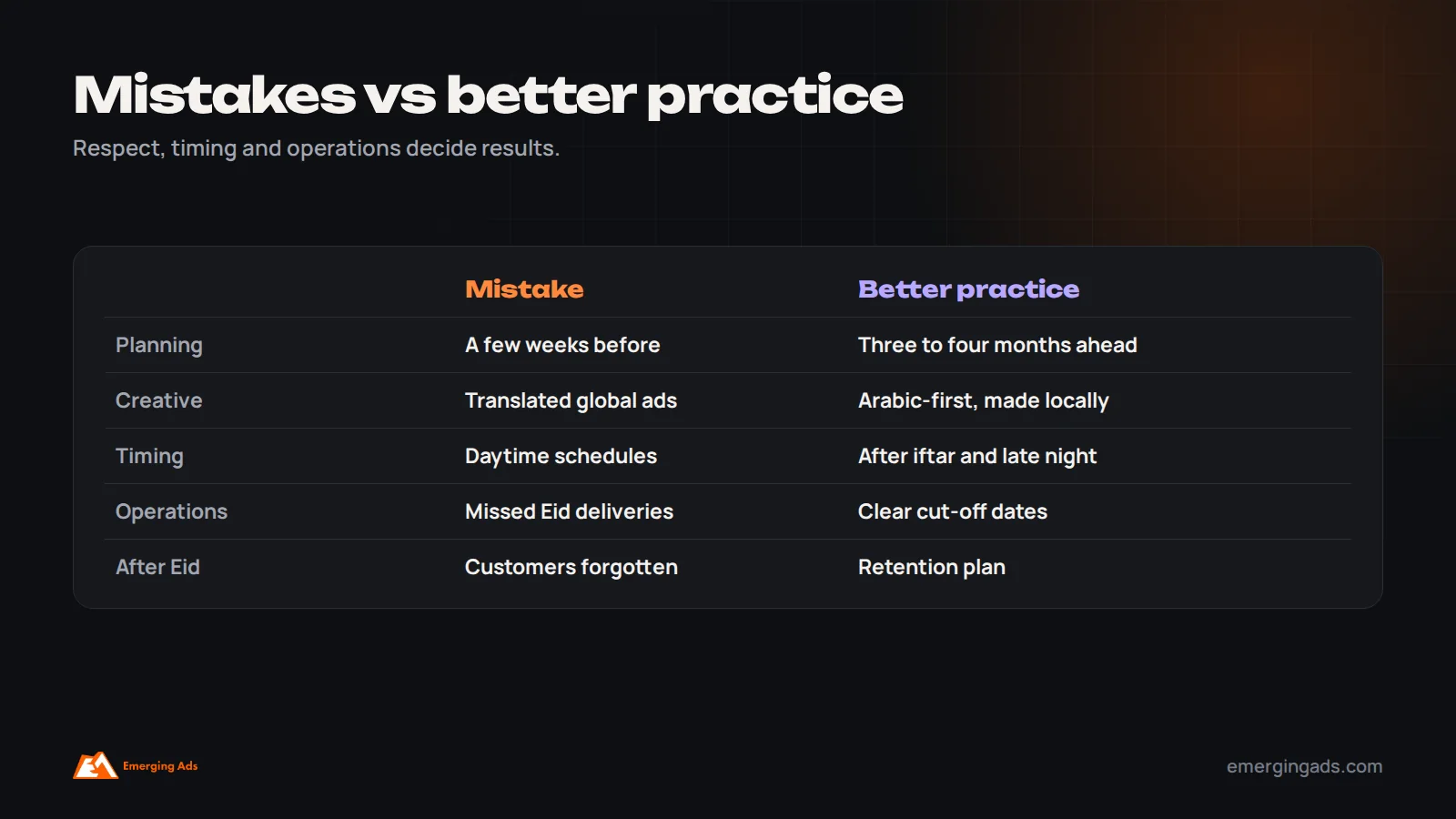
These are the errors we see most often when reviewing brands’ Ramadan campaigns after the season. Most of them come from late planning or from treating Ramadan like any other sale period.
- Starting planning a few weeks before the month.
- Translating global campaigns instead of creating locally.
- Insensitive imagery or tone.
- Scheduling ads and messages for daytime peaks that no longer exist.
- Underestimating ad cost increases near Eid.
- Missing Eid delivery deadlines.
- Treating Ramadan as one long sale rather than distinct phases.
- Forgetting post-Eid retention.
If you would like help planning Ramadan campaigns, our teams run Snapchat, Meta and WhatsApp campaigns across the GCC with Arabic-first creative.
Frequently asked questions
When does Ramadan 2027 start?
Ramadan 2027 is expected to begin in early to mid February 2027, with Eid al-Fitr about a month later. Exact dates depend on moon sighting, so keep plans flexible.
When should brands start planning Ramadan campaigns?
Three to four months ahead for budgets, offers, stock and creative briefs, with production six to eight weeks before and pre-Ramadan campaigns two to four weeks before.
What time of day is best for Ramadan ads?
Activity often peaks after iftar and late into the night. Check your own data from last year, since patterns vary by audience and category.
Which platforms work best during Ramadan in Saudi Arabia?
Snapchat, Instagram, TikTok and YouTube are all strong, with Google capturing search intent and WhatsApp for direct messaging. Snapchat is especially widely used in Saudi Arabia.
Should Ramadan ads be in Arabic?
Yes, Arabic-first creative made for local audiences usually performs best, with English versions for expatriate audiences in the UAE.
Do ad costs rise during Ramadan?
Often, especially in the last ten nights and before Eid. Build audiences before Ramadan and keep budget in reserve for peak periods.
What should brands avoid in Ramadan marketing?
Insensitive imagery or humor, translated rather than localized creative, daytime-focused scheduling, aggressive discounting and missed Eid delivery promises.
How should I measure Ramadan campaign success?
Compare with last year’s Ramadan, track results by phase, time of day and channel, and include new customer acquisition and post-Eid retention.