
The short answer
To run a successful referral marketing program, start with a product or service people genuinely recommend, offer a simple reward that benefits both the referrer and the friend, ask at the moments customers are happiest, make sharing effortless with unique links or codes, track every referral reliably, prevent abuse, and promote the program continuously through email, WhatsApp, your website, packaging and conversations. Measure participation, referral conversion and the value of referred customers, who often buy more and stay longer than customers from ads.
Word of mouth is the oldest and often the most effective form of marketing. People trust recommendations from friends, family and colleagues far more than advertising, and customers who arrive through a recommendation often convert faster and stay longer. A referral program turns that natural behavior into a system: it encourages happy customers to share, rewards them for it and tracks the results.
Yet many referral programs underperform. They are launched with a single announcement, hidden on a page nobody visits, offer rewards nobody cares about, or rely on tracking that breaks. This guide explains how to design, launch, promote and measure a referral program that actually works, for ecommerce brands, service businesses and B2B companies.
Why referral programs work
Referrals combine trust, relevance and low cost. The referrer already knows the product and the friend, so recommendations reach people likely to be interested. The friend trusts the referrer more than any ad. And because rewards are only paid when referrals succeed, cost per new customer is predictable. Referred customers also tend to have something in common with your existing customers, which often makes them a good fit.
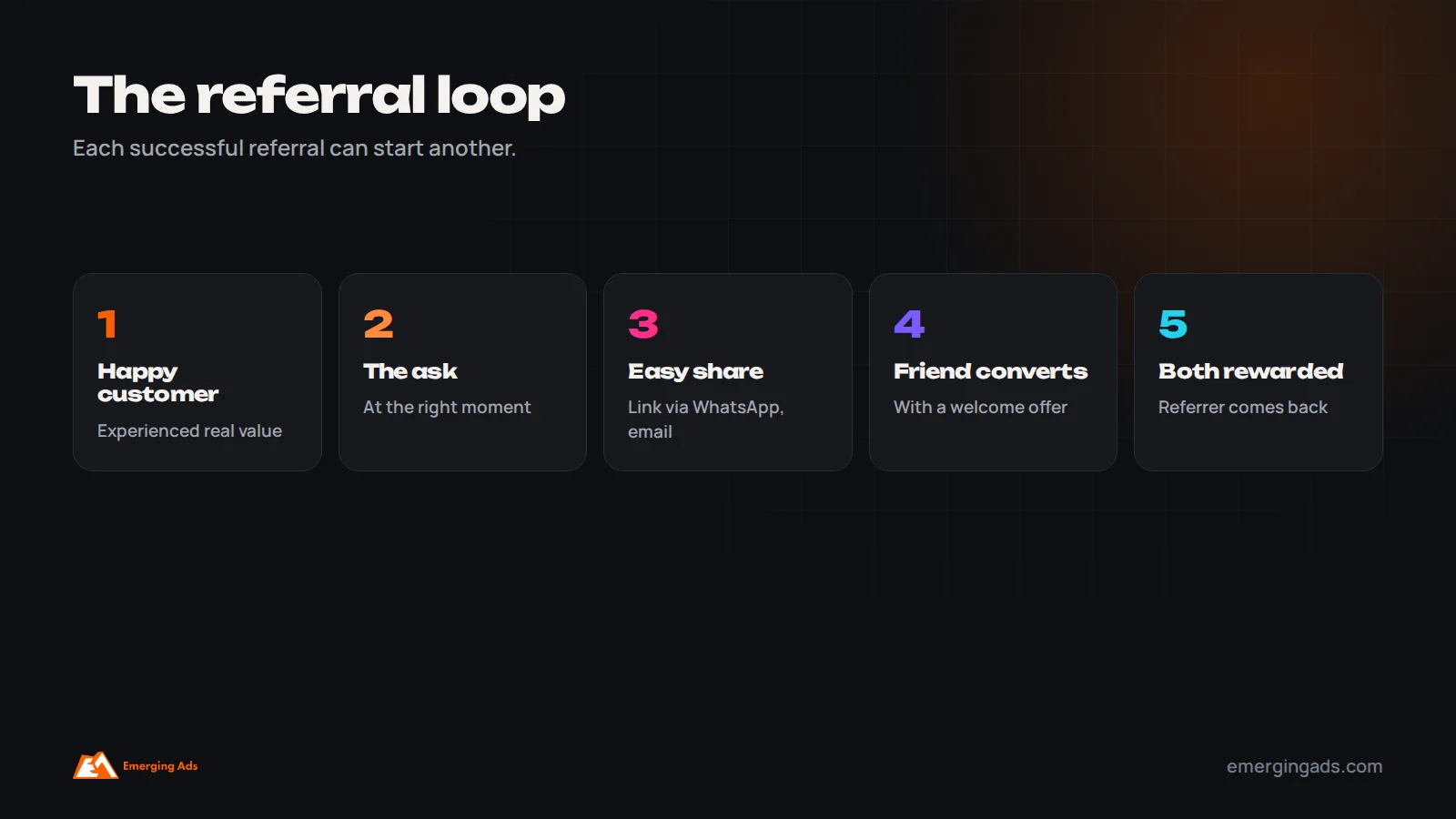
Referrals also strengthen loyalty among referrers. Customers who recommend a brand publicly tend to feel more committed to it, and rewards in the form of store credit bring them back to buy again.
Start with something worth recommending
A referral program amplifies existing satisfaction; it cannot create it. If customers are not already happy, a reward will not make them recommend you, and those who do will bring friends who have the same disappointing experience. Before launching, check your reviews, repeat purchase rate, customer service feedback and net promoter scores if you collect them. Fix major problems first. The best referral programs sit on top of products and services customers already talk about.
Types of referral program
- Customer referral programs: existing customers refer friends, usually with rewards for both. The most common type for ecommerce and consumer services.
- Partner referral programs: businesses or professionals refer clients to you, such as accountants referring to a software company, or interior designers referring to a furniture brand.
- Affiliate programs: publishers, creators and websites earn commission on sales they drive. More structured and often larger scale. Our guide to performance-based affiliate deals covers these.
- Employee referral programs: staff refer customers or candidates.
- B2B client referrals: satisfied clients introduce you to peers, often rewarded with service credits, discounts or gifts.
Designing the reward
A good reward is easy to understand in one sentence, valuable enough to motivate, and affordable at the volumes you hope to reach.
The reward is the engine of the program. Common structures include:
- Two-sided rewards: both the referrer and the friend receive something, such as a discount for the friend and store credit for the referrer. Usually the most effective, because the referrer feels they are giving a gift rather than selling.
- One-sided rewards: only the referrer is rewarded. Simpler, but less appealing to share.
- Tiered rewards: bigger rewards for more referrals, which motivates your most enthusiastic advocates.
- Store credit vs cash: store credit costs less in margin terms and brings referrers back; cash is more motivating for some audiences, especially B2B.
- Free products or upgrades: often feel generous while costing less than equivalent discounts.
- Charitable donations: suit some brands and audiences who prefer not to profit from recommending friends.
Set the reward value from your economics. Compare it with your current customer acquisition cost from ads and with the lifetime value of a new customer. A referral reward that costs less than paid acquisition, for customers who are often more valuable, is usually a good investment.

Ask at the right moments
Timing matters as much as the reward. Customers are most willing to refer when they have just experienced value. Good moments include shortly after delivery when the product has been used, after a positive review or high satisfaction score, after a successful project or milestone for service businesses, when a customer reorders or renews, and after a helpful customer service interaction. Asking immediately after purchase, before the customer has used the product, usually performs worse.

Make sharing effortless
- Unique referral links and codes for each customer, so referrals are tracked automatically.
- One-click sharing via WhatsApp, SMS, email and social media, with pre-written messages customers can edit.
- A clear explanation of what both sides get, and any conditions.
- A dashboard or notification showing referrers when friends sign up and when rewards are earned.
- Mobile-friendly design, since most sharing happens on phones.
Many ecommerce platforms and email tools integrate with referral software that handles links, tracking, rewards and fraud checks.
Promote the program continuously
The most common reason referral programs fail is that customers never hear about them, or hear once and forget. Promote the program wherever customers interact with you:
- In post-purchase email flows and order confirmation pages. Our guide to ecommerce email flows shows where it fits.
- In account pages and the website footer and navigation.
- On packaging inserts and thank-you cards.
- In WhatsApp and SMS messages to opted-in customers.
- In customer service conversations after positive interactions.
- In occasional dedicated campaigns, such as double rewards for a limited time.

Writing referral messages that get shared
The words customers send to friends matter. Pre-written share messages should sound like something a real person would say, be short enough to send on WhatsApp or SMS, explain what the friend gets, and include the link. “I love these running socks, here’s 20% off your first order” works far better than a promotional paragraph full of brand language. Let customers edit the message before sending. Test a few variations of the share message and the referral page headline, since small wording changes can affect how many people share and how many friends convert.
The referral landing page should welcome the friend by name where possible, mention who referred them, show the offer clearly, explain the product quickly and make the first purchase or signup easy. A friend arriving from a personal recommendation is warm; do not make them work hard to claim the offer.
Referral programs for ecommerce brands
For online stores, referral programs work best when built into the customer journey: a referral prompt on the order confirmation page, a referral email a week or two after delivery, a reminder in later post-purchase emails, and a permanent referral section in customer accounts. Store credit rewards bring referrers back to buy, and first-order discounts help friends convert. Track referred customers as a separate segment so you can compare their repeat purchase rate and lifetime value with customers from paid ads. Many brands find referred customers among their most valuable.
Referral programs for local and service businesses
Clinics, salons, gyms, home services, coaches and other service businesses often grow largely through word of mouth already. A simple program can make it more consistent: a referral card or link given after a great appointment, a thank-you reward such as a free service or credit when a friend books, and a WhatsApp message to past clients announcing the program. Staff play a big role, so train them to mention the program naturally after positive interactions. Track referrals in your booking system or CRM so rewards are paid reliably.
Finding and nurturing your best advocates
A small share of customers usually generates most referrals. Identify them through referral data, reviews, social mentions and repeat purchases, and treat them specially: early access to new products, exclusive rewards, invitations to events or communities, and personal thank-you messages. Some brands turn their best advocates into ambassadors with ongoing benefits. Our guide to community-led growth explains how engaged customers can drive growth beyond individual referrals.
Supporting referrals with paid and owned channels
Referral programs work best alongside other channels. Paid ads bring in first-time customers who can later refer; email and WhatsApp keep the program visible; and content gives customers something interesting to share. Some brands also run paid campaigns that promote the referral program to existing customers through retargeting audiences built from customer lists. Treat referrals as one part of the growth system rather than a standalone tactic.
Working out what you can afford to pay
Setting the reward is easier with a little arithmetic. Start with what a new customer is worth to you: their average first order value, your gross margin, and how often customers typically buy again. Then look at what you currently pay to acquire a customer through paid ads. A referral reward, including both sides and any software or fulfillment cost, that comes in below your paid acquisition cost is usually worthwhile, especially because referred customers often have higher lifetime value.
For example, if a new customer typically spends a meaningful amount over their first year and you currently pay a significant sum per customer through Meta and Google, a combined referral reward well below that figure leaves room for profit. Store credit is often cheaper than it looks, because the referrer spends it on products with margin, and some credit goes unused. Run the numbers before launch, then review them after three months with real data.
Choosing referral software
Most businesses use referral software rather than building their own. Look for integration with your ecommerce platform, booking system or CRM; automatic unique links and codes; reliable tracking across devices; flexible reward rules; fraud detection; email and WhatsApp integrations for sharing and notifications; and clear reporting on participation, conversions and value. For B2B and partner programs, partner management platforms add features such as commission tracking and partner portals. Start simple; the best tool is one your customers find easy and your team can maintain.
Launching to your best customers first
A soft launch to your happiest customers reduces risk and builds early momentum. Identify customers who have left positive reviews, bought several times or given high satisfaction scores, and invite them personally, perhaps with a slightly better launch reward. Their referrals test the mechanics, show early conversion rates and generate success stories you can use in wider promotion. Fix any problems with tracking, rewards or messaging before opening the program to everyone.
Testing and improving the program
Referral programs improve with testing. Useful tests include reward size and type, such as a percentage discount versus a fixed amount or store credit versus a free product; one-sided versus two-sided rewards; share message wording; the timing of the referral email; the placement of referral prompts on the website; and limited-time boosts such as double rewards. Change one thing at a time and judge on referred customers and cost per referred customer, not just shares.
Example referral programs by business type
A skincare brand: friends get a discount on their first order, referrers get store credit once the friend’s order passes the return window. The program is promoted in the post-delivery email, on the account page and on a packaging insert, with a double-credit week before major sales.
A fitness studio: members get a free class or a month’s discount for each friend who joins, and friends get a free trial week. Staff mention it after classes, and a WhatsApp message announces it to existing members.
A B2B software company: clients who introduce another company that signs up receive service credits or an account upgrade, and partners such as consultants earn a commission. Account managers ask after successful quarterly reviews.
A home services company: customers receive a credit toward their next service for each referred booking, and the referred customer gets a discount on their first job. Technicians leave referral cards after completed work.
Referrals and retention work together
Referral programs and retention reinforce each other. Customers who refer friends become more loyal, store credit rewards bring them back to buy, and referred customers who have a great experience become referrers themselves. That is why referral programs work best alongside strong post-purchase experiences, email and WhatsApp communication, and loyalty programs. Our guide to improving ecommerce email results covers the retention side.
Building a partner referral program
For many service and B2B businesses, the most valuable referrals come from other businesses rather than customers. Accountants refer clients to lawyers and software providers, wedding venues refer to photographers, gyms refer to physiotherapists, and agencies refer to complementary specialists. A partner program formalizes these relationships. Identify businesses that serve your customers before, during or after they need you, approach them with a clear proposal, agree how referrals will be tracked and rewarded, make it easy for them to introduce you with a simple form or email template, and keep them updated on referrals they send. Reciprocity matters: partners are more likely to refer if you refer to them too.
Referral programs in different markets
Referral behavior varies by market. In the Gulf and India, WhatsApp is the main sharing channel, so referral links and messages should be designed for it, ideally in Arabic or local languages as well as English. Family and community networks are strong, which can make referrals especially effective. In the UK and US, email, SMS and social sharing are common, and clear terms are important for consumer protection. In every market, check local rules on promotions, incentives and marketing communications before launching, particularly for cash rewards.
Who should own the program?
Referral programs work best with a clear owner, often in marketing or customer experience, responsible for the reward structure, promotion, software, fraud checks, reporting and improvements. Without an owner, programs launch with enthusiasm and then fade as attention moves elsewhere. A short monthly review of participation, conversion, cost per referred customer and any issues keeps the program healthy.
Encouraging referrals without rewards
Not every referral needs a reward. Many customers recommend businesses simply because they had a great experience and want to help a friend. You can encourage this without incentives: make your product or service genuinely remarkable, give customers something worth sharing, such as useful content, beautiful packaging or a surprising extra, make your business easy to describe in one sentence, and simply ask. A short, sincere request after a positive experience, such as “If you know anyone who could use this, we’d really appreciate an introduction”, often works surprisingly well, especially for service businesses and B2B. Rewards amplify referrals; they rarely create them from nothing.
Thanking referrers properly
Referrers are doing you a favor, and how you thank them affects whether they refer again. Pay rewards promptly and reliably, send a personal thank-you when a friend joins, keep referrers informed about the status of their referrals, and recognize your most active advocates with something extra, such as early access, exclusive products or a handwritten note. Customers who feel appreciated tend to refer more people, more often.
Keeping the program fresh over time
Referral programs can lose momentum after the launch excitement fades. Keep them fresh by refreshing creative and messages every few months, running occasional limited-time boosts around key moments such as product launches or seasonal peaks, featuring real referral stories in emails and social posts, adding new reward options as your range grows, and reminding long-standing customers who may have forgotten the program exists. Review results quarterly and retire anything that no longer works. A program that is actively managed keeps growing; one left alone slowly fades into the footer of your website.
A pre-launch checklist
Before launching, confirm that customer satisfaction is strong, the reward has been costed against acquisition and lifetime value, terms are clear and published, unique links and codes track correctly across devices, rewards are issued automatically after confirmed purchases, fraud rules are active, share messages are short and editable, the friend’s landing page shows the offer clearly, the program appears in post-purchase emails, account pages and packaging, customer service knows how it works, and reporting is set up for participation, conversion and cost per referred customer.
Prevent abuse
Any reward program attracts some abuse, such as people referring themselves with new email addresses or sharing codes on coupon sites. Reduce it by paying rewards only after the friend’s first purchase is confirmed and past any return window, limiting rewards per customer, checking for duplicate addresses, payment details or devices, setting minimum order values for the friend’s discount, and monitoring unusual patterns. Most referral software includes basic fraud detection.

Rules and transparency
Be clear about terms: who qualifies, what each side receives, when rewards are paid and any limits. In some markets, rules on consumer promotions, marketing communications and tax treatment of rewards apply, especially for cash rewards. Referral messages sent by customers to friends are generally treated differently from your own marketing, but you should still avoid encouraging spam. Do not tie rewards to positive reviews, which breaches rules in many markets and platforms. Check local regulations, especially in regulated industries such as finance and healthcare, where referral rewards may be restricted.
Measure the right things
- Participation rate: the share of customers who share their link or code.
- Referral conversion rate: the share of referred friends who buy or sign up.
- Referrals per referrer: how many successful referrals active referrers make.
- Cost per referred customer: total rewards and program costs divided by new customers.
- Value of referred customers: average order value, repeat purchase rate and lifetime value compared with other channels.
- Share of new customers from referrals over time.
Compare cost per referred customer with paid acquisition costs. Our guide to attribution modeling covers how to compare channels fairly.

Referral programs for B2B and services
B2B and professional service referrals work differently. Volumes are lower, but each referral can be worth a great deal. Instead of automated links alone, B2B programs often rely on personal asks from account managers, structured partner programs with agreed commissions, service credits or account upgrades for clients who refer, recognition such as case studies or events, and making it easy for clients to introduce you, for example with a short email template. Timing matters even more: ask after a clear success, such as a project milestone or results review.
Common mistakes
These are the reasons we see most often when referral programs fail to deliver.
- Launching a referral program before customers are genuinely happy.
- Rewards too small to motivate, or too complicated to understand.
- Announcing the program once and never promoting it again.
- Asking for referrals before customers have experienced value.
- Tracking that fails, so referrers never receive rewards.
- No fraud controls.
- Measuring only the number of referrals, not their value.
A 90-day plan to launch a referral program
- Weeks 1 to 3: review customer satisfaction, calculate acceptable reward costs from acquisition and lifetime value, choose the reward structure and referral software.
- Weeks 3 to 5: set up links, tracking, fraud rules and terms; design the referral page and share messages.
- Weeks 5 to 8: launch to your happiest customers first, add the program to post-purchase emails, account pages and packaging, and fix any issues.
- Weeks 8 to 13: run a promotional push, test reward variations and messaging, and review participation, conversion and cost per referred customer.

Frequently asked questions
How do I start a referral marketing program?
Make sure customers are genuinely happy, choose a simple two-sided reward based on your acquisition costs, set up unique links and tracking, ask at moments of satisfaction and promote the program continuously.
What is the best referral reward?
Two-sided rewards, such as a discount for the friend and store credit for the referrer, usually work best. The right value depends on your margins, acquisition costs and customer lifetime value.
When should I ask customers for referrals?
When they have just experienced value: after using the product, leaving a positive review, achieving a result or having a great service interaction.
How do I prevent referral fraud?
Pay rewards only after confirmed purchases and return windows, limit rewards per customer, check for duplicate details and monitor unusual patterns.
How is a referral program different from an affiliate program?
Referral programs reward customers for recommending friends. Affiliate programs pay publishers, creators and partners commission for driving sales at larger scale.
Do referral programs work for B2B?
Yes, though they usually rely more on personal asks, partner agreements, service credits and recognition than on automated links alone.
How do I measure referral program success?
Track participation, referral conversion, referrals per referrer, cost per referred customer and the lifetime value of referred customers compared with other channels.
Can I reward customers for reviews?
Rewarding positive reviews breaches rules in many markets and platforms. Keep referral rewards separate from reviews.