What Is Rebranding and Why Do You Need It
Key Takeaways
- Rebranding is a strategic repositioning, a refresh is a visual update, the two get confused constantly and need different processes.
- The most reliable signal it’s time to rebrand is a mismatch between who you serve now and what your brand was built to say five or ten years ago.
- A rebrand done for internal boredom rather than a real market reason usually underperforms and confuses existing customers.
- Customer and stakeholder research should come before any visual design work starts, not after.
- A phased rollout protects existing brand equity better than an overnight full switch, which is where a coordinated branding & content plan makes the difference.
Rebrand vs. Refresh: The Distinction That Matters
A refresh updates the visual execution, colors, typography, logo polish, while the underlying positioning and message stay the same. A rebrand changes the strategic story: who you serve, what you stand for, and often the name or core visual identity itself. Businesses frequently ask for a rebrand when what they actually need is a refresh, and vice versa, which is why the research phase matters before any design work begins, and why we handle this through our own branding & content process rather than jumping straight to logos.
Signals It’s Actually Time
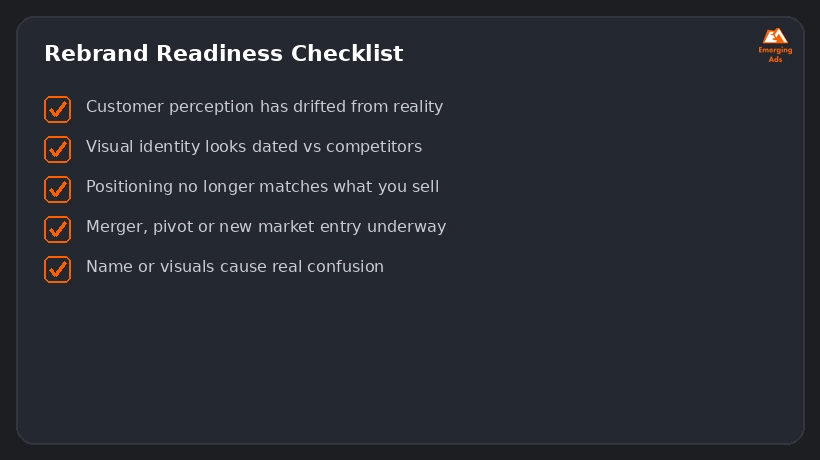
- Your current customer base looks meaningfully different from who the brand was originally built to attract
- You’ve expanded into new products or markets the original brand story doesn’t cover
- A merger, acquisition, or leadership change has shifted the company’s actual direction
- Consistent feedback that the brand feels dated, confusing, or doesn’t match the quality of what you deliver
- Legal or trademark issues forcing a name or mark change
When Rebranding Is the Wrong Move
If the core issue is inconsistent execution, different fonts and colors across channels, an outdated website, weak photography, that’s usually a brand refresh and consistency project, not a full rebrand. Rebranding purely out of internal boredom with the current look, without a real shift in positioning or audience, risks confusing loyal customers for no strategic gain.
The Process, Start to Finish

- Research: customer interviews, competitor audit, and internal stakeholder alignment on what’s actually changing and why
- Strategy: defined positioning, messaging pillars, and target audience before any visual work starts
- Identity design: logo, color, typography, and voice guidelines built to express the new strategy
- Application: website, packaging, social, and other touchpoints updated in priority order
- Rollout: internal team alignment first, then a coordinated external launch
- Strategy: defined positioning, messaging pillars, and target audience before any visual work starts
- Identity design: logo, color, typography, and voice guidelines built to express the new strategy
- Application: website, packaging, social, and other touchpoints updated in priority order
- Rollout: internal team alignment first, then a coordinated external launch
This is essentially the same sequence we follow in our branding & content service, from initial positioning work through to the assets that actually go live across your channels.
Rolling Out Without Losing Existing Customers
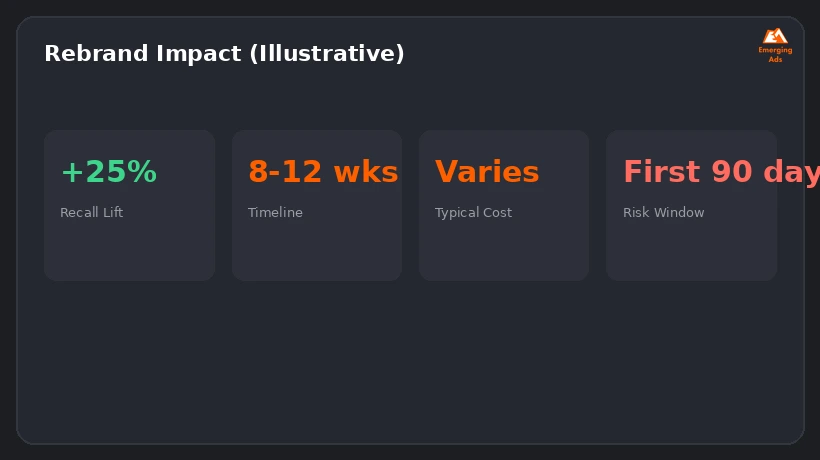
A sudden, unexplained switch confuses people who already trust the old brand. Communicating the why behind the change, through email, social, and direct customer touchpoints, before or alongside the visual switch, preserves more of that existing trust than a silent overnight change. Getting this messaging right across every touchpoint is a big part of what our branding & content team handles during rollout.
Want us to look at your account?
We’ll audit your setup and tell you exactly where the budget is leaking, free. Or see how our branding & content service handles a rebrand from strategy to rollout.
Get Your Free Ad AuditFrequently Asked Questions
What’s the difference between a rebrand and a brand refresh?
A refresh updates visual execution while keeping the same positioning, a rebrand changes the underlying strategic story and often the name or core identity itself.
How long does a full rebrand typically take?
It varies by scope, but research through full rollout commonly spans two to six months for a mid-size business, longer for complex multi-brand organizations.
Do I need to change my business name to rebrand?
No, most rebrands keep the existing name and change positioning, visual identity, and messaging, a name change is a bigger, separate decision within that process.
Will a rebrand hurt my SEO rankings?
It can if not planned carefully, especially with URL or domain changes, proper redirect mapping and a phased content update plan protect existing rankings.
How do I know if my brand needs a rebrand or just better consistency?
If the core complaint is inconsistent execution across channels rather than a mismatch in positioning or audience, a consistency-focused refresh is usually the right, less disruptive fix.
Should customer research happen before or after design work?
Before, always, designing new visual identity without first understanding how current and target customers perceive the brand risks solving the wrong problem.
What’s the risk of rebranding too often?
Frequent rebrands erode brand recognition and can signal instability to customers, most businesses shouldn’t rebrand more than once every several years absent a major strategic shift.
Can a small business benefit from rebranding, or is it only for large companies?
Small businesses rebrand successfully too, often around a pivot in services or target market, the process just scales down in scope and cost.
How do I roll out a rebrand without confusing existing customers?
Communicate the strategic reason behind the change through direct channels before or alongside the visual switch, and consider a phased rollout across touchpoints rather than an instant full switch.
What should be included in brand guidelines after a rebrand?
Logo usage rules, color and typography specifications, voice and tone guidance, and application examples across key touchpoints like web, social, and packaging.
Ready to fix what’s costing you conversions?
Book a free, no-pressure audit of your ad account or website.
Get Your Free Ad Audit