
The short answer
The best food brand influencer marketing strategy in 2026 partners with creators whose audiences genuinely cook, eat or shop in your category, lets them show your product in real recipes and routines rather than scripted ads, mixes many micro creators with a few larger partners, turns the best content into paid ads, and measures results through sales, codes, retail data and content performance. Food brands should also follow advertising disclosure rules carefully, especially around health and nutrition claims and content that may reach children.
Food is one of the most natural categories for influencer marketing. People already follow creators for recipes, meal ideas, restaurant recommendations, healthy eating, budget cooking, baking and food culture. When a trusted creator uses a product in a recipe their followers want to make, it feels like a recommendation from a friend rather than an ad.
That is why so many food and beverage brands, from packaged snacks and sauces to drinks, meal kits, supplements, restaurants and delivery services, invest in creators. But results vary widely. Some brands see lasting growth; others pay for posts that get likes and no sales. This guide sets out a practical strategy for food brands in 2026: choosing creators, content that works, deal structures, compliance, amplification and measurement.
Why influencer marketing suits food brands
Food is visual, sensory and habitual. Watching someone cook with an ingredient, take a bite or react to a new flavor creates desire in a way static ads rarely do. Recipes give audiences a practical reason to buy a product. Food creators also have highly engaged audiences who save, share and recreate content, giving posts a long life. And for brands without large advertising budgets, creators can produce a steady stream of authentic content that also works as advertising.
Types of food creators
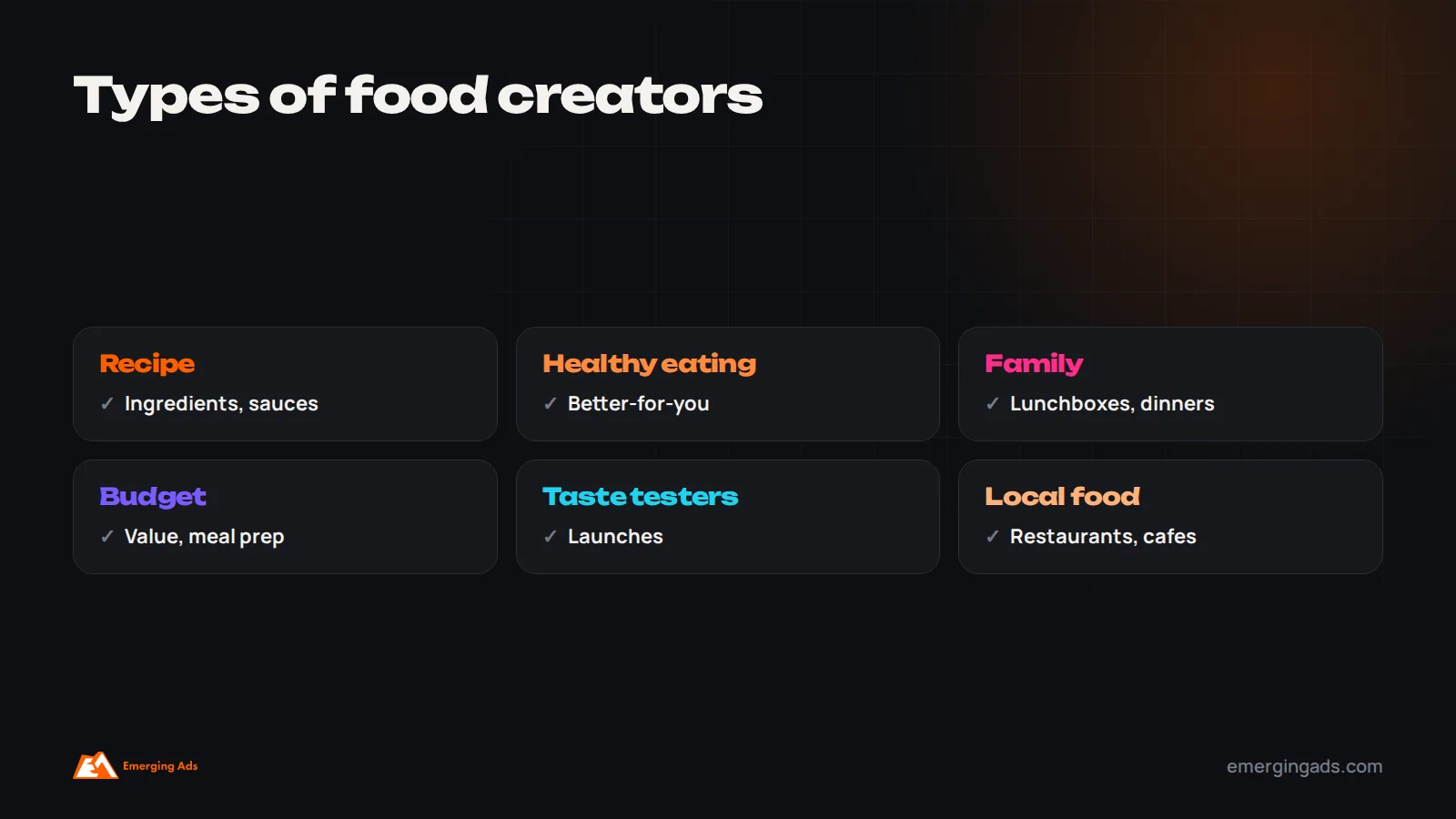
- Recipe creators: show how to cook dishes, ideal for ingredients, sauces, spices and kitchen staples.
- Healthy eating and fitness creators: suited to better-for-you products, protein snacks and drinks, with careful attention to claims.
- Family and parenting creators: meal planning, lunchboxes and quick family dinners.
- Budget and meal prep creators: value-focused products and bulk cooking.
- Taste testers and reviewers: honest reactions to new products, good for launches and limited editions.
- Restaurant and street food creators: local discovery for restaurants, cafes and delivery brands.
- Culture and cuisine specialists: creators focused on specific cuisines, important for authenticity.
Choosing the right creators
Creator selection decides most of a campaign’s results, so it deserves more time than any other step.
Follower count matters less than audience fit and engagement. Look for creators whose followers match your customers by location, age, lifestyle and diet; whose comments show people actually making their recipes; whose content style fits your brand; and who already use products like yours. Check that their audience is in markets where your product is available, since a large international following is useless if your product is sold in one country. Micro creators often deliver better engagement and value than celebrities, and a group of them can cover several audiences at once. Our guide to influencer collaborations covers vetting in detail.
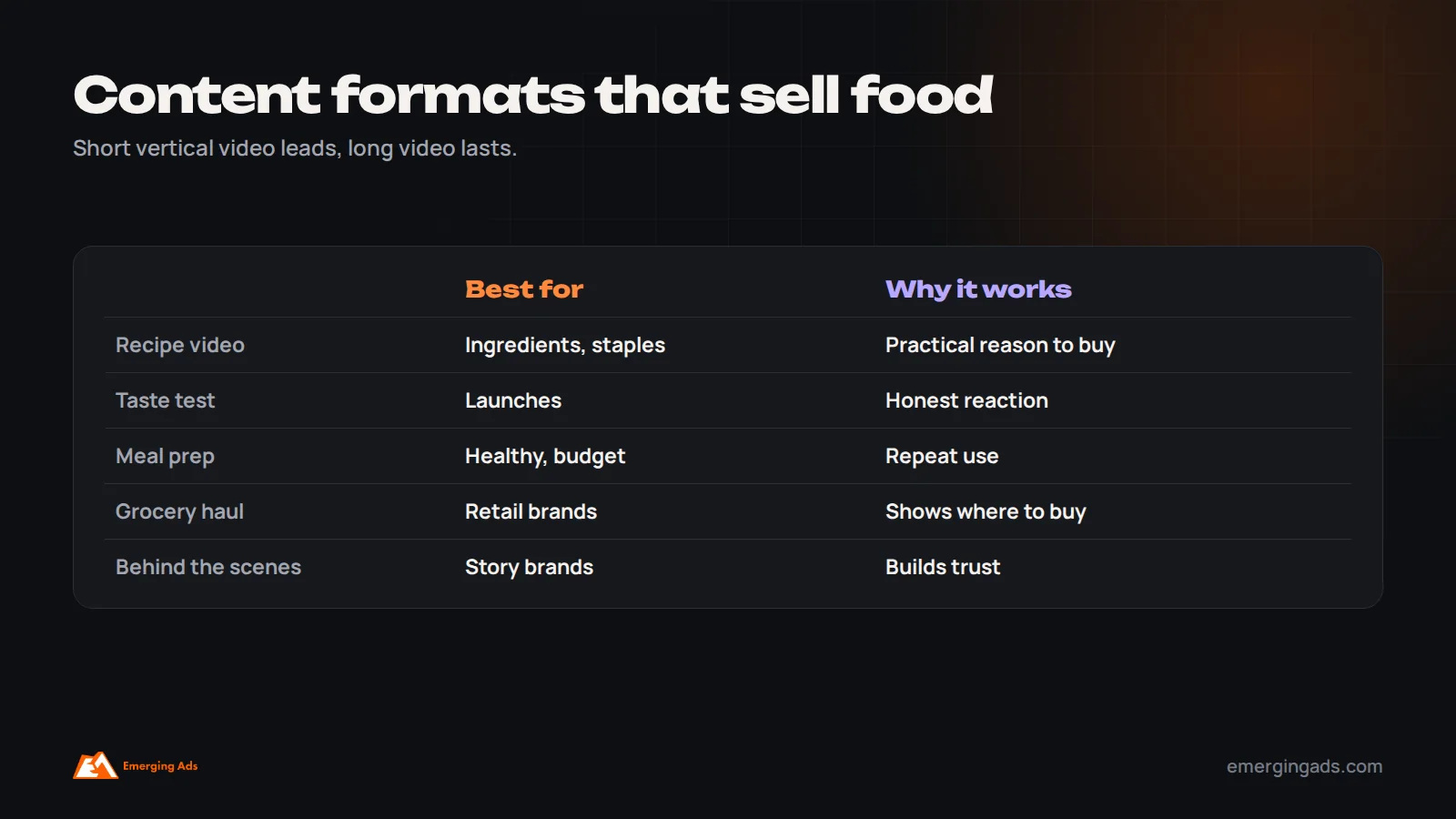
Content formats that sell food
- Recipe videos featuring the product as a key ingredient.
- Taste tests and first reactions, honest and unscripted.
- What I eat in a day or weekly meal prep content.
- Hacks and quick ideas showing new ways to use the product.
- Grocery hauls showing where to buy it.
- Challenges and trends adapted to the brand.
- Behind-the-scenes visits to farms, kitchens or factories.
Short vertical video on Instagram Reels, TikTok where available and YouTube Shorts dominates, while longer YouTube recipes and blog posts provide lasting search value.
Writing a brief that keeps content authentic
The best food creator content feels like something the creator would have made anyway. A good brief gives direction without turning creators into actors. Explain the product, what makes it different and who it is for; suggest one or two ways to use it, while inviting creators to develop their own recipes; list the key message in a sentence; state clearly what not to say, especially about health, nutrition or comparisons with competitors; specify deliverables, timing, disclosure requirements and any links or codes; and share examples of content you liked. Send product early enough for creators to cook with it more than once. Creators who have genuinely tried and enjoyed a product make far more convincing content than those reading talking points.
Influencer marketing for supermarket brands
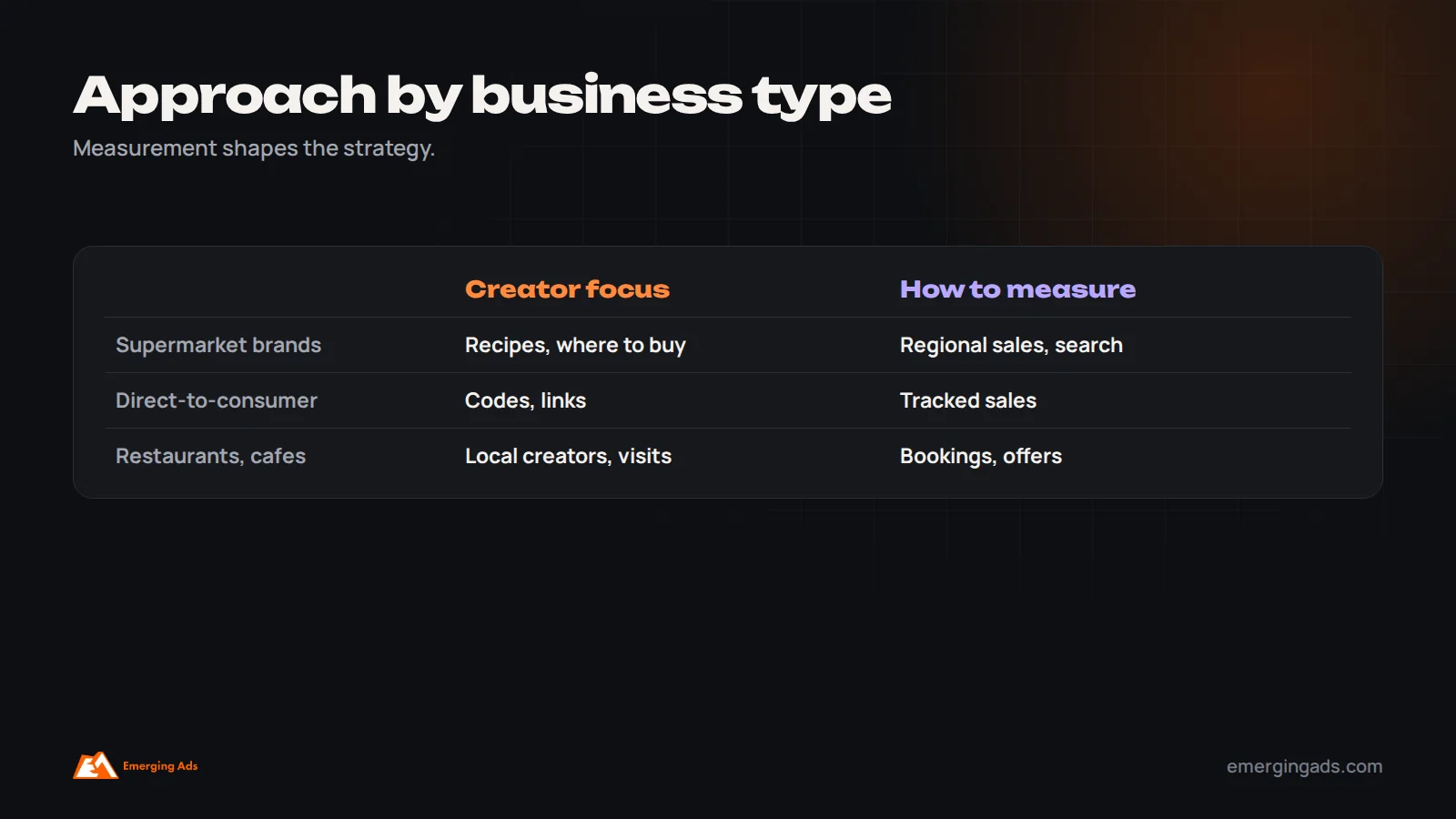
Food brands sold mainly through supermarkets and convenience stores face a measurement challenge: there is no discount code to track. The strategy shifts toward building awareness and preference in the regions where the product is stocked, and toward helping shoppers find it. Creators can show the product in a real shop, mention which retailers carry it, and feature it in recipes that drive repeat purchase. Brands can measure impact through retail sales data in campaign regions compared with others, retailer partnerships, branded search trends and surveys. Coordinating creator campaigns with in-store promotions, new listings or retail media campaigns makes each more effective. Retail buyers also notice strong social buzz, which can help win new listings.
Influencer marketing for direct-to-consumer food brands
Online food brands, such as subscription snacks, coffee, specialty ingredients, meal kits and healthy foods, can track creator sales directly through codes and affiliate links. That allows performance-based deals, rapid testing of creators and content, and clear decisions about who to keep working with. Combine creator posts with a strong welcome offer, smooth checkout and email flows that turn first orders into subscriptions or repeat purchases. Our guide to ecommerce email flows explains how to keep new customers coming back.
Influencer marketing for restaurants and cafes
For restaurants, cafes, bakeries and food delivery brands, local creators are usually the right partners. Invite creators for a genuine experience, such as a tasting menu, a new dish launch or behind-the-scenes kitchen visit, and let them share honest impressions. Local food creators often accept experiences rather than fees, and their followers are people who can actually visit. Track results through bookings, a creator-specific offer, delivery platform orders and new followers. Timing matters: content published before weekends, holidays and local events tends to drive the most visits. Our guide to local business marketing covers the wider local strategy.
Seasonal and cultural moments
Food is tied to seasons and celebrations: summer barbecues, back-to-school lunches, holiday baking, Ramadan iftar and suhoor, Diwali sweets, Christmas and New Year, and national days. Planning creator campaigns around these moments gives content natural relevance and urgency. Book popular creators early, since many are busy before major holidays. Make sure content respects the cultural and religious significance of each occasion, and adapt recipes and messaging for different markets. Our guide to Ramadan marketing explains how food brands approach the season in the Gulf.
Deal structures
Common structures include gifting product for honest coverage, flat fees for agreed posts, affiliate commission on sales, and hybrids combining a fee with commission. Food brands selling mainly in supermarkets cannot always track sales by creator, so flat fees with clear deliverables and content usage rights are common. Direct-to-consumer brands can use discount codes and affiliate links. Long-term ambassador relationships usually outperform one-off posts, because audiences need to see a product repeatedly before buying.

Disclosure and food claims
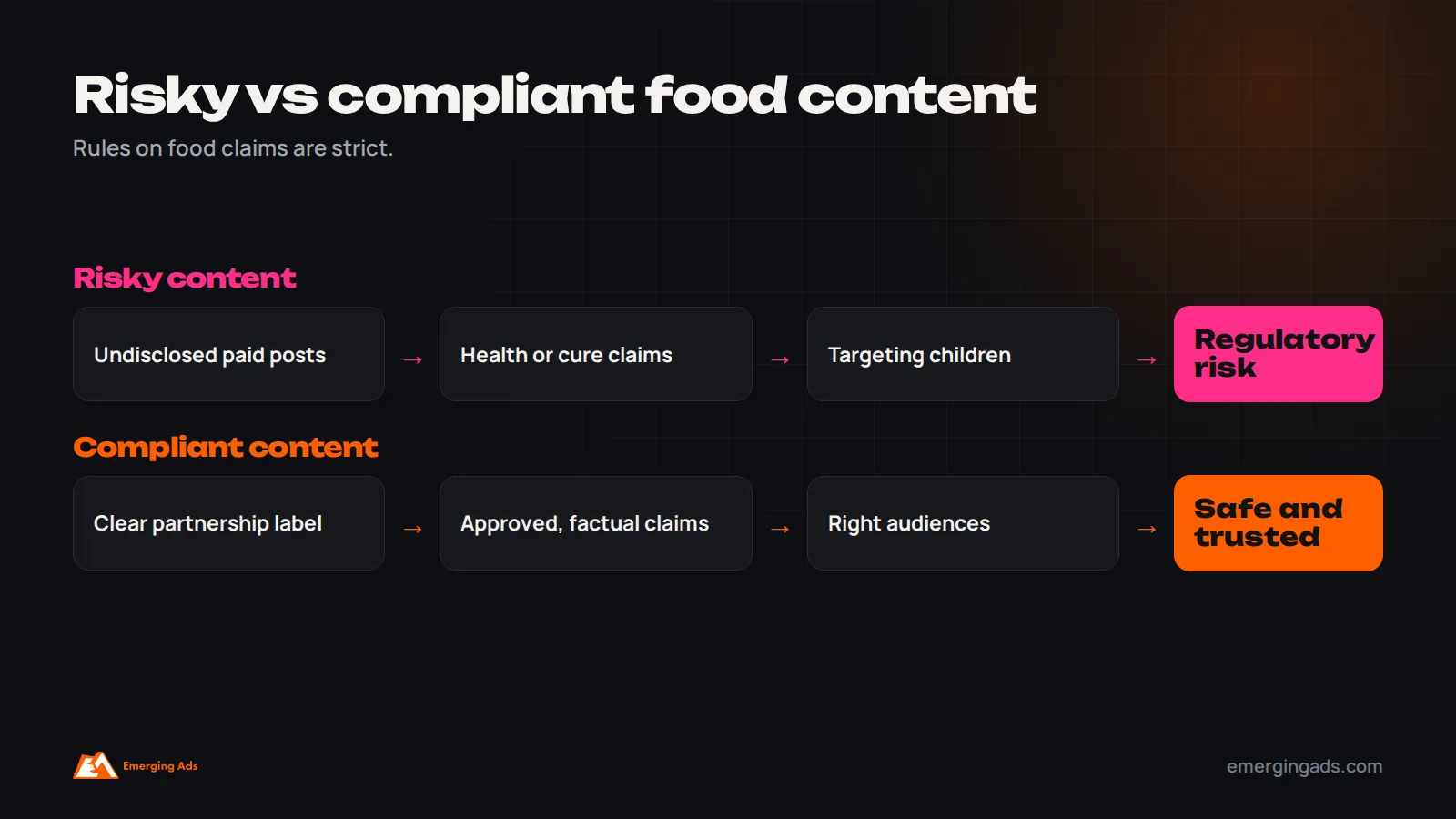
Paid partnerships must be clearly disclosed in most markets, using platform labels and clear wording. Food brands face extra rules on health and nutrition claims, which are often tightly regulated, so creators must not claim a product cures, prevents or treats conditions, or make nutrition claims the product does not meet. Content promoting foods high in fat, sugar or salt may face restrictions on targeting children in some markets. Alcohol has its own strict rules. Brief creators on what they can and cannot say, review content before publishing, and keep records.
Turning creator content into ads
Creator content often outperforms brand-made ads on social platforms because it looks native. With usage rights agreed, run the best posts as partnership ads on Meta or Spark Ads on TikTok, test different hooks and recipes, and use content on product pages, retail media and email. Our guide to scaling Meta ads explains how creator content fits into paid campaigns.
Balancing micro creators and larger partners
Most successful food brands use a mix. A group of micro creators, typically with between a few thousand and around a hundred thousand followers, produces a steady volume of authentic content across different audiences and cuisines, often at modest cost, and their followers tend to trust their recommendations closely. A small number of larger creators or chefs can add reach and credibility for launches, seasonal campaigns or entry into new markets. Start with a wider group of micro creators to learn which audiences and content styles drive results, then invest more in the best performers and selectively add larger partners for moments where reach matters most. Avoid putting most of the budget into a single celebrity post, which can produce a brief spike and little lasting effect.
User-generated content and community
Beyond paid creators, a food brand’s own customers are a powerful source of content. Encourage customers to share recipes and photos with a branded hashtag, feature the best on your social channels and website with permission, run recipe contests, and celebrate fans who create content regularly. Some brands turn their most enthusiastic customers into ambassadors with early access to new flavors and small rewards. User-generated content builds social proof, shows real people using the product and gives your paid creator program a steady pipeline of potential partners. Our guide to community-led growth explains how engaged customers become a growth engine.
Regional differences
Food culture varies enormously between markets, and so does creator marketing. In the Gulf, food creators play a major role in restaurant discovery and grocery choices, Arabic content reaches wide audiences, and Ramadan is the biggest season for food content; influencer advertising also requires appropriate permits in some countries. In India, regional cuisines and languages matter, short video on Instagram and YouTube dominates, and creators often reach audiences in specific states or cities. In the UK and US, recipe creators, healthy eating and budget cooking content are highly competitive, and advertising rules on food claims and children’s audiences are strict. Adapt creator selection, recipes, language and timing to each market rather than running one global campaign.
Using creators for product launches
Launches are where food creator programs often shine. Send new products to a group of creators shortly before launch, invite honest first reactions and recipes, and time posts to coincide with availability in stores or online so excited viewers can actually buy. Combine organic posts with paid amplification of the best content, retailer promotions and email to existing customers. Taste test content works especially well for new flavors and limited editions, because curiosity drives trial. Collect feedback from creators and comments to refine messaging and identify which audiences respond most strongly.
Budgeting for food creator campaigns
Set budgets based on goals and how you can measure them. Direct-to-consumer brands can budget toward a target cost per new customer, using creator codes and links to judge performance. Retail brands should budget for awareness and trial in stocked regions, and judge results through regional sales data and search trends. In both cases, reserve part of the budget for amplifying top-performing creator content as ads, since paid distribution often multiplies the value of the best posts. Budget for product samples and shipping too, especially for perishable items that need careful delivery.
Building long-term creator relationships
The most valuable creator partnerships in food are long-term. Creators who genuinely enjoy a product feature it repeatedly in different recipes, which builds familiarity and trust with their audiences far more effectively than a single sponsored post. Treat creators as partners: pay fairly and on time, share results, involve them in new product feedback, give them early access and recognize their contribution. Over time, a small group of committed ambassadors can become one of a food brand’s most effective marketing channels.
An example campaign
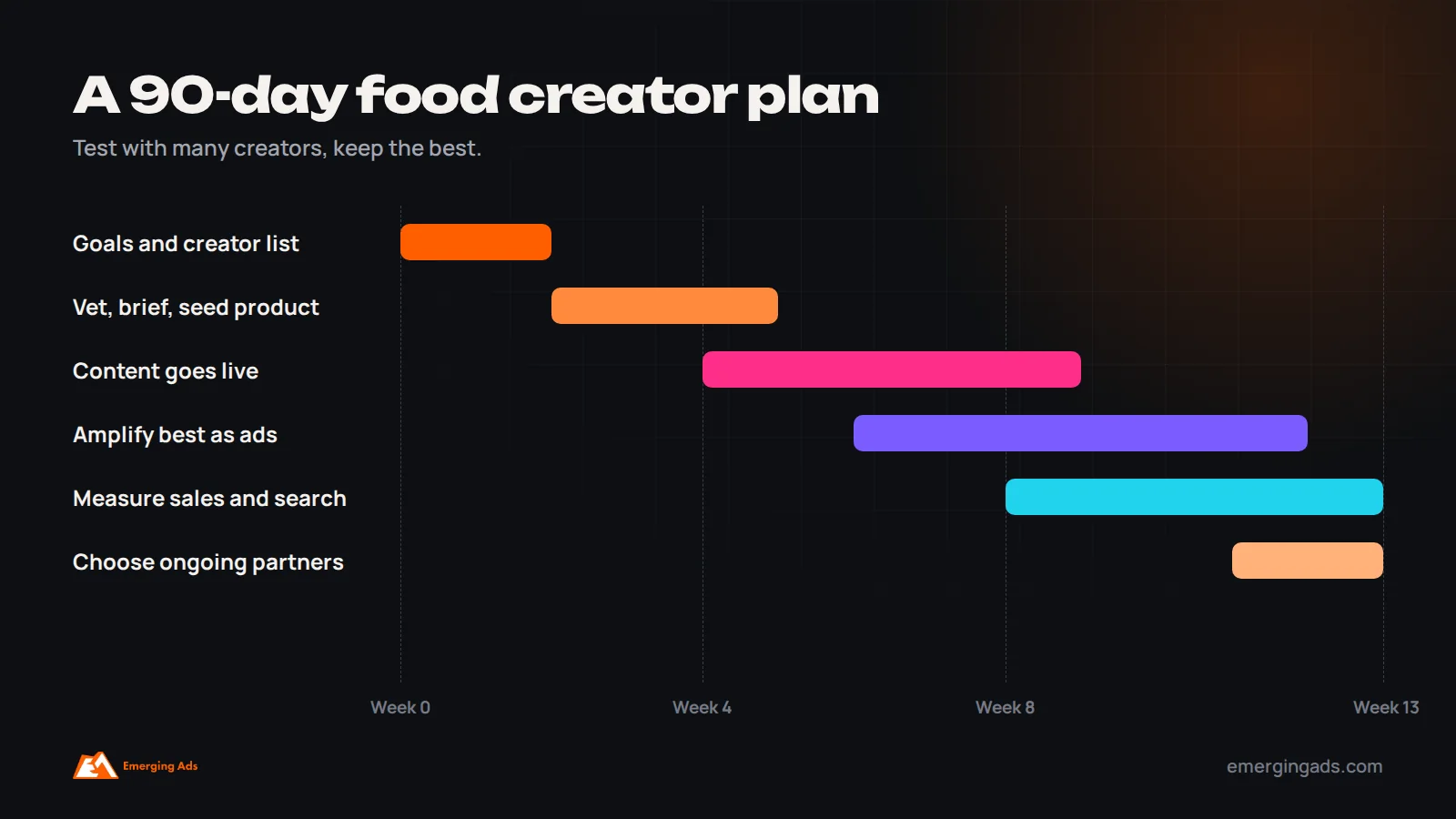
Consider a small brand making premium chili sauces, sold online and in a regional supermarket chain. It identifies forty recipe, barbecue and spicy food creators whose audiences are mostly in its market, and after vetting, works with twelve micro creators and two larger cooking creators. Each receives a set of sauces two weeks before posting, a short brief suggesting a few recipe ideas but inviting their own, a list of claims to avoid and a unique discount code. The micro creators are paid a modest fee plus commission on online sales; the larger creators receive flat fees with three months of ad usage rights. Content goes live around the start of barbecue season, with several creators mentioning the supermarket chain. The brand runs the five best-performing videos as partnership ads and Spark Ads, sends the content to its email list, and shares it with the retailer. It tracks online sales by code, regional supermarket sales compared with the previous year, branded search and comments asking where to buy. Three micro creators drive most online sales, so the brand signs them as ongoing ambassadors for the next six months.
What makes food content perform
The food creator content that performs best shares a few traits. It hooks viewers in the first second with something appetizing, such as sizzling, pouring, cutting or a first bite. It shows the product clearly in use rather than holding it up to the camera. It is practical, giving viewers a dish they can realistically make. It feels honest, with genuine reactions rather than exaggerated enthusiasm. And it gives viewers a reason to save or share it, such as a quick recipe, a clever hack or a seasonal idea. When reviewing creator drafts, look for these qualities rather than how prominently the logo appears.
Working with an agency
Food brands can run creator programs in-house or with an agency. Agencies bring creator relationships, vetting, contract and compliance processes, briefing experience and the ability to amplify content as ads. If you work with one, ask for examples of food campaigns with sales or retail results, how they check audience fit, how they handle food claims and disclosure, and who owns the content and usage rights. Our branding and content team runs creator campaigns alongside paid social for consumer brands.
Beverage, health food and specialty categories
Some food categories need particular care. Beverages such as coffee, tea, juices and soft drinks benefit from lifestyle and routine content, morning rituals, workout drinks and hosting ideas; alcoholic drinks face strict advertising rules, age restrictions and platform policies that limit creator partnerships. Health and functional foods, such as protein snacks, supplements and gut-health products, attract fitness and wellness creators but carry the highest risk of non-compliant claims, so briefs and reviews must be especially careful. Baby and children’s food requires extra sensitivity around claims, safety and children appearing in content. Specialty and cultural foods gain credibility from creators who genuinely know the cuisine, and authenticity matters to audiences who care about tradition.
Creator content and search visibility
Recipe content lives on beyond social feeds. Creators who publish recipes on blogs and YouTube that mention your product can drive search traffic for months or years, and those pages may be referenced by AI tools answering recipe questions. Brands can build on this by hosting a recipe hub on their own website featuring creator recipes with credit, optimized for searches people make, and linking to where to buy. This turns short-lived social campaigns into lasting search assets. Our guide to generative engine optimization explains how such content earns AI citations.
Managing risks
Creator partnerships carry some risk for food brands. A creator may make an inaccurate health claim, post content that breaks advertising rules, show unsafe food handling, become involved in controversy, or simply publish content that does not reflect the brand. Reduce these risks by vetting creators carefully, reviewing their past content, including clear rules in briefs and contracts, reviewing drafts before publishing, keeping approval records and spreading budget across several creators rather than relying on one. If a problem occurs, act quickly: request edits or removal, pause any paid amplification, and communicate openly if needed. Food safety concerns in particular should be handled with care and speed.
What good reporting looks like
A useful monthly creator report shows which creators posted, what they posted and when; reach, views, saves, shares and comments for each piece; sales through codes and links, or regional retail sales trends; branded search and website traffic during the campaign; performance of creator content used as ads compared with brand content; costs including fees, product and shipping; and recommendations on which creators to continue with. Reports should focus on business outcomes and learning, not only on reach and engagement.
A quick checklist before launching
Before launching a food creator campaign, confirm that creators’ audiences are in markets where your product is sold, briefs give direction without scripting, health and nutrition claim rules are clear, disclosure requirements are agreed, products arrive in time for creators to cook with them properly, codes and links are set up and tested, usage rights for ads are agreed, and you have a plan to amplify the best content and measure results.
Timing and posting cadence
When creators post matters. Recipe content often performs well when people plan meals, such as weekends, Sunday meal prep or the days before holidays. Restaurant content works best before weekends and evenings out. Launch content should go live when the product is actually available to buy, so interest does not fade before shoppers can find it. Spread posts from different creators over a few weeks rather than all on one day, so audiences encounter the product several times from different trusted voices. For long-term ambassadors, agree a regular cadence, such as one recipe a month, which keeps the product present in their audience’s routine.
Starting your first campaign
If you have never worked with creators, start small and learn quickly. Choose one product, one market and one goal, such as online sales or awareness in a region where you are stocked. Shortlist twenty to thirty creators, vet them carefully and work with eight to twelve, mostly micro creators. Send product with a simple brief and unique codes, let them create, then watch which content and creators drive saves, comments, clicks and sales. Amplify the best content with a small paid budget, and invite the top performers into ongoing partnerships. After one or two cycles, you will know far more about what works for your brand than any general guide can tell you.
Measuring results
Measure what creators do for sales and demand, using the methods that suit how you sell.
- Sales via discount codes and affiliate links for online brands.
- Retail sales lifts in regions or stores during campaigns.
- Content performance: views, saves, shares and recipe recreations.
- Branded search and website traffic during and after campaigns.
- Performance of creator content as ads compared with brand content.
- Follower growth and comments asking where to buy.

Common mistakes
These are the patterns we see most often in food creator programs that disappoint.
- Choosing creators by follower count rather than audience fit.
- Over-scripting content so it looks like an ad.
- Working with creators whose audiences cannot buy your product.
- Ignoring disclosure and health claim rules.
- One-off posts instead of ongoing partnerships.
- Not securing rights to reuse content in ads.
- Measuring likes instead of sales and search lift.
Frequently asked questions
What is the best influencer strategy for food brands?
Partner with creators whose audiences cook, eat or shop in your category, let them use your product in real recipes, mix micro and larger creators, amplify the best content as ads and measure sales and search lift.
Which creators work best for food brands?
Recipe creators, healthy eating, family, budget, taste test, restaurant and cuisine specialists, chosen for audience fit and genuine engagement.
What content works best for food influencer campaigns?
Recipe videos, taste tests, meal prep, hacks, grocery hauls, trends and behind-the-scenes content, mostly in short vertical video.
How do food brands measure influencer marketing?
Through codes and affiliate links, retail sales lifts, content performance, branded search, website traffic and the performance of creator content as ads.
Are there rules for food influencer content?
Yes. Paid content must be disclosed, health and nutrition claims are regulated, and some foods face restrictions on targeting children.
Should food brands use micro influencers?
Often yes. Micro creators usually have engaged, local audiences and good value, especially in groups.
How much do food influencers cost?
It varies by platform, audience, engagement, deliverables and usage rights. Options include gifting, flat fees, commission and hybrids.
Can creator content be used in ads?
Yes, with agreed usage rights, through partnership ads on Meta and Spark Ads on TikTok.