The short answer
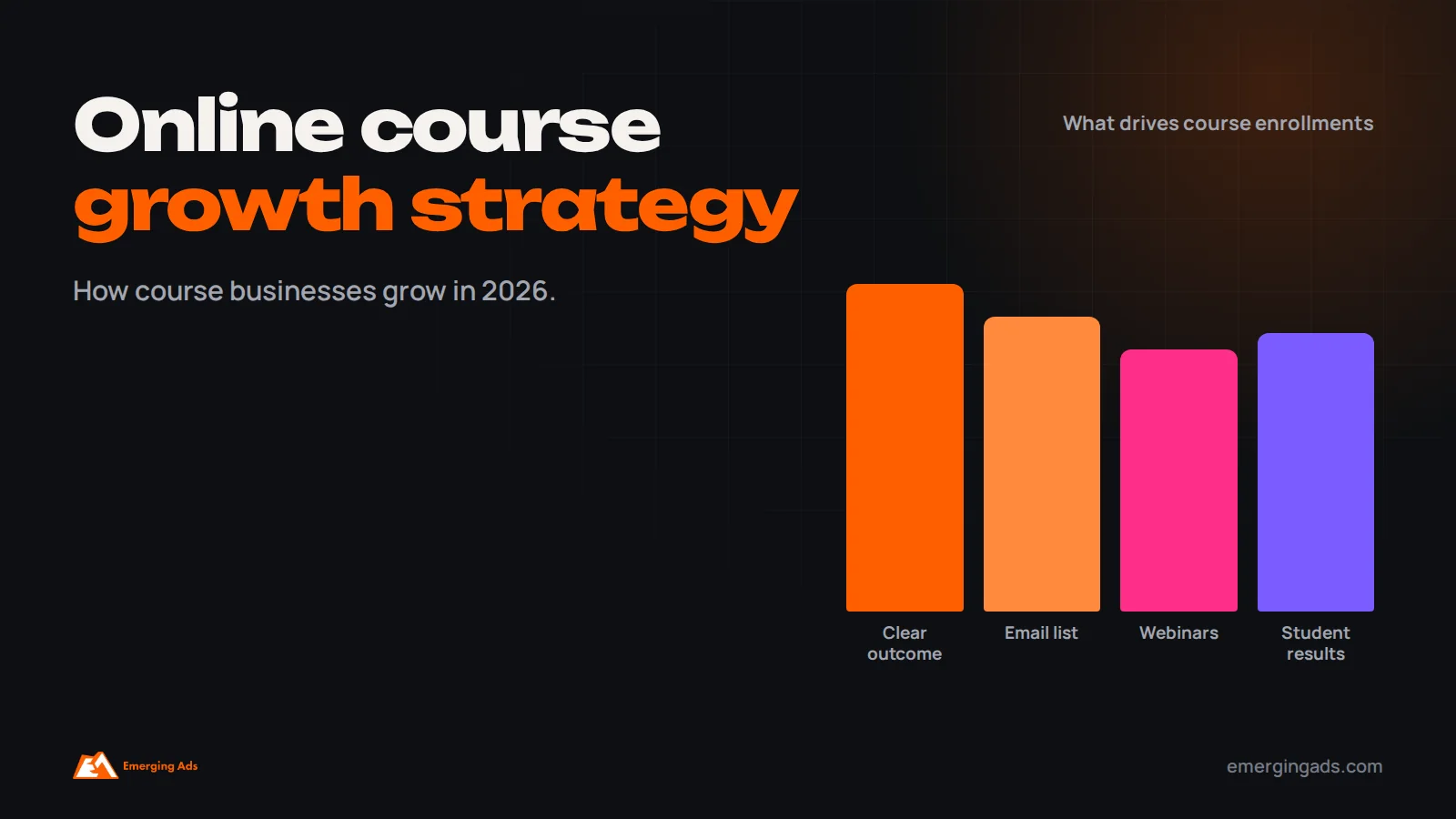
The best growth strategy for an online course business in 2026 starts with a specific audience and outcome, validates demand before building, grows an email list through free value such as lead magnets, webinars and mini-courses, sells through launches or evergreen funnels, uses search, YouTube and social content for long-term demand, and adds paid ads once the funnel converts. Completion rates, student results and community drive reviews, referrals and repeat purchases, which matter as much as acquisition.
Online courses look simple from the outside: record lessons, upload them to a platform and sell. In practice, the market is crowded, buyers are skeptical after years of overpromising, and many courses struggle to sell beyond the creator’s existing followers. Course platforms and education companies face similar challenges at a larger scale.
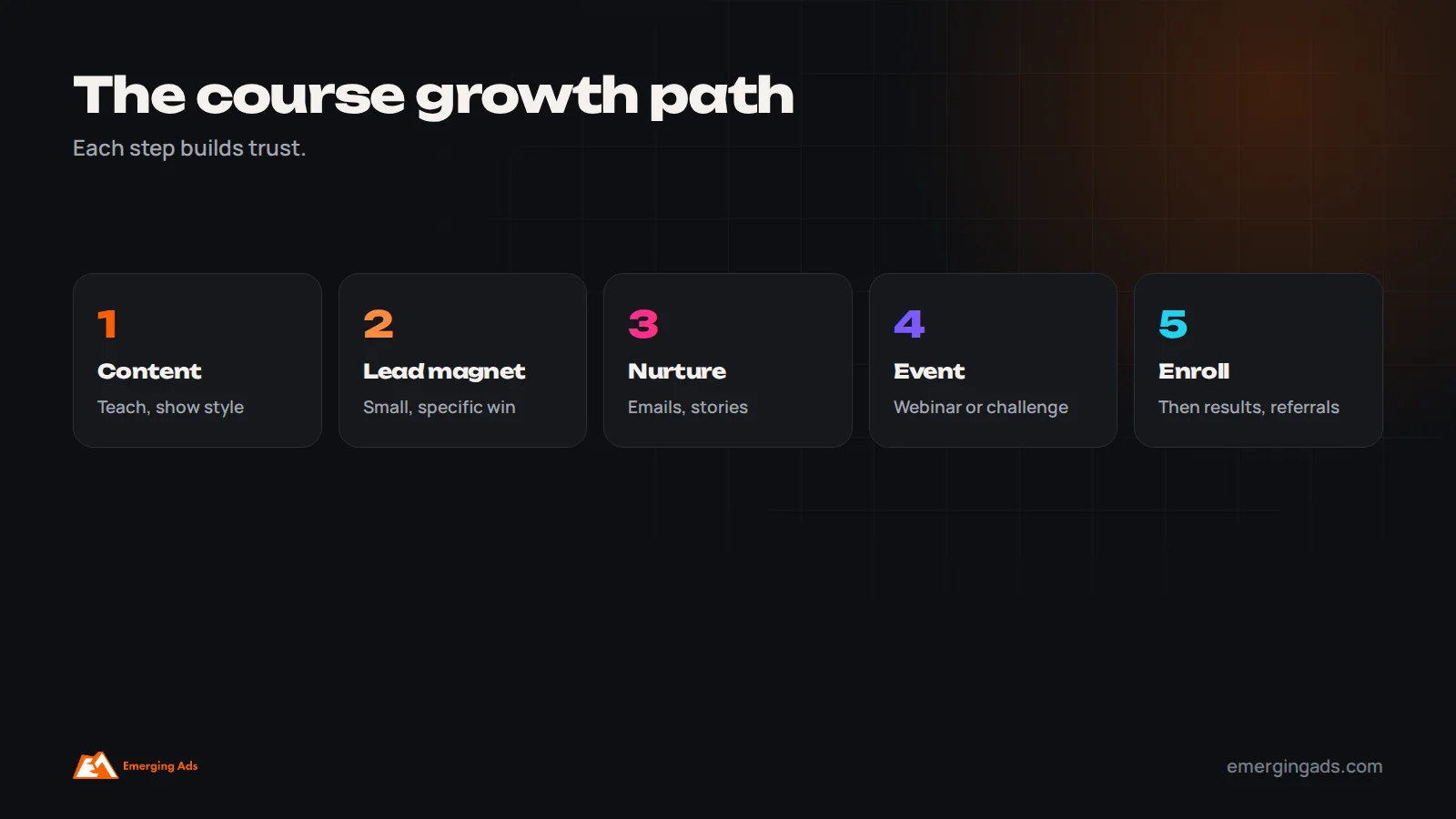
The course businesses that grow consistently do a few things well. They know exactly who they serve and what result students get. They build trust before selling. They have a repeatable path from first contact to enrollment. And they care about student outcomes, because satisfied students become the best marketing. This guide sets out a practical growth strategy for online course creators, education businesses and course platforms in 2026.
Start with a specific audience and outcome
Everything else in course marketing becomes easier once the audience and promised result are clear and specific.
“Learn marketing” competes with thousands of free resources. “Get your first ten freelance design clients in 60 days” is specific, measurable and easier to market. Define who the course is for, where they are now, the result they will achieve and roughly how long it takes. Specific positioning makes content, ads and partnerships more effective, and helps students self-select. Our guide to brand positioning explains how to find a clear position.
Validate demand before building
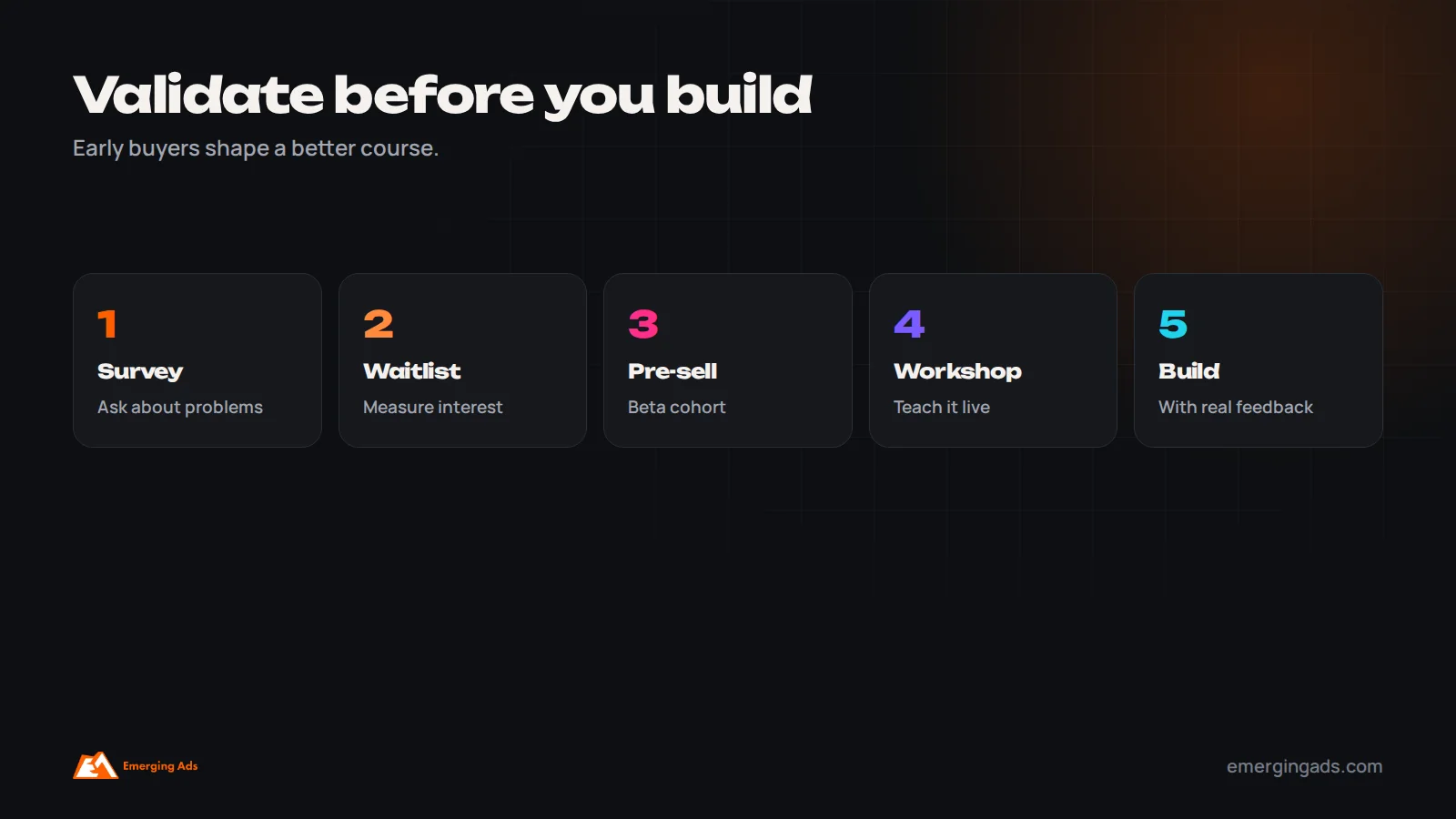
Many creators build an entire course before checking whether anyone will pay. Validate first: survey your audience, run a waitlist, pre-sell a beta cohort at a discount, or teach a live workshop on the topic. Early buyers prove demand, give feedback that shapes the content and become your first testimonials. A course built with input from real students usually sells better than one built in isolation.
Build an email list with free value
Email is the core channel for most course businesses, because buyers usually need several touchpoints before enrolling. Offer free value that solves a small, specific problem related to the course: a checklist, template, short video series, mini-course, quiz or challenge. Follow up with a welcome sequence that delivers quick wins, shares student stories and introduces the course. Our guide to lead nurture automation explains how to structure sequences.
Launches vs evergreen funnels
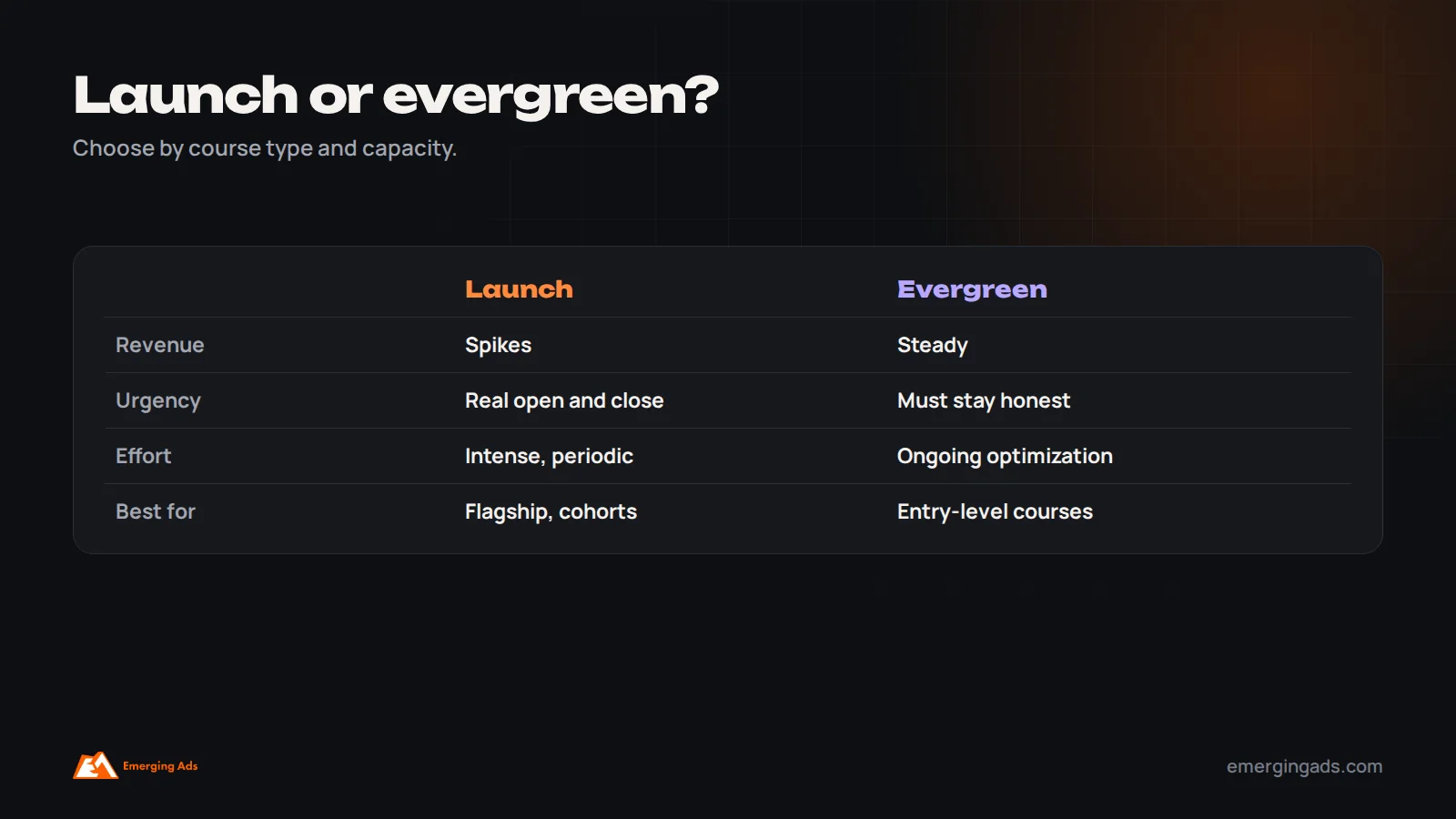
Most course businesses sell through one of two models, or a mix of both. The right choice depends on the course, your audience size, your energy for intense launch periods and how much steady revenue you need.
Launches open enrollment for a limited period, often with a free event such as a webinar or challenge, then close. They create urgency and community but require intense effort and produce uneven revenue.
Evergreen funnels sell continuously through automated webinars, email sequences and ads. They produce steadier revenue but need careful optimization and honest messaging; fake urgency damages trust.
Many course businesses combine both: occasional live launches for flagship programs and an evergreen funnel for entry-level courses.
Running webinars and challenges that convert
Free live events remain one of the most effective ways to sell courses, because they let prospective students experience your teaching. A strong webinar promises one specific outcome in its title, teaches genuinely useful material for most of the session, shares one or two student stories, and ends with a clear explanation of the course, what it includes, who it is for and how to enroll. Send reminders before the event, a replay afterwards and a short follow-up sequence for registrants who did not attend or buy. Challenges run over several days in a group or community, with a daily task and live session, building momentum and relationships before an offer on the final day. Track registrations, attendance, conversion and refunds for every event, and improve the weakest step each time.
Pricing and course structure
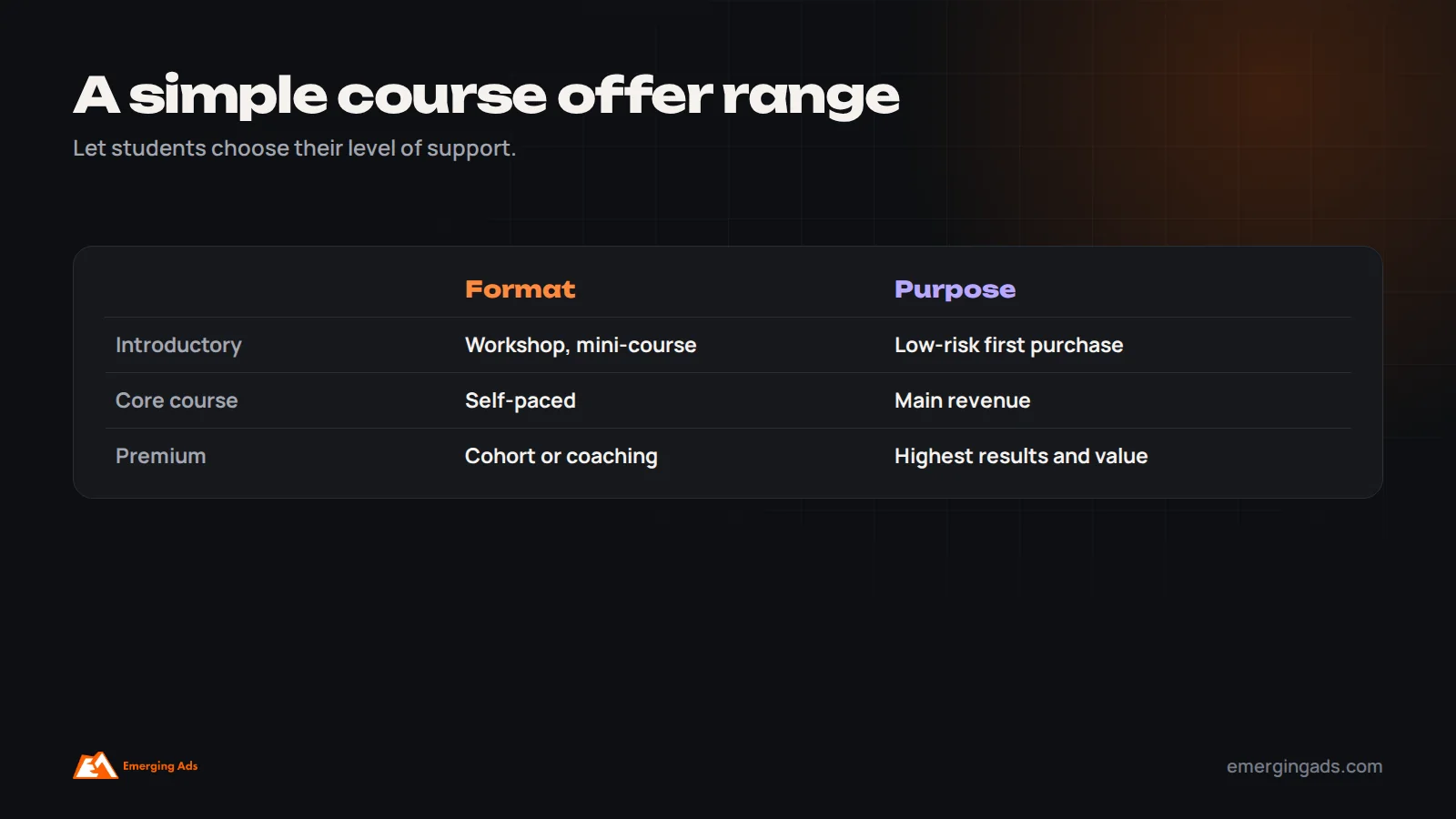
Price signals value and shapes who enrolls. Very cheap courses can attract buyers with little commitment, which lowers completion and results; higher prices need stronger proof, more support and a clearer outcome. Many course businesses offer a range: a low-priced introductory course or workshop, a core self-paced course, and a premium cohort or coaching option with live support. Payment plans make higher-value programs accessible without discounting. Bonuses, such as templates, live Q&A sessions or community access, can add value, but should genuinely help students rather than inflate perceived value.
Community and cohorts
Community transforms self-paced courses, where completion is often low, into experiences people finish and talk about. Cohort-based programs, with fixed start dates, live sessions and peer groups, typically achieve better completion and results than purely self-paced courses. Even self-paced courses benefit from a community space where students ask questions, share progress and celebrate wins. Community members also become a source of testimonials, referrals and ideas for new courses. Our guide to community-led growth explains how to build one that lasts.
Partnerships and affiliates
Partnerships can reach audiences far beyond your own. Guest appearances on podcasts and YouTube channels, joint webinars with complementary experts, bundles with other creators, and affiliate programs where partners earn commission for enrollments all extend reach. Choose partners whose audiences match your ideal students, give them useful assets, and track results by partner. Our guide to performance-based affiliate deals covers commission structures. For B2B courses, partnerships with employers, associations and training budgets can produce group enrollments.
Choosing a course platform
Course platforms differ in pricing, features and control. Some host courses on your own website with full control over branding, pricing and data; others are marketplaces that bring traffic but set prices and own the customer relationship. Consider checkout options, email integration, community features, mobile experience, analytics, payment plans and how easily you can move if needed. For growth, owning your customer list and data matters more than any single feature.
Writing a course sales page that converts
The sales page is where most enrollment decisions are made, so it deserves careful work. Strong course sales pages open with the specific outcome and who the course is for, then describe the problem in the student’s own words, explain the approach and why it works, outline the curriculum module by module with the result of each, introduce the instructor with relevant credentials and experience, show student results and testimonials with specifics, list exactly what is included, such as lessons, templates, community access and live sessions, state the price and payment options clearly, explain the guarantee or refund policy, and answer common objections in a FAQ. Use real screenshots or preview videos of the course itself, since buyers want to see what they are getting. Keep claims honest; exaggerated promises lead to refunds, negative reviews and regulatory risk. Our guide to conversion rate optimization explains how to test and improve pages.
YouTube and search for course businesses
YouTube is often the most valuable long-term channel for course creators. People search YouTube for how to learn skills, and tutorials that answer specific questions can attract viewers for years. Each video demonstrates your teaching style, builds trust and can point viewers to a free lead magnet or the course. Plan videos around questions your target students search for, give genuinely useful answers, and include a clear next step. Written content on your own website, such as guides and tutorials optimized for search, does the same for people searching on Google, and increasingly feeds AI answers that recommend courses and learning resources. Our guide to keyword research helps find topics people actually search for.
Selling more to existing students
Existing students are the warmest audience a course business has. Students who complete one course and get results often want the next step: an advanced course, a cohort program, coaching, a community membership or certification. Map a learning path that takes students from beginner to advanced outcomes, and introduce the next step at moments of success, such as course completion or a result shared in the community. Membership models with ongoing content, live sessions and community can provide recurring revenue, provided they deliver ongoing value. Track repeat purchase rates and lifetime value, not just first purchases.
Course platforms and B2B education
Course platforms, education companies and B2B training providers face additional challenges: attracting both instructors and learners, selling to employers and institutions, and competing with large marketplaces. B2B education marketing often relies on LinkedIn, search, content that addresses skills gaps, case studies showing business results from training, partnerships with professional bodies and direct sales to HR and learning teams. Measuring outcomes, such as skills gained, certifications earned or performance improvements, is especially important when organizations pay. Our guide to B2B leads with LinkedIn ads covers the paid side.
Marketing courses honestly
The online course industry has suffered from exaggerated income claims, fake countdown timers, misleading testimonials and high-pressure tactics. Regulators, including the US Federal Trade Commission, have taken action against misleading earnings claims, and buyers have become more skeptical. Honest marketing is both the right approach and a competitive advantage. Describe typical results realistically, use genuine deadlines only, show real testimonials with context, be clear about what students must do to succeed, and offer a fair refund policy. Course businesses known for honesty build reputations that bring referrals for years.
An example growth plan
Consider a designer who teaches freelance designers how to win better clients. She validates demand by running a paid live workshop for a small group, then turns the feedback into a six-week cohort course. She publishes two YouTube tutorials a month on topics such as pricing design work and writing proposals, each pointing to a free proposal template. The template grows her email list, and a welcome sequence shares student stories and invites subscribers to a monthly live webinar. Each cohort opens with a webinar and a one-week enrollment window. Students join a community, meet weekly on live calls and share wins. After three cohorts, she has dozens of testimonials with specific results, starts small YouTube and Meta ads promoting the template, and launches an advanced program for graduates. Enrollments grow steadily, refunds stay low and most new students mention a referral or YouTube video.
Building an evergreen funnel that stays honest
Evergreen funnels sell courses continuously without live launches. A typical funnel combines a lead magnet or free training, an automated or on-demand webinar, an email sequence that addresses objections and shares student results, and a sales page. Ads bring new people into the funnel, and email turns them into students over days or weeks. The challenge is keeping urgency genuine. Fake timers and “closing soon” messages for courses that never close erode trust quickly and can breach consumer protection rules. Honest alternatives include time-limited bonuses that are genuinely limited, early-bird pricing that actually ends, or simply strong reasons to start now based on the student’s goals. Review evergreen funnels regularly, since messages that worked a year ago may now feel stale.
Email sequences that sell courses
Course emails work best when they teach as well as sell. A typical sequence after someone downloads a lead magnet might deliver the resource and a quick win, share the instructor’s story and approach, explain a common mistake and how to avoid it, present a student story with specific results, answer common objections such as time, cost or whether it will work for them, and then invite them to a webinar or the course with a clear explanation of what is included. After the sequence, regular newsletters keep subscribers engaged with useful content and occasional offers. Segment by interest and stage so subscribers receive relevant messages.
Social media for course creators
Social media builds awareness and personal connection, which matter in a category where people buy from instructors they trust. Short videos sharing tips, student wins, behind-the-scenes moments and honest opinions about the topic help prospective students get to know you. Choose platforms that suit the audience: LinkedIn for professional and business skills, Instagram and TikTok for creative and lifestyle topics, and YouTube for in-depth teaching. Always give followers a next step, such as the lead magnet or a free event, so attention turns into email subscribers rather than staying on a platform you do not control.
Testimonials and social proof
Prospective students want evidence that a course works for people like them. Collect testimonials systematically: ask at key moments, such as after a student achieves a result or completes the course, make it easy with a short form or video recording tool, and ask specific questions about where they started, what changed and what they would tell someone considering the course. Turn the strongest stories into short case studies and videos. Display them on sales pages, in emails and in ads, matched to the audience who will see them. Reviews on independent platforms add credibility, since buyers trust them more than testimonials chosen by the seller.
Course marketing in different markets
Online learning is growing worldwide, but buyer expectations differ. In the US and UK, the course market is mature, competition is intense and buyers expect clear outcomes and strong proof. In India, demand for skills, exam preparation, career and language courses is very large, price sensitivity is often higher, regional language content widens reach, and YouTube, Instagram and WhatsApp communities are central. In the Gulf, demand for professional development, business, language and personal development courses is growing, with Arabic content reaching audiences that English-only courses miss. Adapt pricing, language, examples, payment options and channels to each market you target.
What to review every month
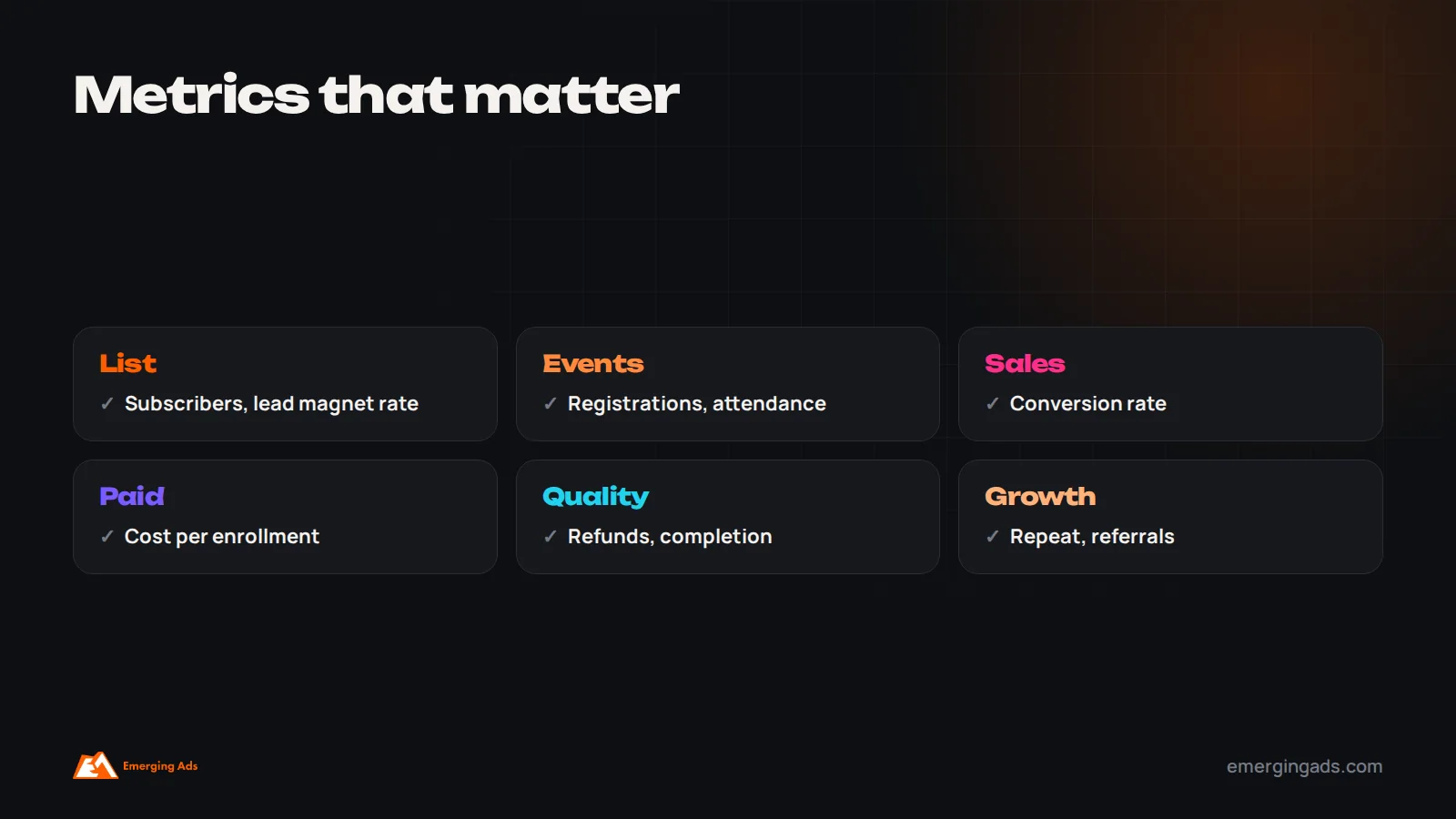
Review the full journey each month: new subscribers and their sources, lead magnet conversion, event registrations and attendance, sales page conversion, enrollments and revenue, cost per enrollment for paid channels, refunds, course progress and completion, student results and testimonials collected, and repeat purchases. Identify the weakest step in the funnel and focus improvement there. Course businesses that review these numbers consistently usually grow faster than those that only watch revenue.
AI search and course discovery
Learners increasingly ask AI assistants how to learn a skill or which course to take. These answers draw on reviews, tutorials, articles, course listings and instructor websites. Clear course descriptions with specific outcomes, honest reviews on independent platforms, helpful free content that answers learners’ questions and consistent instructor credentials across the web make it more likely your course is mentioned. Our guide to ChatGPT SEO explains what helps.
Systems and team as you grow
Early on, most course creators do everything themselves: content, teaching, marketing and support. As the business grows, systems and help become essential. Useful systems include an email platform with automated sequences, a course platform with progress tracking, a community tool, a simple CRM or spreadsheet for leads and partners, and templates for launches and webinars. Common first hires or contractors include a video editor, a community or student success manager, a marketing assistant and, later, a paid ads specialist or agency. Protect time for teaching quality and student support, since outcomes drive long-term growth.
Budgeting for course marketing
Set marketing budgets from course economics. Work out average revenue per student, including upgrades and repeat purchases, your refund rate and the share of webinar attendees or email subscribers who enroll. From that, calculate what you can afford per lead and per enrollment. Invest first in content and list building, which compound over time, and add paid ads once the funnel converts. Review cost per enrollment and refund rates monthly, and shift budget toward the channels and offers that bring students who complete and succeed.
A quick course marketing checklist
Check that your course has a specific audience and outcome, that demand was validated before building, that a useful lead magnet and welcome sequence are running, that a webinar, challenge or other event converts consistently, that the sales page explains outcomes, curriculum, instructor, results and refund policy clearly, that content builds long-term demand, that students have structure and community, that testimonials are collected systematically, and that claims and urgency are honest.
Running your first launch
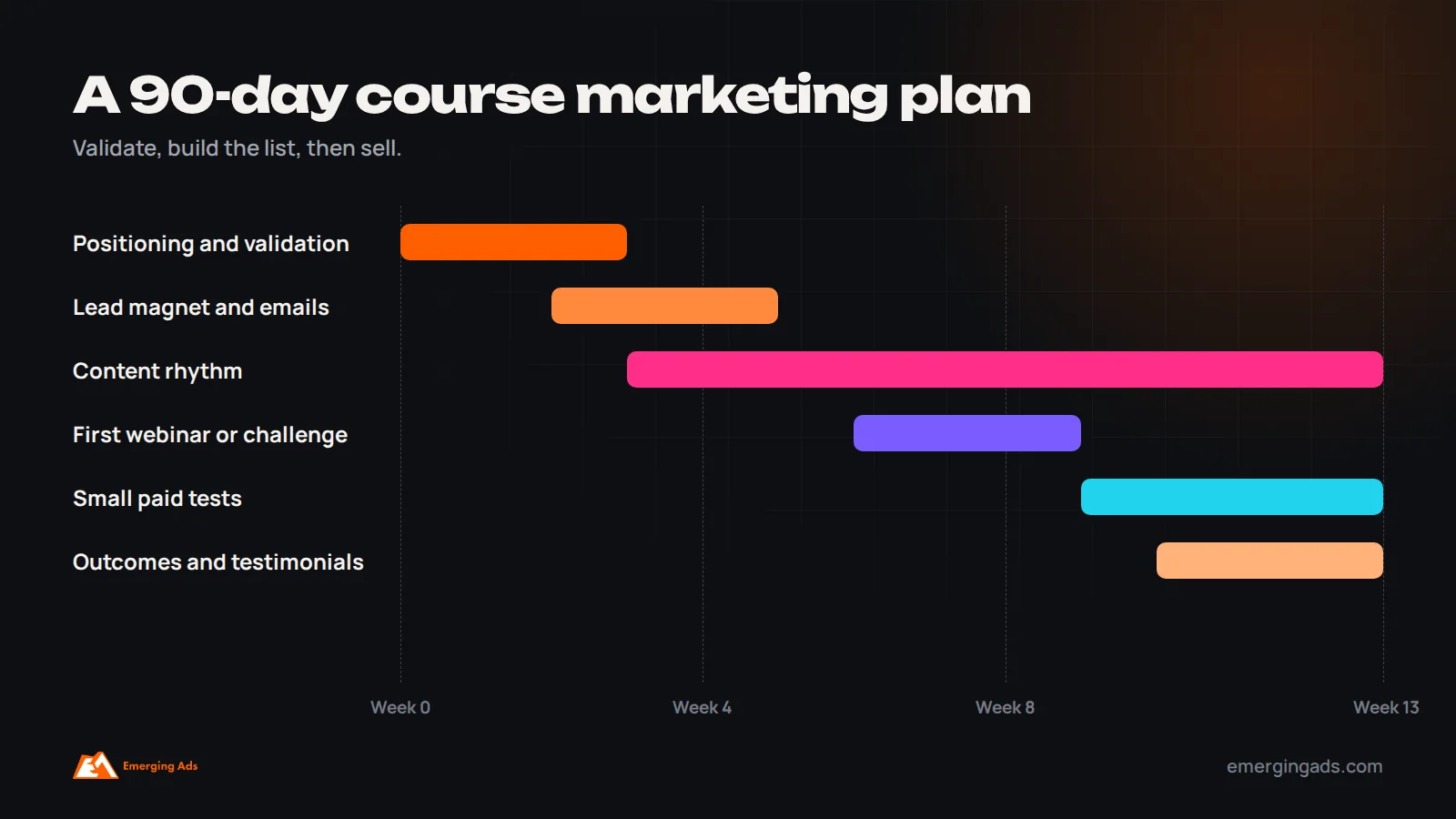
A first launch does not need a large audience. Start building interest four to six weeks ahead with useful content and a waitlist. Two weeks before, announce a free live event, such as a workshop or three-day challenge, and promote it to your list, social followers and partners. Teach generously during the event, then open enrollment for about a week with a clear explanation of the course, a genuine early-bird bonus and a firm close date. Send a short sequence of emails during the open period answering common questions and sharing early student stories. After closing, survey people who did not buy to understand why, and use the answers to improve the next launch. Many successful course businesses grew from small first launches refined over several rounds.
Improving completion rates
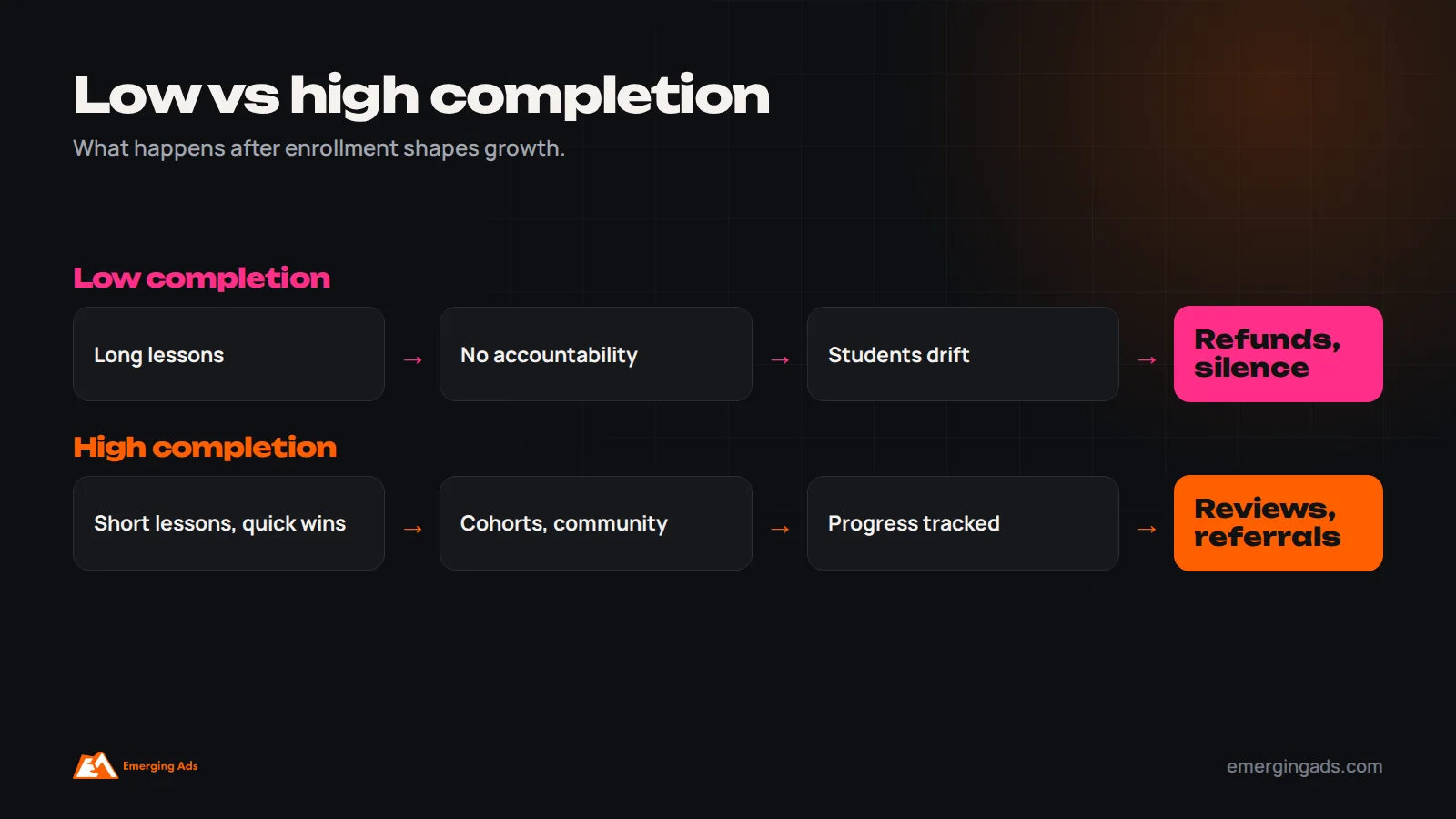
Completion affects reviews, refunds, referrals and repeat purchases, so it deserves deliberate attention. Shorter lessons, a clear roadmap, early quick wins, regular reminders, accountability through cohorts or live calls, assignments with feedback, community support and milestone celebrations all help. Track where students drop off in the course, and improve those lessons first. Reaching out personally to students who stall can recover many of them and provide valuable feedback about the course.
Content for long-term demand
Content builds trust and brings students for years. YouTube is especially powerful for course creators because tutorials rank in search and demonstrate teaching style. Blog posts and SEO capture people searching for how to learn skills. Podcasts build depth and loyalty. Social platforms, such as Instagram, TikTok and LinkedIn, build awareness and community. Choose one or two channels that suit your topic and audience, and teach genuinely useful content consistently.
Paid ads for course businesses
Ads can accelerate growth quickly, but only for a funnel that already works well without them.
Paid ads amplify a funnel that already converts. Common approaches include promoting a lead magnet or webinar to cold audiences, retargeting engaged visitors and email subscribers with testimonials and enrollment offers, and search ads for course topics people actively look for. Track cost per lead, cost per webinar attendee, conversion rate and cost per enrollment, and scale gradually. Our guide to scaling Meta ads covers how to grow spend efficiently.
Student outcomes drive growth
The best marketing a course business can have is students who succeed and talk about it.
Course completion and student results are marketing assets. Students who finish and succeed leave reviews, share their results, refer friends and buy the next course. Improve outcomes with clear structure, short lessons, accountability such as cohorts, live calls or deadlines, community support, quick wins early in the course and progress tracking. Collect testimonials and case studies systematically, and share them honestly.
Metrics that matter
Track the whole journey from first subscriber to successful, returning student, and review it monthly.
- Email subscribers and lead magnet conversion.
- Webinar or event registration and attendance.
- Conversion rate to enrollment.
- Cost per enrollment for paid channels.
- Refund rate.
- Completion rate and student results.
- Repeat purchases and referrals.
Common mistakes
These are the patterns that most often hold course businesses back, even when the course itself is good.
- Building a course before validating demand.
- Vague positioning and promises.
- Relying only on social media followers.
- Running ads before the funnel converts.
- Fake scarcity and exaggerated income claims.
- Ignoring completion and student results.
Frequently asked questions
How do I market an online course?
Define a specific audience and outcome, validate demand, grow an email list with free value, sell through launches or evergreen funnels, build content for long-term demand, add paid ads once the funnel converts, and focus on student outcomes.
Should I use launches or an evergreen funnel?
Launches create urgency and community; evergreen funnels provide steady revenue. Many course businesses use both.
What is the best lead magnet for a course?
One that solves a small, specific problem related to the course, such as a checklist, template, mini-course, quiz or challenge.
Is YouTube good for marketing courses?
Yes. Tutorials rank in search for years and show prospective students how you teach.
How do I validate a course idea?
Survey your audience, run a waitlist, pre-sell a beta cohort or teach a live workshop before building the full course.
Why do course completion rates matter?
Students who complete and succeed leave reviews, refer others and buy again, which drives growth.
When should course creators run paid ads?
Once the lead magnet, webinar or sales page converts organically, so ads amplify a proven funnel.
What metrics should course businesses track?
Subscribers, event attendance, conversion rate, cost per enrollment, refunds, completion, results, repeat purchases and referrals.