Top-Rated E-Commerce Marketing Agency Netherlands for Small Business
Key Takeaways
- Dutch e-commerce marketing retainers typically run EUR 1,200-EUR 7,000+ a month, with pricing shaped by whether an agency handles local payment methods like iDEAL properly
- The Netherlands has one of Europe’s highest e-commerce penetration rates, which means competition for paid search and social ad inventory is intense relative to the country’s size
- GDPR compliance and cookie consent aren’t optional extras, they directly affect email marketing, retargeting audience building, and analytics setup for any Dutch-facing store
- Dutch consumers respond well to direct, factual marketing messaging, over-promising or heavily embellished copy tends to underperform compared to markets that reward more aggressive sales language
- Cross-border selling into the broader EU single market is common for Netherlands-based e-commerce brands, and an agency should account for this from the start rather than treating the Netherlands as an isolated market
Why the Dutch E-Commerce Market Rewards a Different Approach
The Netherlands has one of the highest e-commerce adoption rates in Europe, a densely connected, tech-comfortable population that shops online across nearly every category. That sounds like an easy market to sell into, and in some ways it is, but the flip side is that competition for the same paid search and social ad inventory is unusually intense given the country’s relatively small population of roughly 18 million people.
An agency that treats the Netherlands as a smaller, generic version of a broader European or English-language strategy tends to underperform here. Dutch shoppers are famously price-conscious and comparison-shop aggressively before buying, and the brands and agencies that win are the ones that respect that behavior with transparent pricing, honest product information, and fast, reliable fulfillment promises rather than aggressive urgency-driven sales tactics.
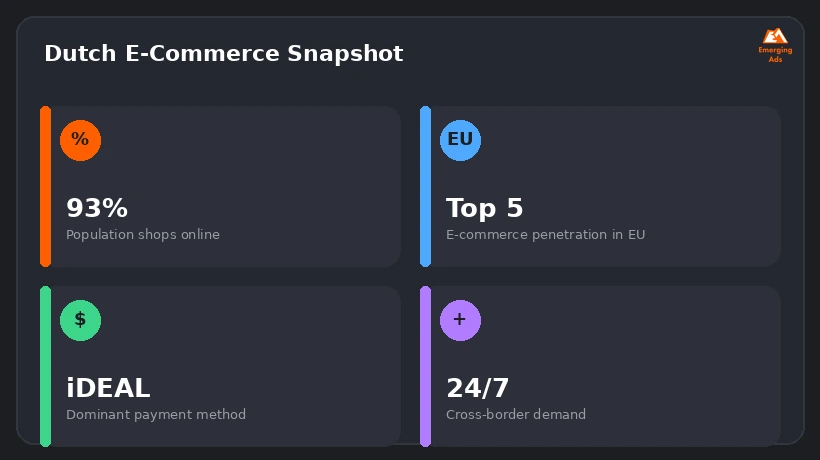
This is also a market where word of mouth and review culture carry real weight. Dutch consumers check independent review platforms (Trustpilot and similar) heavily before purchasing from a smaller or newer brand, and a marketing strategy that doesn’t actively build and showcase a genuine review base is leaving a meaningful trust-building lever unused.
Typical Pricing for Netherlands E-Commerce Marketing
| Service | Typical Monthly Range (EUR) |
|---|---|
| PPC management (Google Shopping/Meta) | EUR 1,200-EUR 4,000 + ad spend |
| SEO for e-commerce | EUR 1,000-EUR 3,500 |
| Full-service (PPC + SEO + email/CRO) | EUR 2,500-EUR 7,000+ |
| One-off Shopify/platform optimization | EUR 1,500-EUR 8,000 (project-based) |
Dutch agency pricing tends to sit closer to UK and German rates than to lower-cost Southern or Eastern European markets, reflecting both the country’s high cost of living and the genuine sophistication of its digital marketing talent pool. Amsterdam and Rotterdam-based agencies typically price at the higher end of these ranges.
As with any market, always confirm whether a quoted number includes ad spend or is management fee only, and whether pricing is quoted including or excluding Dutch VAT (BTW), which is a common point of confusion for businesses newer to the market.
Payment Methods: Why iDEAL Support Isn’t Optional
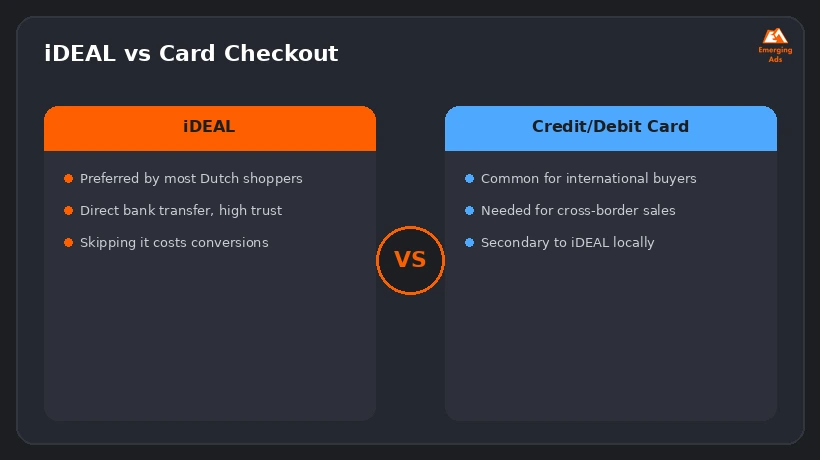
iDEAL is the dominant online payment method in the Netherlands, used for the large majority of Dutch e-commerce transactions, well ahead of credit cards, which are used far less domestically than in markets like the US or UK. A checkout that doesn’t offer iDEAL prominently, or buries it below credit card options, will measurably underperform with local shoppers regardless of how strong the surrounding marketing is.
- Ensure iDEAL is set up and displayed as a primary, not secondary, payment option at checkout
- Test checkout completion rates specifically for Dutch traffic separately from other markets, since payment friction shows up disproportionately here if iDEAL is missing or poorly implemented
- Ask a prospective agency directly whether they’ve configured iDEAL-inclusive checkouts before, this is a simple, specific question that quickly separates agencies with genuine Netherlands e-commerce experience from those without it
- Consider Bancontact support too if you’re also targeting the Belgian market, a natural cross-border extension for many Netherlands-based brands
GDPR and Cookie Consent for Dutch E-Commerce
As an EU member state, the Netherlands enforces GDPR strictly, and Dutch consumers are generally more privacy-aware than shoppers in many other markets, partly due to strong local consumer protection culture. A marketing agency working with Dutch e-commerce brands needs properly configured cookie consent, clean email opt-in processes, and GDPR-compliant retargeting audience building baked into the campaign setup from day one, not retrofitted after a complaint or an ad platform policy flag.
This has practical marketing implications beyond legal compliance. A poorly implemented cookie consent banner that blocks too much or too little tracking directly affects how much retargeting and analytics data is actually available to optimize campaigns, so getting this right isn’t just about avoiding fines, it’s foundational to running effective paid media in the first place.
Messaging That Actually Works With Dutch Consumers
Dutch marketing culture leans toward directness (sometimes called Dutch directness even by the Dutch themselves) and a genuine skepticism toward hype-driven or heavily embellished sales copy. Messaging that would read as normal, confident marketing copy in the US can come across as overselling or untrustworthy to a Dutch audience.
| Approach | How It Lands With Dutch Consumers |
|---|---|
| Specific, factual product claims | Builds trust, generally performs well |
| Heavy urgency/scarcity tactics | Often perceived skeptically, can reduce trust |
| Clear, upfront pricing | Strongly preferred over hidden fees revealed at checkout |
| Genuine customer reviews prominently displayed | Significantly influences purchase decisions |
This doesn’t mean Dutch marketing has to be dry or boring, humor and personality still work well, but they tend to land better paired with genuine substance and transparency rather than pure hype. Brands that adapt their tone specifically for this market, rather than running the same aggressive discount-driven creative used elsewhere in Europe, tend to build stronger long-term trust and repeat purchase behavior.
Selling Cross-Border From a Netherlands Base
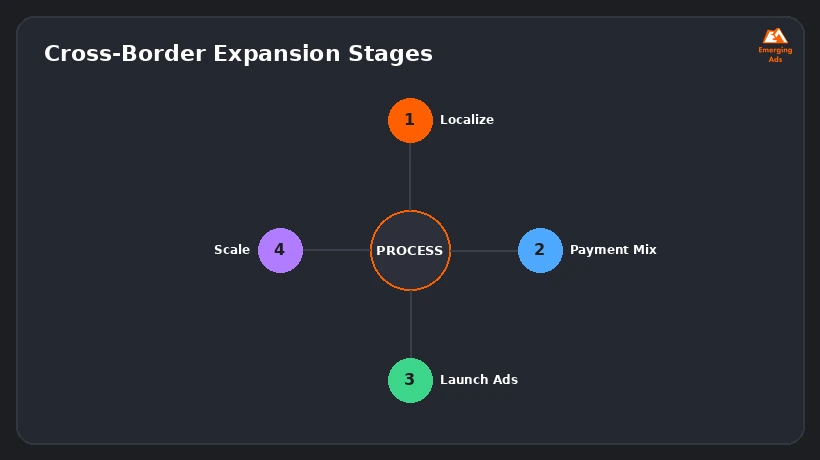
Many Netherlands-based e-commerce brands naturally expand into selling across the broader EU single market, taking advantage of the country’s central location and strong logistics infrastructure (Rotterdam’s port and Schiphol’s air cargo capacity make the Netherlands a genuine European fulfillment hub for many brands).
- Confirm your agency’s experience running campaigns across multiple EU markets simultaneously, not just the Netherlands in isolation
- Understand how VAT obligations change as you sell into other EU countries, and make sure checkout and pricing reflect this correctly by destination
- Consider language localization priorities, German and French are natural next markets for many Netherlands-based brands given proximity and trade volume
- Build campaign structure that can scale market by market rather than one blended pan-European campaign that obscures which specific country is actually driving results
Content and Channel Strategy for Dutch Shoppers
Channel preferences in the Netherlands broadly mirror wider Western European patterns, Google Search and Shopping dominate for high-intent, transactional traffic, Instagram and Facebook remain strong for retargeting and broader reach, and TikTok has grown quickly with younger Dutch demographics without yet reaching the dominance it holds in some other markets. What differs is less the platform mix and more the tone and substance of what performs on each one.
Content that walks through genuine product detail, sourcing, materials, sizing specifics, and honest limitations tends to outperform purely aspirational lifestyle content with this audience. This doesn’t mean lifestyle and brand-building content has no place, but it works best layered on top of a foundation of real, checkable product information rather than replacing it entirely.
A practical channel sequence for a new Netherlands-focused e-commerce brand
- Start with Google Shopping and Search ads targeting specific, transactional Dutch-language keywords, this typically delivers the fastest, most measurable early signal
- Layer in Meta retargeting once you have enough site traffic and pixel data to build meaningful audiences, focused on factual, review-supported creative
- Test TikTok for younger-skewing product categories once the first two channels are performing predictably, rather than launching there first
- Build an email flow (welcome series, abandoned cart, post-purchase) early, Dutch consumers who’ve already engaged respond well to helpful, non-pushy follow-up rather than aggressive discount bombardment
Common Mistakes Brands Make Entering the Dutch Market
A recurring pattern we see with brands new to the Netherlands is launching with creative and messaging lifted directly from a US or UK campaign, translated but not genuinely adapted. Direct translation misses the tonal shift this market rewards, and Dutch consumers, many of whom are fluently multilingual and regularly see both English and Dutch marketing, notice the difference between authentic localization and a translated afterthought.
- Launching without iDEAL prominently supported at checkout, quietly capping conversion rate before any marketing even runs
- Using aggressive countdown timers and stock-scarcity messaging borrowed from markets where it performs better, which can read as manipulative to Dutch shoppers
- Underestimating how much comparison shopping happens before a Dutch consumer commits to a purchase, and not building pricing and offer strategy with that visible competition in mind
- Treating the Netherlands and Belgium’s Dutch-speaking Flanders region as identical markets, subtle cultural and regulatory differences exist and are worth accounting for separately if targeting both
Logistics and Fulfillment Expectations in the Netherlands
Dutch e-commerce customers hold delivery expectations shaped by a densely populated, logistically efficient country, next-day or even same-day delivery is common and increasingly expected for many product categories, and a brand whose fulfillment promise lags noticeably behind established local competitors will lose conversions regardless of how strong the marketing funnel above it performs.
Marketing and fulfillment need to be genuinely aligned here, not managed as separate workstreams. A campaign promising fast delivery that the fulfillment operation can’t actually back up creates exactly the kind of trust gap this comparison-savvy, review-conscious market punishes quickly and visibly, both in direct feedback and in the review scores future customers will see before they buy.
- Set delivery time expectations in ad and landing page copy that match what your actual fulfillment operation can reliably deliver, not an aspirational best case
- Consider a local or EU-based fulfillment partner if you’re currently shipping from outside Europe, since customs delays and longer transit times are a common source of Dutch customer complaints for international brands
- Make return policy details clear and easy to find, Dutch consumers, protected by strong EU consumer rights around returns, actively check this before completing a purchase
- Track delivery-related complaints and reviews as a marketing input, not just an operations metric, since they directly affect the trust signals future paid traffic will see
Questions to Ask a Netherlands E-Commerce Agency
- Have you set up iDEAL-inclusive checkouts before, and can you show results for a comparable Dutch e-commerce brand
- How do you handle GDPR-compliant cookie consent and retargeting audience building specifically for this market
- What’s your experience adapting messaging tone for Dutch consumers versus a broader European campaign
- If cross-border expansion is a goal, what’s your experience running multi-country EU campaigns rather than just the Netherlands alone
- Are your quoted prices inclusive or exclusive of Dutch VAT (BTW)
What Good Results Look Like in the First Quarter
For a Netherlands-focused e-commerce brand, the first quarter with a new agency should show properly functioning iDEAL-inclusive checkout with measurable completion rate data, a clean GDPR-compliant tracking setup actually feeding usable data back into campaigns, and early signal on which paid channels and messaging approaches are resonating with the notably price-conscious, comparison-driven Dutch shopper.
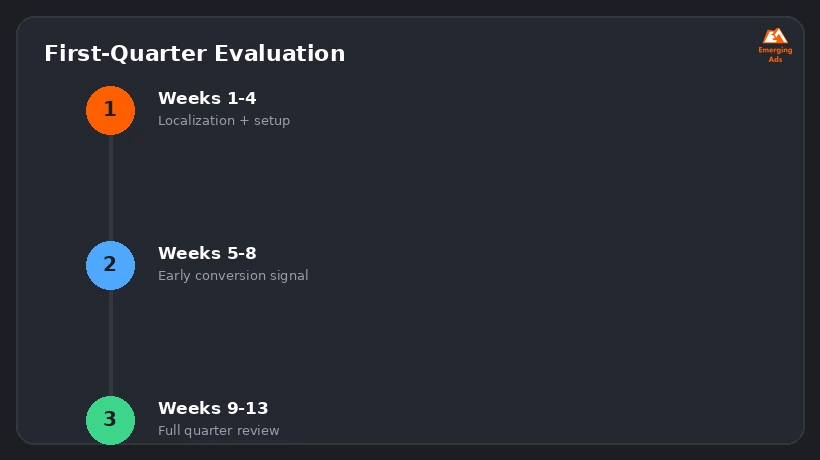
Given the market’s comparison-shopping culture, it’s also worth tracking how your pricing and offers stack up against direct competitors visible in the same Google Shopping and comparison-site results Dutch consumers are actively checking before they buy, since that competitive context often explains performance shifts that pure account-level metrics alone won’t reveal.
By the end of the first quarter, you should also have a reasonably clear read on whether the Netherlands alone justifies the marketing investment at its current scale, or whether the stronger long-term opportunity is using this market as a proven, well-instrumented base from which to expand into neighboring EU markets with a similar playbook.
Whichever direction the data points, put a specific decision date on the calendar rather than letting the quarter drift into an open-ended ongoing arrangement without a deliberate checkpoint, a dedicated review at the 90-day mark keeps both you and the agency honest about what’s actually working.
One more thing worth putting in writing before the quarter starts is exactly what a good outcome looks like in numbers, not just in general direction. Agreeing upfront on a target blended ROAS, a target cost per acquisition, or a target share of revenue coming from returning Dutch customers gives both sides something concrete to measure against, rather than relying on a vague sense of whether things feel like they’re going well. Vague success criteria are one of the most common reasons a genuinely productive first quarter still ends in a frustrating renewal conversation, simply because nobody wrote down what winning was supposed to look like.
Want us to look at your account?
We’ll audit your setup and tell you exactly where the budget is leaking, free.
Get Your Free Ad AuditFrequently Asked Questions
How much does e-commerce marketing cost for a small business in the Netherlands?
Most Netherlands-based small e-commerce businesses budget between EUR 1,200 and EUR 7,000 a month for agency services, with full-service engagements combining PPC, SEO, and CRO typically at the higher end.
Is iDEAL really necessary for a Dutch e-commerce checkout?
Yes, iDEAL is the dominant payment method for Dutch online shoppers, well ahead of credit cards. A checkout without prominent iDEAL support will measurably underperform with local customers.
Do Dutch consumers respond differently to marketing than other European audiences?
Generally yes, Dutch marketing culture rewards directness, factual claims, and transparent pricing over heavy urgency or hype-driven sales tactics, which can come across as less trustworthy to this audience.
How important is GDPR compliance for Netherlands-based e-commerce marketing?
Very important, both legally and practically. Properly configured cookie consent directly affects how much retargeting and analytics data is available to optimize campaigns, so getting it right is foundational, not just a compliance checkbox.
Should a Netherlands e-commerce brand expand into other EU markets?
Many do, given the country’s central location and strong logistics infrastructure. It’s worth discussing with a prospective agency whether they have genuine experience running multi-country EU campaigns rather than treating expansion as an afterthought.
Are Dutch e-commerce agency prices higher or lower than the broader EU average?
Dutch agency pricing tends to sit closer to UK and German rates, reflecting the country’s high cost of living and sophisticated digital marketing talent pool, generally higher than lower-cost Southern or Eastern European markets.
What role do online reviews play in Dutch e-commerce marketing?
A significant one. Dutch consumers check independent review platforms heavily before buying from a smaller or newer brand, so actively building and showcasing a genuine review base is an important trust-building lever.
Should pricing quotes from Dutch agencies include VAT?
Always confirm explicitly whether a quoted price includes or excludes Dutch VAT (BTW), since this is a common point of confusion, particularly for businesses newer to the market.
What’s the biggest mistake brands make marketing to Dutch consumers?
Treating the Netherlands as a smaller, generic version of a broader European campaign, using the same aggressive discount and urgency-driven messaging that performs elsewhere but tends to underperform with this notably price-conscious, comparison-driven audience.
How soon should I expect results from a Netherlands e-commerce agency?
A properly functioning iDEAL-inclusive checkout and clean GDPR-compliant tracking should be in place within the first month, with clearer channel and messaging performance data typically emerging over the first full quarter.
Ready to fix what’s costing you conversions?
Book a free, no-pressure audit of your ad account or website.
Get Your Free Ad Audit