
The short answer
The best real estate marketing strategy in 2026 combines high-intent search ads and portals for buyers already looking, Meta and YouTube video to reach people earlier, fast lead follow-up through WhatsApp, calls and a CRM, and nurture that keeps leads warm for the months most property decisions take. Show properties with video, honest details and clear next steps, follow local advertising rules, and measure success on site visits, bookings and sales rather than cheap leads. Speed of response and lead quality matter more than lead volume.
Real estate marketing has a problem most industries do not: long, emotional, high-value decisions made by people who often enquire with several agents or developers at once. A buyer may browse for months, submit a form on a Tuesday night, and choose whoever calls back first with a useful answer. A developer launching a project may get thousands of leads and convert only a small share into site visits.
The strategies that work in 2026 accept this reality. They capture intent where it exists, build familiarity before people are ready, respond within minutes, and keep in touch until the buyer, seller, landlord or tenant is ready to act. For Zuplex, a UK property management group, we built a Google Ads system with call ads, lead forms and CRM integration that brings in more than 150 qualified landlord leads every week, with cost per lead 38% lower than before and automated first replies within two minutes.
This guide covers the channels, creative, lead handling, nurture, compliance and measurement that make up a strong real estate marketing strategy, whether you are an agency, developer, broker or property manager.

Understand the property buyer’s journey
Property decisions rarely happen in one step. A typical journey looks something like this: early browsing on portals and social media, often months before acting; active research into areas, prices, developers and mortgages; shortlisting properties and agents; enquiries, calls and viewings; negotiation and decision; and finally completion and moving in. Sellers, landlords and tenants follow their own versions.
Different channels serve different stages. Social media and video create awareness and familiarity early. Search and portals capture people actively looking. Fast follow-up and helpful content convert enquiries into viewings. Nurture keeps leads warm through the long middle. A strategy that only covers one stage leaves money on the table.
Google Search: capture active demand
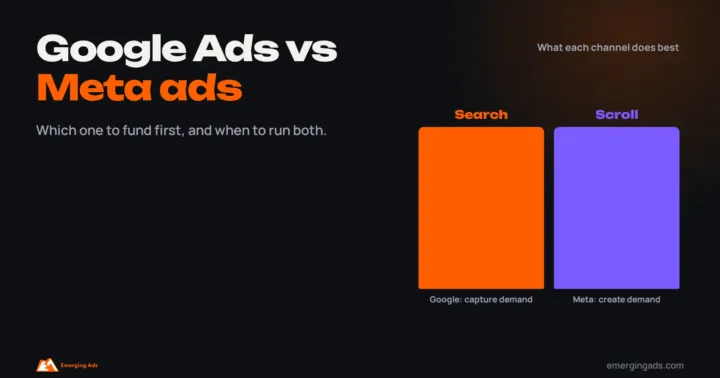
People actively looking search for specific things: property types, areas, projects, price ranges, “for sale”, “for rent”, “near me”, developer names and services such as property management or valuations. Google Search ads put you in front of them at that moment. For lead generation businesses such as property management, guaranteed rent, mortgage brokers and valuation services, search is often the most efficient channel.
Best practices include tightly grouped campaigns by property type and area, strong negative keywords to filter out irrelevant searches, call ads and call extensions for people who prefer to phone, location targeting set to people in or regularly in your target areas, and landing pages that match each search closely. Our guides to lowering Google Ads CPA and lowering cost per click cover the mechanics.
Meta and Instagram: reach buyers earlier
Facebook and Instagram reach people before they start searching, and they suit visual products such as property. Lead ads with instant forms can generate high volumes of enquiries at low cost per lead, but lead quality varies widely. Add qualifying questions, such as budget, timeline, preferred area and whether the buyer is an investor or end user, and test forms that require more intent against those that make submitting easy.
In some countries, including the US, Meta applies special rules to housing ads that limit targeting options to prevent discrimination. Check the rules for your market. Elsewhere, broad targeting with strong creative often outperforms narrow interest targeting, because creative does much of the targeting work. Our guide to Facebook ads mistakes covers what to avoid.
Video: the most persuasive real estate content
Video is the closest thing to a viewing. Walkthrough tours, neighborhood guides, drone footage, developer and agent introductions, amenity tours, before-and-after renovations and buyer testimonials all build trust and help buyers shortlist. Vertical short videos work on Instagram Reels, YouTube Shorts, TikTok where available and Snapchat. Longer tours and guides work on YouTube and property pages. Our guide to YouTube ads explains how to reach people with longer video.

Property portals
For most agents and landlords, portals remain a core source of enquiries and deserve the same care as any paid channel.
Portals remain central in most markets because buyers and renters use them to compare listings. Listing quality matters: professional photos, video, floor plans, accurate details and fast responses to enquiries. Portals capture high-intent demand but are shared with competitors, so differentiation comes from presentation and speed. Many agencies use portals for volume and their own website, search ads and social for brand building and direct enquiries that do not depend on portal fees.
SEO and your own website
Your website is where you control the experience. Area guides, market updates, buying and selling guides, project pages and property pages can rank for valuable searches and build authority over time. Local SEO matters too: a strong Google Business Profile for each office, with genuine reviews, helps agents and property managers win “near me” searches. AI assistants increasingly answer questions such as which areas suit families or how to buy property as a foreigner, so clear, specific content also improves visibility there. Our technical SEO checklist covers the foundations.
Speed to lead: the biggest lever
If you change only one thing in your real estate marketing this year, make it response time. It affects every channel at once, costs little to improve and often lifts conversion to viewings more than any change in targeting or budget.
In real estate, the first agent or developer to respond helpfully often wins. Leads that wait hours go cold or talk to competitors. Strong systems respond within minutes:
- Instant automated acknowledgment by WhatsApp or SMS, with a way to book a call or viewing.
- Automatic routing to the right agent by area, project, language or availability.
- Notifications on the channel agents actually use.
- Escalation if nobody responds within a set time.
- Call tracking so phone enquiries are recorded and followed up.
For Zuplex, automated first replies within two minutes were a core part of turning leads into conversations. Our article on CRM automation mistakes covers how to build this.

Qualify leads without killing volume
Not every lead is a buyer. Qualification helps agents spend time on the right people. Use a small number of qualifying questions in forms, such as budget, timeline and area, and ask the rest in the first conversation. Score leads based on answers and behavior, such as visiting pricing pages or opening project brochures, and route hot leads to senior agents. Send outcomes such as qualified, viewing booked and sale closed back to ad platforms, so they optimize for quality rather than form fills.
Nurture: the long middle
Many property leads will not buy for months. Nurture keeps them engaged until they are ready, with new listings matching their criteria, market updates, area guides, financing information, open house invitations and occasional personal check-ins. WhatsApp works well in markets such as the Gulf and India; email suits longer content everywhere. Our guide to lead nurture automation explains how to structure sequences.
Project launches vs ongoing marketing
Developers launching projects need intense, time-bound campaigns: teaser content, waitlists, launch events, early-bird offers, high lead volumes and large sales teams ready to call. Agents and property managers need steady, ongoing lead flow across listings and services. Launch campaigns benefit from building audiences weeks in advance, preparing creative in every format and planning follow-up capacity before ads go live. Ongoing marketing benefits from consistent content, reviews, SEO and efficient search campaigns.
Landing pages that convert property leads
Sending paid traffic to a homepage or a generic listings page wastes much of it. Each major campaign should have a landing page built for that audience: a specific project, area, property type or service. Strong property landing pages lead with the key facts buyers want first, such as location, price range, size, handover or availability and payment plans; show high-quality photos, video and floor plans; explain amenities and the neighborhood; include trust signals such as developer track record, reviews and awards; and make the next step obvious, whether booking a viewing, downloading a brochure or chatting on WhatsApp. Keep forms short, load quickly on mobile, and match the language of the ad. Our landing page design team builds pages like this for property campaigns.

Creative that works for property
The best real estate creative shows the real thing honestly and answers buyers’ questions. Effective approaches include short walkthrough videos filmed on a phone or gimbal, agent-led tours where a real person explains the property, lifestyle footage of the area, before-and-after renovation reels, client testimonials, quick market updates, and carousel ads with photos, floor plans and key details. Avoid overly polished renders without context, which buyers increasingly distrust, and misleading claims about prices or returns. Test different angles: lifestyle, investment returns, family suitability, location convenience and payment plans each appeal to different buyers.
Retargeting interested visitors
Most people who visit a property page or project site leave without enquiring. Retargeting brings them back. Show visitors of a project page video tours, testimonials and payment plan details; show people who opened but did not submit a lead form a simpler offer, such as a brochure; and show past enquirers new listings that match their interests. Keep frequency sensible, and exclude people who have already booked viewings or bought.
Personal brands for agents
In many markets, buyers choose an agent as much as a property. Agents who post useful, honest content on Instagram, LinkedIn, YouTube and TikTok where available, such as market updates, property tours, buying tips and client stories, build trust and generate referrals and direct enquiries. Agencies can support this with content guidelines, simple filming kits, editing help and paid amplification of the best posts. Our guide to LinkedIn content strategy covers the principles, which apply across platforms.
Reviews and reputation
Property is a high-trust purchase, and reviews heavily influence which agent or developer people contact. Ask satisfied buyers, sellers, landlords and tenants for reviews on Google and relevant property platforms, respond to every review professionally, and showcase genuine reviews on your website and in ads. A steady flow of recent, specific reviews also improves local search visibility and how AI assistants describe your business.
How to allocate a real estate marketing budget
Allocation depends on your business model. Agents and property managers often put the largest share into Google search, portals and local SEO, with a smaller share for social video and retargeting. Developers launching projects often weight budget toward Meta, YouTube and other video channels for reach, with search capturing branded and project searches as awareness grows. In every case, budget for follow-up capacity, CRM and automation as part of marketing, because ads that generate leads nobody calls back are wasted. Review allocation monthly based on cost per viewing and cost per sale by channel, and shift spend toward what converts.

Market-specific considerations
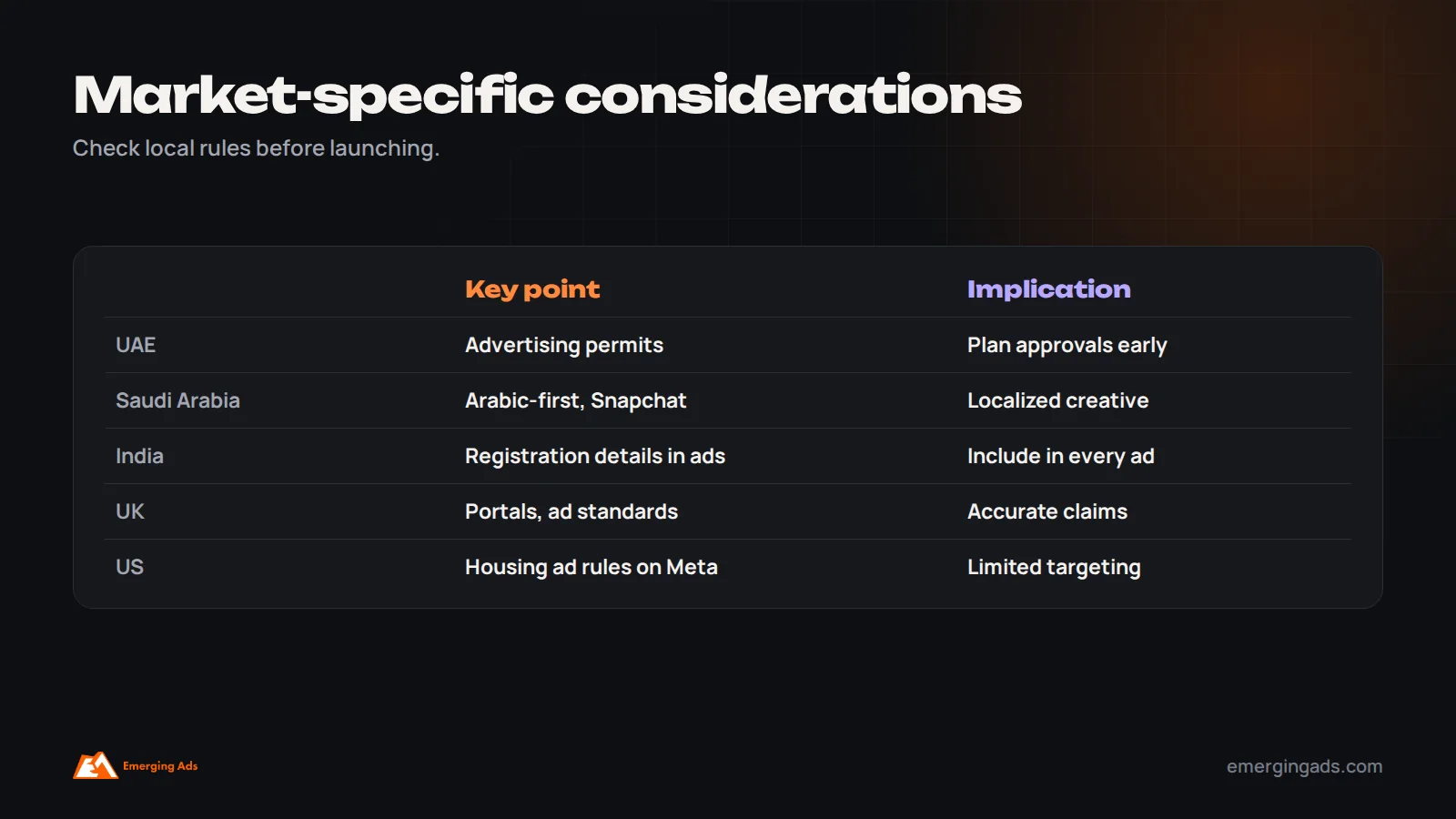
UAE: property advertising in Dubai requires the appropriate permits, buyers include many international investors, and campaigns usually run in English and Arabic, sometimes other languages.
Saudi Arabia: fast-growing demand, Arabic-first creative and strong use of Snapchat and Instagram.
India: registered projects must display their registration details in advertising, campaigns often target both local buyers and non-resident Indians, and WhatsApp follow-up is essential.
UK: portals dominate search for listings, lettings and property management services perform well on Google, and advertising must follow UK consumer protection and advertising standards.
US: housing ads on Meta follow special category rules, fair housing laws apply, and local market expertise matters.
Marketing to sellers and landlords
Many real estate businesses need supply as much as demand: sellers who want to list, landlords who need tenants or management, and developers looking for agents. These audiences behave differently from buyers. Sellers and landlords often search for valuations, agents, property management services and guaranteed rent schemes, so Google Search is usually the strongest channel. Clear offers, such as a free valuation, transparent fees or guaranteed rent terms, perform better than generic brand messages. Trust matters enormously, so reviews, case studies and local market knowledge should be visible on landing pages. Zuplex’s results came from exactly this approach: search campaigns aimed at landlords looking for guaranteed rent, call ads for people who prefer to phone, and fast automated follow-up.
Building a CRM that agents actually use
A CRM is only valuable if agents use it. Many real estate businesses have one but still track leads in spreadsheets, notebooks and personal phones, which makes follow-up inconsistent and reporting impossible. A useful real estate CRM captures every lead automatically with its source, routes it to the right agent, records calls, messages and viewings, sets reminders for follow-up, tracks each lead’s stage from enquiry to sale, and reports on results by source, agent and project. Keep it simple, train agents properly, and make the CRM the easiest way to manage their day rather than an extra task. Our comparison of HubSpot and GoHighLevel covers two common options.
WhatsApp in real estate
In markets such as the Gulf and India, WhatsApp is often where property conversations actually happen. Buyers prefer to receive brochures, floor plans, videos and price details there, and to ask quick questions without a call. A WhatsApp Business Platform setup with automated first replies, routing to agents, saved brochures and templates, and broadcast updates to opted-in leads can transform follow-up. Make sure messages are personal and relevant, and respect consent rules. Our guide to WhatsApp broadcast campaigns covers the details.
Marketing to international investors
In markets such as Dubai and parts of India and the UK, international and non-resident buyers make up a significant share of demand. Reaching them needs targeting by country and language, content that answers their specific questions, such as ownership rules, payment plans, rental yields, visa implications where relevant and how to buy remotely, and follow-up across time zones. Virtual tours, video calls and detailed digital brochures matter more because many international buyers decide before visiting. Make claims about returns and yields accurate and supportable.
AI search and property research
More property buyers now ask AI assistants questions such as which areas suit families, how to buy property as a foreigner or what a fair price is for a type of home. These answers draw on content across the web, including area guides, market reports, developer and agent websites and reviews. Clear, specific, current content on your website, with consistent business information and genuine reviews, improves the chances of being referenced. Our guide to generative engine optimization explains the approach.
A 90-day real estate marketing plan
- Weeks 1 to 3: audit current channels, tracking and response times; set up CRM capture and routing; launch instant WhatsApp or SMS acknowledgment.
- Weeks 3 to 6: restructure search campaigns by property type and area, build dedicated landing pages, and refresh portal listings with video and better photos.
- Weeks 6 to 9: launch Meta and video campaigns with qualifying forms, start retargeting, and begin a nurture sequence for unready leads.
- Weeks 9 to 13: review cost per viewing and cost per sale by channel, shift budget to what converts, and send qualified outcomes back to ad platforms.
Connecting online and offline
Real estate sales still involve offline steps: viewings, site visits, sales centre meetings, phone calls and signings. If those steps are not recorded and connected to marketing, campaigns optimize for form fills rather than buyers. Record every viewing and sale in the CRM with the original lead source. Track phone calls with call tracking numbers so calls from ads are attributed. Send offline outcomes, such as viewings booked and sales closed, back to Google and Meta as offline conversions, so their algorithms learn which kinds of leads become buyers. This single change often improves lead quality more than any targeting adjustment. Our guide on attribution modeling covers how to measure across channels.
Open houses, launches and events
Events remain powerful in property marketing. Open houses, project launches, investor events and webinars give interested buyers a reason to act. Promote them with targeted ads, email and WhatsApp to relevant leads, use registration forms that capture budget and timeline, send reminders, and follow up quickly afterwards with personalized next steps. Record attendance in the CRM so sales teams can prioritize attendees, and use event footage and testimonials as content for future campaigns.
Advice for small agencies and independent agents
Small agencies and independent agents cannot match large firms’ budgets, but they can win on speed, local knowledge and personal trust. Focus on a strong Google Business Profile with many genuine reviews, fast WhatsApp and phone responses, useful local content and video, a focused search campaign for valuations or lettings in your area, and a simple CRM that ensures nobody is forgotten. Personal brand content from the agent, showing real properties and honest market views, often generates more trust than polished agency advertising.
Email marketing for property businesses
Email remains one of the most cost-effective channels in real estate, especially for nurture and repeat business. Useful property emails include new listings matched to each lead’s saved criteria, monthly market updates for their area, guides to buying, selling or renting, invitations to open houses and launches, and anniversary or check-in emails to past clients, who are a major source of referrals and future sales. Segment your list by buyer, seller, landlord, tenant and investor, and by area and budget, so each email is relevant. Keep messages short and visual, with clear calls to action, and make sure consent and unsubscribe rules are followed.
Referrals and past clients
Past clients are among the most valuable sources of new business in real estate, through repeat transactions and referrals to friends and family. Stay in touch after completion with useful updates, ask for reviews and referrals at the right moments, and consider a simple referral program with a thank-you reward where local rules allow. Our guide to running a successful referral program covers how to structure one.
Measure what matters
- Cost per qualified lead, not just cost per lead.
- Response time to new leads.
- Lead to viewing or site visit rate.
- Viewing to booking or sale rate.
- Cost per site visit and cost per sale.
- Revenue by channel and campaign, tracked in your CRM.
Cheap leads that never visit are expensive. A channel with higher cost per lead but better conversion to viewings is usually the better investment.
Common real estate marketing mistakes
These are the patterns we see most often when reviewing property marketing that is not delivering. Most are about follow-up and measurement rather than the ads themselves.
- Chasing lead volume instead of qualified leads.
- Slow follow-up, leaving leads for hours or days.
- Generic creative instead of video and real details.
- Sending all traffic to a homepage instead of project or listing pages.
- No nurture for leads not ready to buy.
- Ignoring local advertising rules and permits.
- Judging channels on cost per lead without tracking sales.
If you would like help, our real estate marketing team runs search, social, video and CRM automation for agencies, developers and property managers, and you can start with a free ad audit.
Frequently asked questions
What is the best real estate marketing strategy in 2026?
Combine search ads and portals for active buyers, Meta and YouTube video for awareness, fast follow-up through WhatsApp, calls and a CRM, and nurture for leads not yet ready, measured on viewings and sales.
Which channel generates the best real estate leads?
Google Search usually brings higher-intent leads, while Meta brings more volume at lower cost per lead but variable quality. Most businesses need both, with strong qualification and follow-up.
How fast should real estate leads be contacted?
Within minutes. An instant automated reply followed by a quick call or message from an agent significantly improves conversion to viewings.
How do I improve real estate lead quality?
Add qualifying questions to forms, use landing pages with real details, route leads by criteria, and send qualified and sale outcomes back to ad platforms.
Is video important for real estate marketing?
Yes. Walkthroughs, neighborhood guides, drone footage and testimonials build trust and help buyers shortlist properties before visiting.
Do real estate ads need permits?
In some markets, yes. Dubai requires advertising permits for property ads, and India requires registered projects to display registration details. Check local rules.
What should real estate marketing be measured on?
Cost per qualified lead, response time, viewing rate, booking or sale rate, and revenue by channel, not just cost per lead.
How long should real estate lead nurture last?
Often several months, matching the buying cycle, with listings, market updates, guides and personal check-ins.