Best Finance Industry Marketing Strategy in 2026

Key Takeaways
- Every claim in financial services marketing needs review against regulatory advertising guidelines before it goes live.
- Required disclosures aren’t optional page furniture, missing or buried disclosures create real regulatory exposure.
- Ad platforms require financial-services certification for many campaign types, budget time for that approval process.
- Trust-building in finance marketing operates on a longer cycle than most other categories, six to twelve months is typical.
- Data handling standards in this category go beyond generic privacy practices most other industries follow.
Why Finance Marketing Carries Extra Regulatory Weight
Financial services marketing operates under real regulatory scrutiny, claims about returns, guarantees, or outcomes are held to a higher standard than typical marketing copy, and getting this wrong carries genuine legal and reputational risk, not just a rejected ad. It’s a big part of why finance industry marketing needs a different playbook than most other verticals.
Building Compliance Into the Process, Not Bolting It On
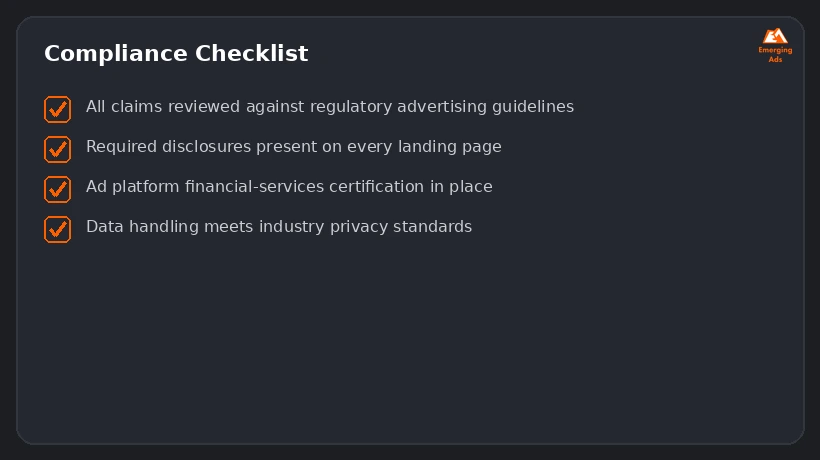
- Every claim reviewed against applicable regulatory advertising guidelines before publishing
- Required disclosures present and clearly visible on every relevant landing page, not buried in fine print
- Ad platform financial-services certification secured before launching relevant campaign types
- Data handling and storage practices meeting industry-specific privacy standards, beyond generic compliance
Channel Strategy That Works for Finance
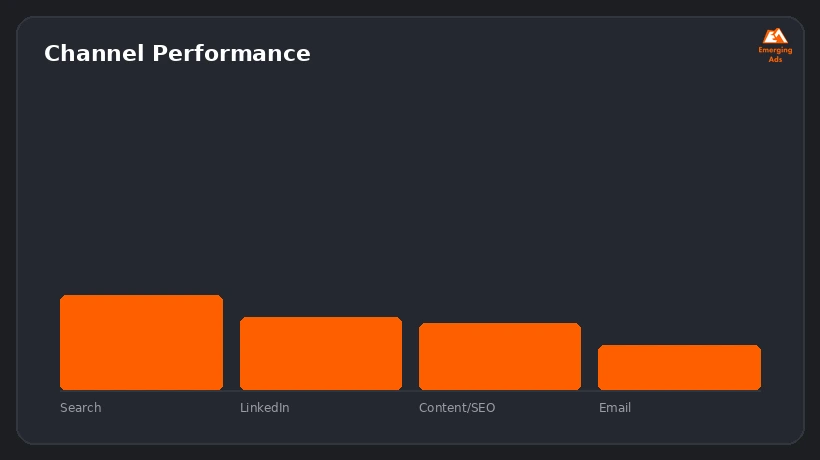
Search captures high-intent prospects actively researching financial products or advisors, LinkedIn performs well for B2B financial services and higher-net-worth targeting, content and SEO build long-term trust and authority, and email nurtures prospects through the naturally longer decision cycle this category involves.
The Trust-Building Timeline
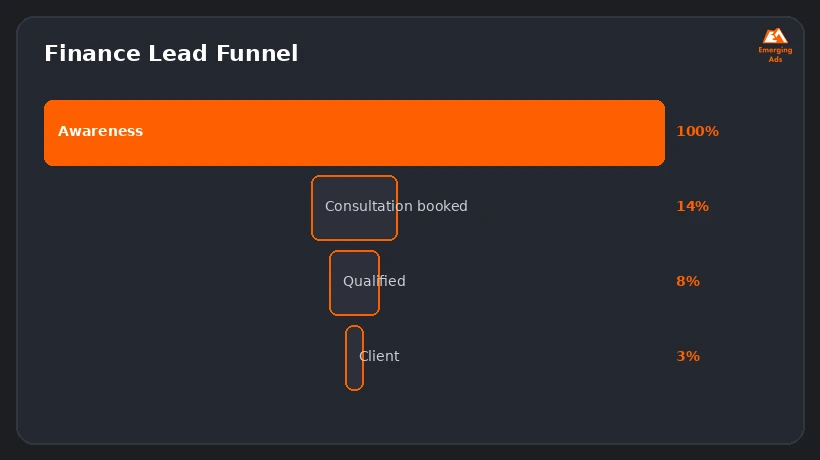
Decisions involving money, especially larger sums or long-term commitments, take real time to build the trust required. A prospect who first engages with content or an ad rarely converts immediately, expect a properly built lead nurture sequence spanning consultations, follow-up content, and multiple touchpoints before conversion.
Budgeting Around a Longer Sales Cycle
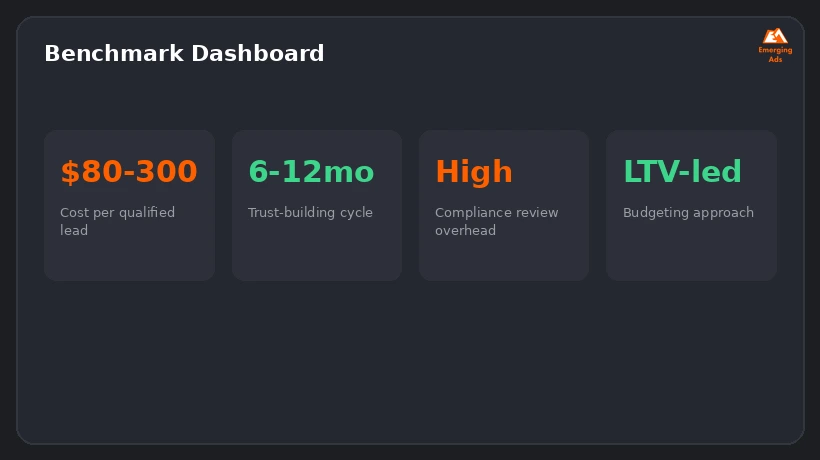
Budgeting purely around cost per lead misses the point in this category, a lifetime-value-informed view of budget allocation, accounting for the compliance overhead and the extended trust-building timeline, gives a more accurate read on whether the finance marketing investment is actually working.
Want us to look at your account?
We’ll audit your setup and tell you exactly where the budget is leaking, free.
Get Your Free Ad AuditFrequently Asked Questions
What makes financial services marketing different from other industries?
The level of regulatory scrutiny on claims, required disclosures, and data handling, combined with a naturally longer trust-building sales cycle than most other categories.
Do I need special certification to run financial services ads?
Many ad platforms require financial-services-specific certification for certain campaign types, budget time into your launch timeline for that approval process.
How long is the typical financial services sales cycle?
Commonly six to twelve months for larger financial decisions, shorter for simpler products, but generally longer than most other B2C or even B2B categories.
What’s a reasonable cost per qualified lead in finance marketing?
It varies significantly by product type and target audience, benchmark against your specific financial product category rather than a broad industry average.
Are testimonials allowed in financial services marketing?
Rules vary by jurisdiction and specific regulatory body, some allow testimonials with proper disclosures, others restrict them significantly, verify current requirements for your specific market before using them.
Does content marketing work well for financial services?
Yes, educational content that builds trust and demonstrates expertise tends to perform particularly well in this category given the extended, trust-dependent decision cycle.
How important is LinkedIn for financial services marketing?
Quite important for B2B financial services and higher-net-worth individual targeting specifically, its professional context and targeting options suit the category well.
What data privacy standards apply to financial marketing?
Requirements go beyond generic privacy compliance and vary by jurisdiction and financial product type, work with counsel familiar with your specific regulatory environment to confirm current standards.
Should finance marketing budget be measured by cost per lead or lifetime value?
A lifetime-value-informed view gives a more accurate picture, given the extended sales cycle and compliance overhead involved, cost per lead alone can be misleading.
Can a small financial advisory firm compete against larger institutions in marketing?
Yes, particularly with focused local or niche positioning and consistent trust-building content, a large budget isn’t the only path to strong results in this category.
Ready to fix what’s costing you conversions?
Book a free, no-pressure audit of your ad account or website.
Get Your Free Ad Audit