How to Run a Successful Referral Marketing Program
Key Takeaways
- Two-sided incentives, a reward for both referrer and referee, consistently outperform one-sided rewards.
- The best moment to ask for a referral is right after a customer’s peak satisfaction moment, not at a random interval.
- A referral link or code needs to be trackable end to end, from share to signup to conversion, or the program’s real performance stays invisible.
- Fraud and abuse limits matter even for small programs, uncapped rewards attract gaming behavior.
- Referral programs compound over time, they rarely produce a fast initial spike the way a paid campaign can.
Why Referral Programs Work Differently Than Other Channels
A referral arrives with built-in trust the referred person’s friend or colleague already vouches for the product, which is why referred customers often convert at a higher rate and with less persuasion needed than a cold paid lead. That trust transfer is the entire value proposition of the channel, and program design should protect it rather than undermine it with a clunky experience. Getting the timing and follow-through right usually comes down to having the right marketing automation in place behind the program.
Designing the Incentive
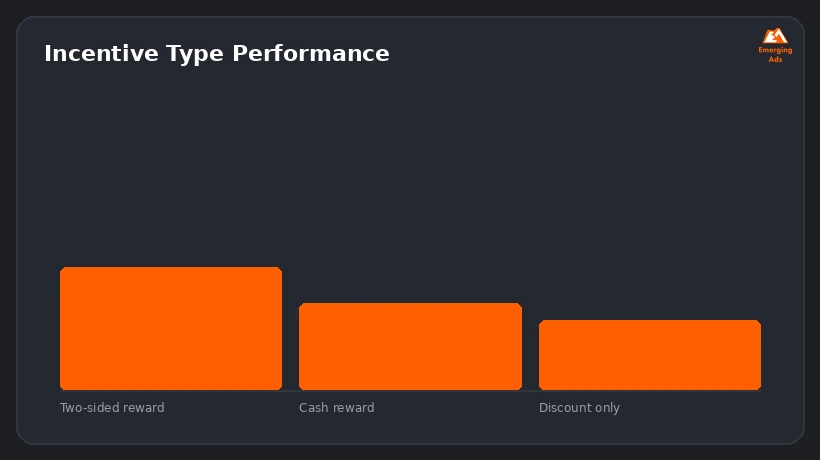
Two-sided incentives, where both the referrer and the new customer get a reward, consistently outperform one-sided programs. The referrer feels good about giving their contact something valuable, not just personally profiting, and the new customer gets a reason to act now rather than delay the decision.
Where to Place the Ask
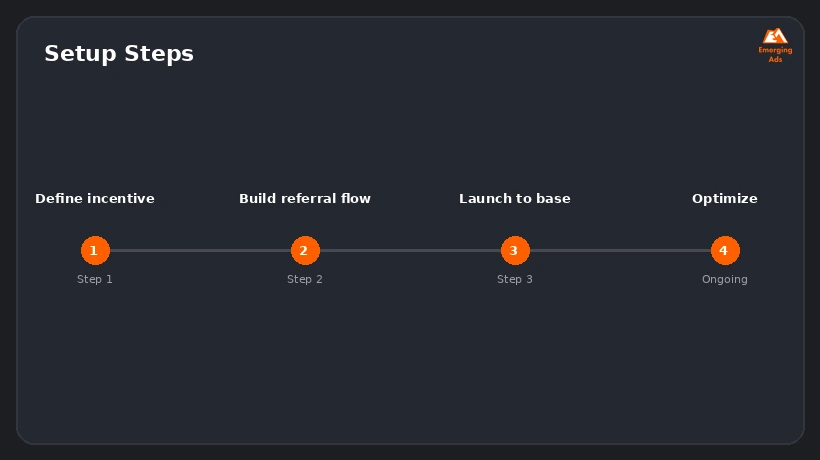
Timing the ask to a customer’s peak satisfaction moment, right after a positive experience, a completed purchase, a strong support interaction, produces far higher participation than a generic periodic email blast to the entire customer base regardless of where they are in their relationship with the brand. We typically build this as an automated trigger rather than something a team has to remember to send manually.
Setting Up Tracking Correctly
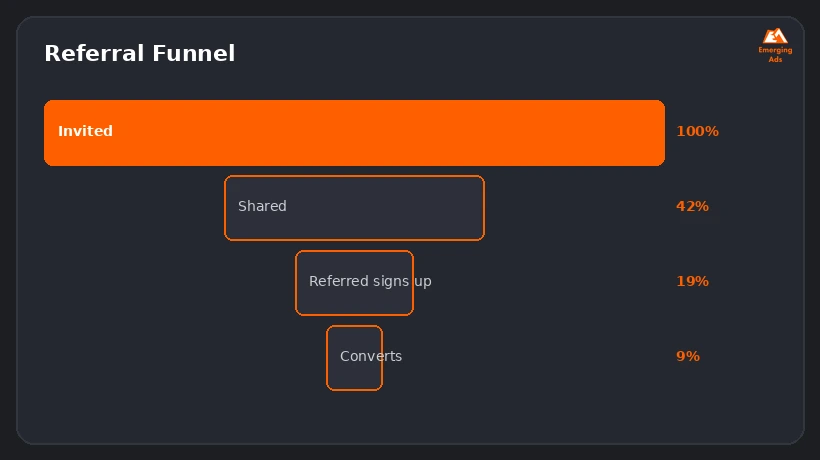
A unique, trackable link or code per referrer, connected end to end from share through signup through conversion, is what makes the program’s real performance visible. Without that full chain tracked, it’s impossible to know which referrers and which channels of sharing actually drive revenue versus just activity. If you’d rather have this set up and monitored for you, that’s a core part of what we do.
Protecting Against Abuse
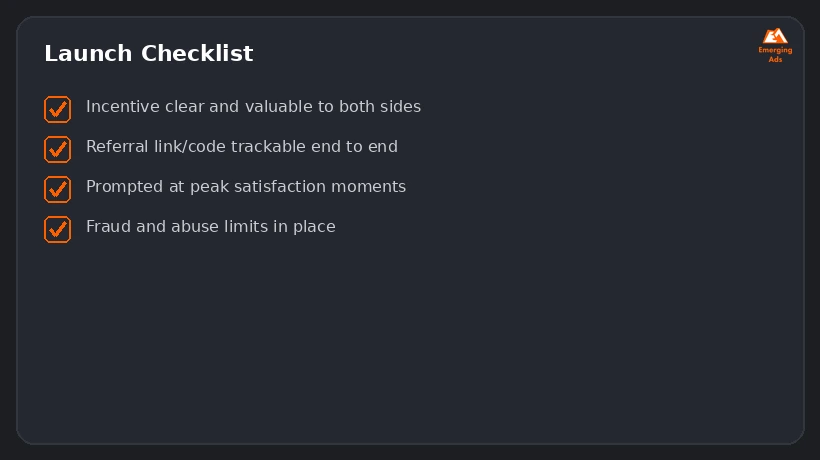
Uncapped or overly generous rewards attract gaming behavior, self-referrals through alternate accounts, bulk sharing to strangers with no real relationship, and similar abuse. Reasonable caps per referrer and basic fraud checks on new signups protect program economics without adding meaningful friction for genuine participants.
Want us to look at your account?
We’ll audit your setup and tell you exactly where the budget is leaking, free.
Get Your Free Ad AuditFrequently Asked Questions
What’s a good referral rate to aim for?
It varies by industry and product, but a program generating referrals from a meaningful share of your most satisfied customers, tracked through NPS or similar feedback, is a reasonable starting benchmark to improve against your own baseline.
Should the referrer or the referred customer get the bigger reward?
Two-sided programs generally work best when both rewards feel genuinely valuable, rather than making one clearly secondary, an imbalance that shortchanges either side tends to reduce participation.
What’s the best time to ask a customer for a referral?
Right after a peak satisfaction moment, a completed purchase, a strong support resolution, a milestone reached with the product, rather than a generic periodic request unrelated to their recent experience.
Do referral programs work for B2B businesses?
Yes, though the cycle is often longer and the ask may need to happen at a different moment, such as after a successful project outcome or renewal, rather than immediately post-purchase.
How do I prevent people from gaming a referral program?
Set reasonable per-referrer caps, verify new signups aren’t duplicate or fraudulent accounts, and monitor for unusual referral patterns that suggest abuse rather than genuine sharing.
What software is commonly used to run referral programs?
Dedicated referral marketing platforms that integrate with your e-commerce or CRM system are common, the right choice depends on your platform and how deeply you need referral tracking connected to existing customer data.
How long does it take to see results from a referral program?
Referral programs typically compound gradually rather than producing an immediate spike, expect the channel to build meaningfully over months as awareness of the program itself grows among your customer base.
Should referral rewards be cash, discounts, or something else?
It depends on your margin structure and customer expectations, store credit or discounts are common for e-commerce, cash or account credit is more common for subscription or service businesses.
Can a referral program work without any paid incentive at all?
Yes, for products with strong enough natural advocacy, a simple easy-to-share mechanism without a financial incentive can work, though most programs perform better with some tangible reward involved.
How do I measure whether a referral program is actually profitable?
Compare the cost of rewards paid out against the lifetime value and acquisition cost savings of referred customers relative to your other acquisition channels, not just raw referral volume.
Ready to fix what’s costing you conversions?
Book a free, no-pressure audit of your ad account or website.
Get Your Free Ad Audit