Klaviyo vs Mailchimp for E-commerce Email Marketing
Key Takeaways
- Klaviyo’s e-commerce data integration is deeper and more granular, Mailchimp is simpler to learn for basic newsletter sending.
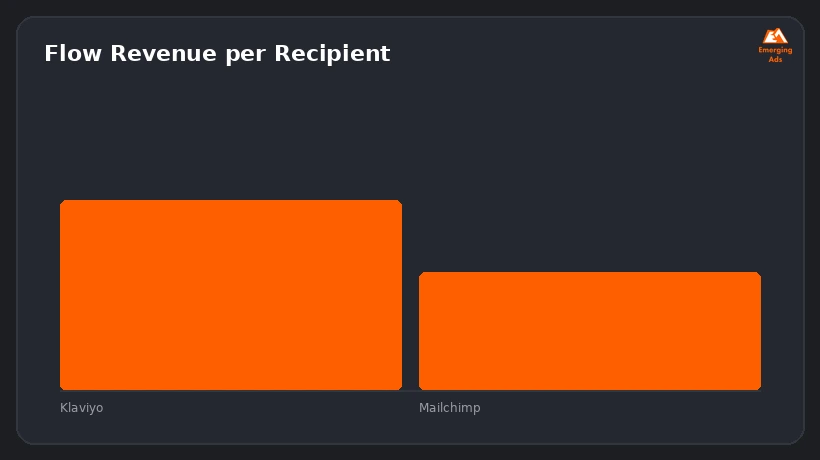
- Flow revenue per recipient tends to run meaningfully higher on Klaviyo for stores with real behavioral segmentation needs.
- Both platforms price on contact volume, the real cost difference shows up in what each tier unlocks, not just the headline number.
- Mailchimp’s free tier goes further for very small lists, Klaviyo’s free tier is more limited by contact count.
- The right choice depends more on how sophisticated your segmentation needs are than on store size alone.
What Each Platform Is Actually Built For
Klaviyo was built specifically around e-commerce data, deep integration with Shopify and similar platforms means product views, purchase history, and browsing behavior feed directly into segmentation and flow triggers. Mailchimp started as a general-purpose email tool and has added e-commerce features over time, but the integration depth and behavioral granularity generally don’t match Klaviyo’s. If you’d rather have this set up and managed for you, our email marketing service handles the platform choice and flow-building end to end.
Feature-by-Feature Comparison
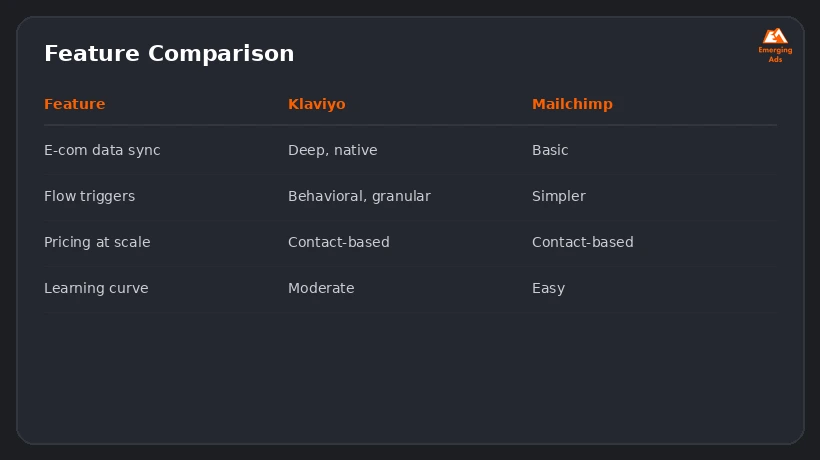
Klaviyo’s flow builder supports more granular conditional logic based on real-time behavior, useful for complex segmentation like browse abandonment by product category. Mailchimp’s automation is more straightforward to set up but offers less depth for stores that want highly specific behavioral triggers.
Pricing: What the Headline Numbers Don’t Show
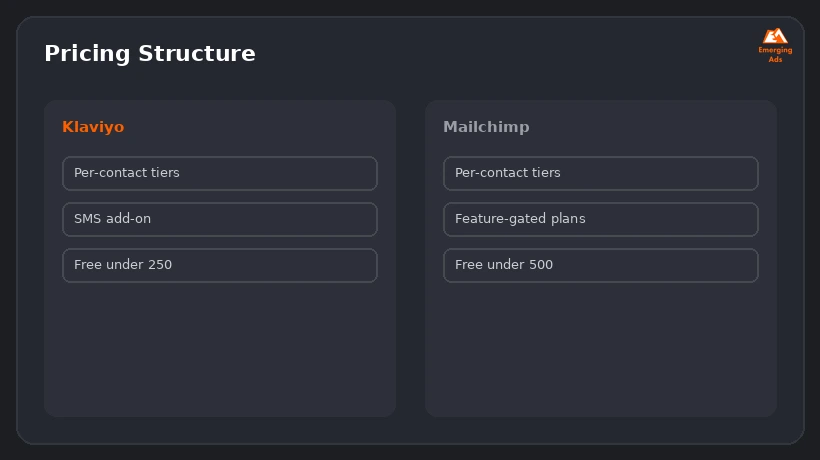
Both platforms price primarily on contact volume, but what each tier unlocks differs. Klaviyo’s SMS functionality is a native add-on tightly integrated with email flows, Mailchimp gates more advanced automation and reporting features behind higher plan tiers rather than purely contact count. Compare based on the specific features your store needs, not just the sticker price at your current list size.
Which One Fits Your Store
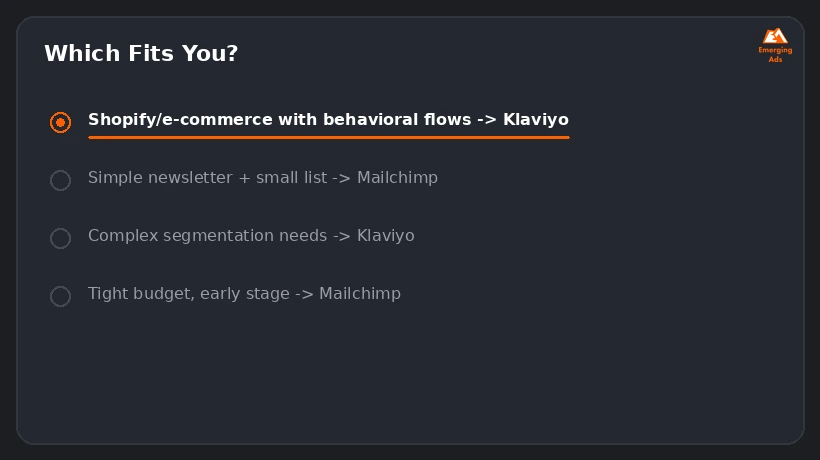
A Shopify or similar e-commerce store planning to build real behavioral flows, abandoned cart, browse abandonment, post-purchase cross-sell, generally gets more from Klaviyo’s deeper data integration. A simpler newsletter-focused sender with a smaller list and lighter automation needs can do perfectly well on Mailchimp at a lower learning curve and often lower cost at small scale. Not sure which fits? Our team can audit your current email setup and recommend the right platform for your store’s stage.
Migration Considerations
Moving from Mailchimp to Klaviyo, the more common direction, generally means rebuilding flows rather than directly importing them, since the underlying data and trigger logic differ. Budget time for this rebuild rather than expecting a one-click migration to preserve existing automation logic. This is usually where a dedicated email marketing partner pays for itself — rebuilding flows correctly the first time avoids weeks of trial and error.
Want us to look at your account?
We’ll audit your setup and tell you exactly where the budget is leaking, free.
Get Your Free Ad AuditFrequently Asked Questions
Is Klaviyo more expensive than Mailchimp?
At comparable list sizes the base pricing is often similar, the real cost difference tends to show up in which features are gated behind higher tiers, compare based on the specific features you need.
Can I migrate my Mailchimp automations directly into Klaviyo?
Not directly, the underlying data model and trigger logic differ enough that flows generally need to be rebuilt rather than imported wholesale.
Does Mailchimp integrate with Shopify?
Yes, though the integration depth and behavioral data granularity generally doesn’t match Klaviyo’s native e-commerce focus.
Is Klaviyo overkill for a small store with a short list?
It can be, if your needs are a simple newsletter and basic automation, Mailchimp’s lower learning curve may serve you just as well at smaller scale.
Does Klaviyo support SMS marketing natively?
Yes, SMS is a native add-on tightly integrated with email flows, allowing coordinated cross-channel automation.
Which platform has a better free tier?
Mailchimp’s free tier generally extends further by contact count for a very small list, Klaviyo’s free tier is more limited by contact volume but includes fuller behavioral automation features even at that tier.
How long does it take to fully set up Klaviyo for a new store?
A thorough setup with core flows (welcome, abandoned cart, post-purchase) built properly typically takes several weeks, not a single afternoon, if done right.
Can I run both platforms at once during a transition?
Technically yes, though running both simultaneously long-term usually creates data and reporting confusion, most businesses transition fully rather than maintaining both indefinitely.
Is Klaviyo only for Shopify stores?
No, it integrates with several major e-commerce platforms, though Shopify integration tends to be the deepest and most commonly used.
What’s the biggest reason stores switch from Mailchimp to Klaviyo?
Usually outgrowing Mailchimp’s behavioral segmentation depth as the store’s flow needs get more sophisticated, particularly around product-level browsing and purchase behavior.
Ready to fix what’s costing you conversions?
Book a free, no-pressure audit of your ad account or website.
Get Your Free Ad Audit