How to Choose a Digital Marketing Agency in 2026
Key Takeaways
- Case studies with vague, unverifiable claims are one of the clearest red flags in an agency pitch.
- Pricing model (retainer, performance-based, project) shapes agency incentives, know which one you’re signing up for.
- Ask who will actually work on your account day to day, not just who’s in the pitch meeting.
- A good agency will tell you what they’re not good at, not claim expertise across every channel.
- Contract terms around ownership of assets, creative, and data should be reviewed carefully before signing.
Start With What You Actually Need
Before evaluating any agency, get specific about what you’re actually hiring for, paid media management, SEO, full-funnel strategy, or a single project like a website rebuild. Agencies that claim deep expertise across every single channel are often spread thin, a specialist who’s genuinely strong in the two or three areas you need usually outperforms a broad generalist.
Red Flags to Watch For
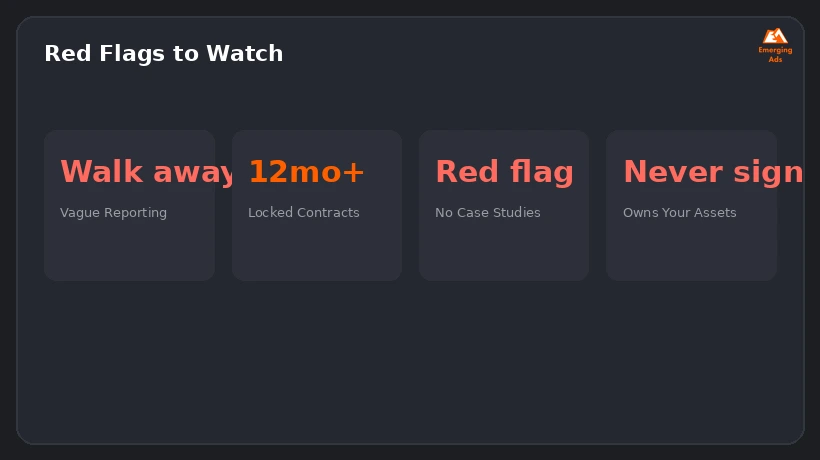
- Case studies with vague results (“increased traffic”) and no specific, verifiable numbers or timeframe
- Guaranteed rankings or guaranteed ROI, no legitimate agency can guarantee search rankings or ad performance outcomes
- Reluctance to explain their actual process or share who specifically will work on your account
- Locked-in long-term contracts with steep early termination penalties and no clear performance review checkpoints
- No clear answer on who owns creative assets, ad accounts, and data if you leave
Questions Worth Asking in the First Call
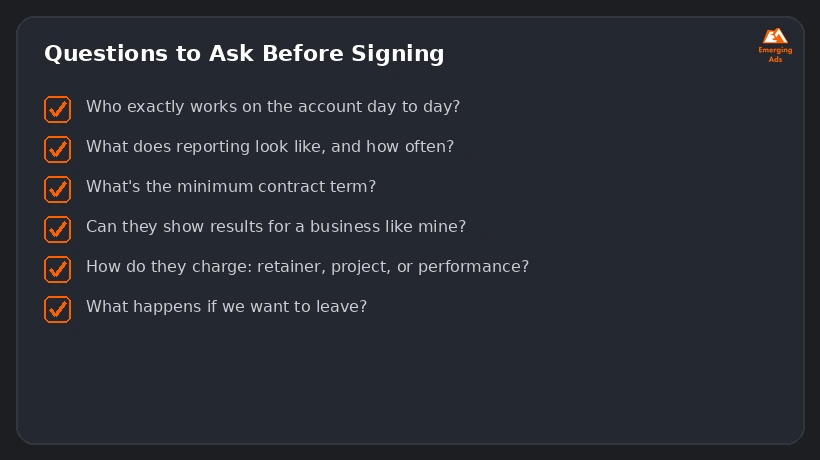
- Who specifically will manage my account day to day, not just who’s presenting in this pitch?
- Can I speak to a current client in a similar industry or business size?
- What does reporting look like, how often, and what metrics tie back to actual business outcomes?
- What happens if performance isn’t meeting expectations after three months?
- Who owns the ad accounts, creative assets, and data if we part ways?
Comparing Pricing Models
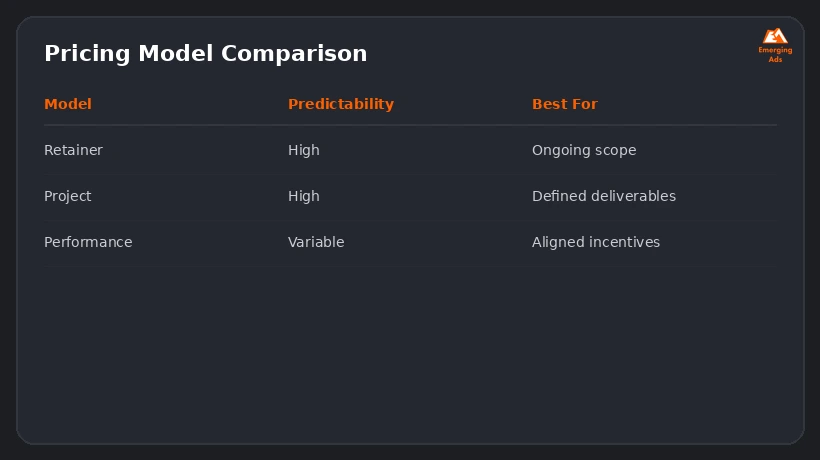
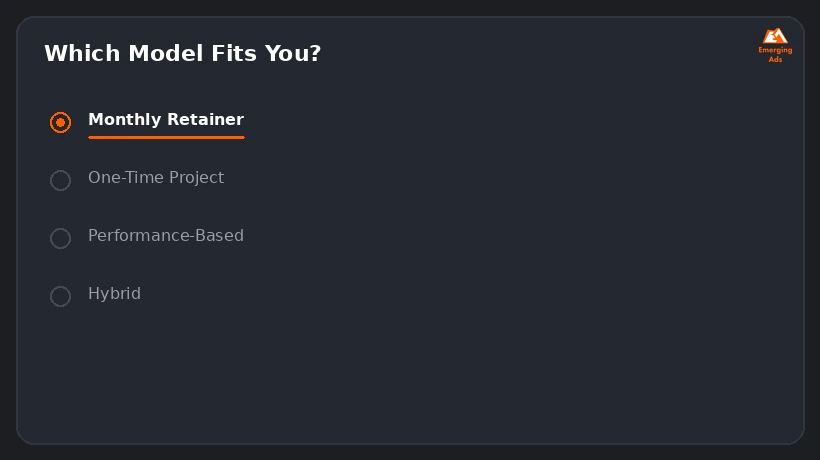
Flat retainers offer predictable budgeting but require trust that the agency is genuinely putting in the work. Percentage-of-spend pricing on paid media can misalign incentives toward higher spend rather than better efficiency. Performance-based pricing sounds appealing but often comes with higher base rates or longer minimum commitments to offset the agency’s risk. None of these is inherently wrong, but understand which incentives you’re signing up for.
What Happens After You Sign
A good agency relationship includes a clear onboarding timeline, an initial audit before major changes are made, and a defined check-in cadence with real reporting, not just a monthly call that summarizes vanity metrics. Set expectations for this upfront so there’s a clear standard to hold the relationship to from month one.
Want us to look at your account?
We’ll audit your setup and tell you exactly where the budget is leaking, free.
Get Your Free Ad AuditFrequently Asked Questions
What’s a reasonable minimum contract length for a marketing agency?
Three to six months is common and reasonable, enough time to see real results from most channels, be cautious of anything requiring a full year commitment with no performance review checkpoint.
Should I hire a specialist agency or a full-service agency?
It depends on your needs, a specialist often goes deeper in their specific channel, a full-service agency offers more coordination across channels but may be less deep in any single one.
How do I verify an agency’s case study claims?
Ask for specific numbers, timeframes, and if possible, a reference call with the actual client, vague or unverifiable claims are a reasonable reason for caution.
What’s a typical marketing agency retainer range?
It varies enormously by scope, channel, and business size, get a scoped quote based on your specific needs rather than anchoring to an industry-wide number.
Can an agency guarantee first-page Google rankings?
No legitimate agency can guarantee specific rankings, search algorithms are outside any agency’s direct control, be skeptical of anyone who promises this.
Who should own my ad accounts and website if I switch agencies?
You should, always confirm before signing that ad accounts, analytics properties, and website access remain under your ownership, not the agency’s, regardless of who set them up.
How often should a marketing agency report on results?
Monthly at minimum, with access to real-time dashboards is even better, reporting should tie back to actual business outcomes, not just surface-level engagement metrics.
Is it a red flag if an agency won’t name past clients?
Some client confidentiality is normal, especially in competitive industries, but a total unwillingness to provide any reference or verifiable example is worth questioning.
What’s the difference between a project-based and retainer-based agency relationship?
Project-based covers a defined scope with a clear end date, like a website build, retainer-based is ongoing work, like continuous ad management or SEO, billed monthly.
How long before I should expect to see results from a new agency?
It depends heavily on the channel, paid media can show early signal within weeks, SEO and organic content typically take three to six months to show meaningful movement.
Ready to fix what’s costing you conversions?
Book a free, no-pressure audit of your ad account or website.
Get Your Free Ad Audit