
Best Medical Practice SEO Strategy in 2026

Key Takeaways
- E-E-A-T signals, provider bios, credentials, genuine reviews, carry extra weight for medical content specifically.
- Analytics and tracking setup needs to be HIPAA-compliant from the start, not retrofitted after the fact.
- Dedicated location pages for each practice site outperform a single generic “locations” page.
- Most patients check reviews before booking, review generation is functionally part of SEO strategy, not separate from it.
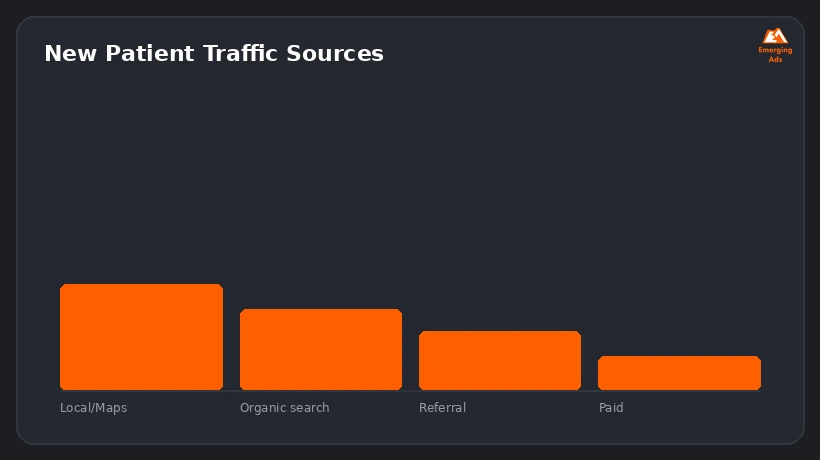
A complete, accurate Google Business Profile, correct specialties, accepted insurance where relevant, current hours, and a steady stream of genuine reviews, drives a large share of new patient discovery for most practices before organic rankings ever come into play. This is the starting point of any local SEO effort we run for healthcare providers, and it’s the first thing worth getting fully right.
Google Business Profile: The Foundation
A complete, accurate Google Business Profile, correct specialties, accepted insurance where relevant, current hours, and a steady stream of genuine reviews, drives a large share of new patient discovery for most practices before organic rankings ever come into play. It’s the first thing worth getting fully right.
Why E-E-A-T Matters More in Healthcare
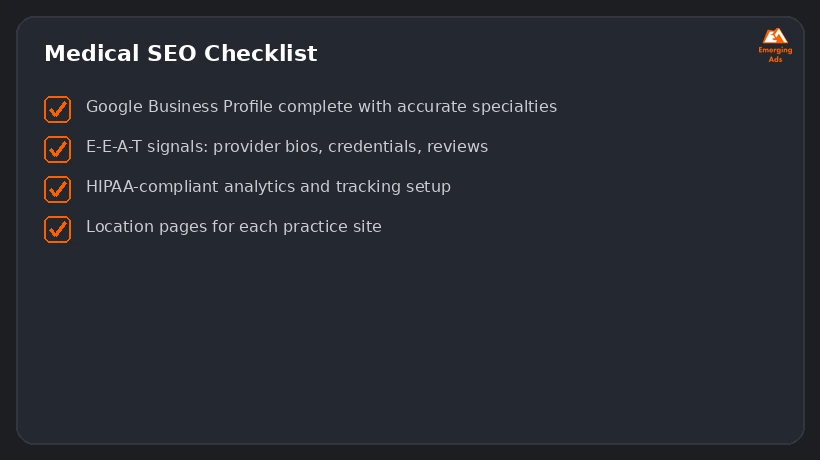
Google applies extra scrutiny to health-related content given the direct impact on people’s wellbeing, referred to as Your Money or Your Life content. Clear provider bios with real credentials, author attribution on medical content, and genuine patient reviews all strengthen the trust signals search engines weigh heavily in this category — which is why SEO strategy for medical practices has to be built differently than for a typical local business.
HIPAA-Compliant Tracking Setup
Standard analytics and ad tracking setups can inadvertently capture protected health information if not configured carefully, form fields, URL parameters, or chat tools that pass along identifiable health details. A properly scoped GA4 setup paired with compliant conversion tracking avoids both a compliance risk and a costly retrofit later.
Location Pages Done Right
A practice with multiple locations benefits from a dedicated, uniquely written page per site, complete with that location’s specific providers, hours, and directions, rather than one generic page listing all locations together, which dilutes local search relevance for each individual site.
A Realistic Implementation Timeline
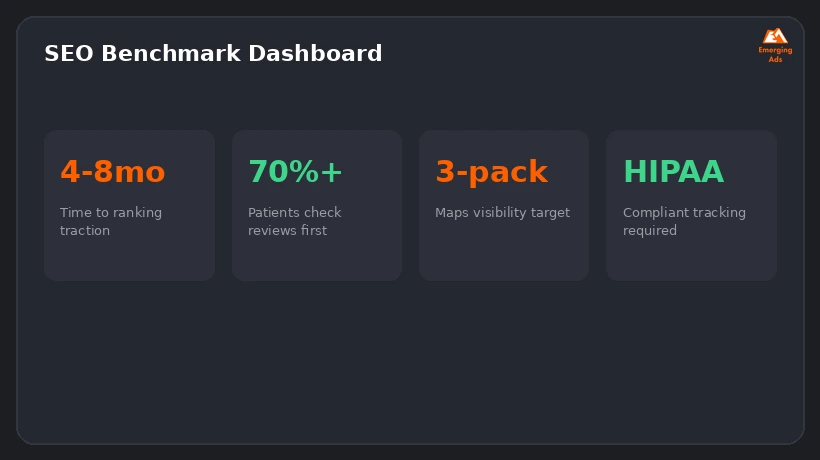
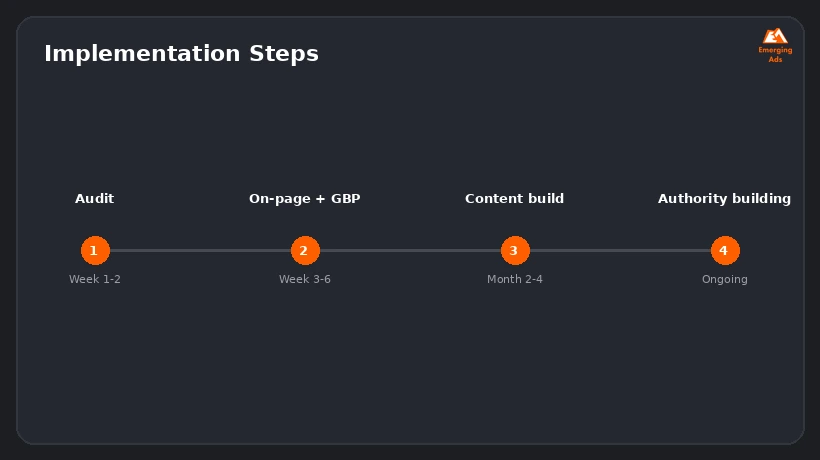
Meaningful ranking traction commonly takes four to eight months of consistent work, an audit and Google Business Profile cleanup in the first weeks, on-page and technical fixes over the following month, then sustained content and authority building. Setting that timeline expectation upfront, which is standard practice in the medical practice marketing we run, prevents disappointment at the three-month mark.
Want us to look at your account?
We’ll audit your setup and tell you exactly where the budget is leaking, free.
Get Your Free Ad AuditFrequently Asked Questions
How important is Google Business Profile for a medical practice?
Very, it’s often the first thing a prospective patient checks and drives a substantial share of new patient discovery independent of organic search rankings.
What does E-E-A-T mean for medical practice SEO?
Experience, Expertise, Authoritativeness, and Trustworthiness, signals Google weighs heavily for health content specifically, shown through provider credentials, clear authorship, and genuine patient reviews.
Is standard Google Analytics tracking HIPAA compliant?
Not automatically, tracking needs to be configured carefully to avoid inadvertently capturing protected health information through forms, URL parameters, or chat tools.
How long does it take to see SEO results for a medical practice?
Typically four to eight months for meaningful ranking traction, medical SEO tends to build gradually rather than producing fast results.
Should each practice location have its own separate page?
Yes, a uniquely written page per location with that site’s specific providers and details performs better in local search than one combined locations page.
Do patient reviews really affect SEO rankings?
Yes, review quantity, recency, and content feed into both local ranking factors and the trust signals search engines weigh for medical content.
What’s the biggest SEO mistake medical practices make?
Leaving Google Business Profile incomplete or inconsistent, and treating provider bios and credentials as an afterthought rather than a meaningful trust and ranking signal.
Can a small practice compete in local SEO against larger healthcare systems?
Yes, particularly for local, specialty-specific searches where a focused, well-optimized presence can outperform a broader institutional site that isn’t tailored to that specific search intent.
Should medical content be written by the providers themselves?
Provider involvement, or at minimum clear provider review and attribution, strengthens the authorship and expertise signals that matter for medical content specifically.
Does paid advertising still matter alongside SEO for medical practices?
Yes, paid search can capture immediate high-intent searches while SEO builds over the medium term, the two work well as a complementary strategy rather than a strict either-or choice.
Ready to fix what’s costing you conversions?
Book a free, no-pressure audit of your ad account or website.
Get Your Free Ad Audit