Top SaaS SEO Agency Near Me

Key Takeaways
- SaaS SEO has its own content taxonomy, comparison pages, alternative pages, use-case pages, that a general SEO agency may not know how to build well.
- Technical SEO for SaaS often involves app and documentation subdomains that need their own crawl and indexing strategy.
- Comparison and alternative pages tend to convert far better than general educational blog content, but need to be built carefully to avoid looking manipulative.
- Organic acquisition cost compounds favorably over time compared to paid channels, but takes real patience to build.
- Reporting should tie back to pipeline influence, not just ranking positions or traffic volume.
Why SaaS SEO Is a Distinct Discipline
SaaS SEO involves content types and technical considerations that don’t map cleanly onto general local or e-commerce SEO experience, comparison and alternative pages, product-led content strategy, and technical structures around app or documentation subdomains all require category-specific familiarity.
What to Look for in an Agency
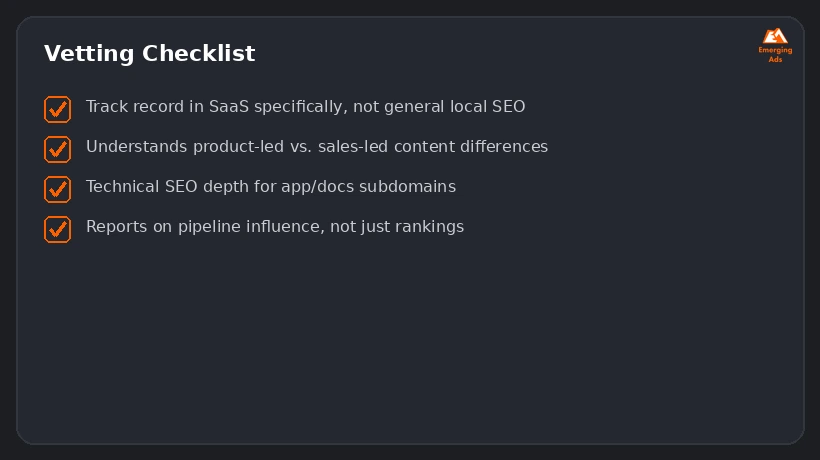
- A verifiable track record specifically in SaaS, not general local or small-business SEO
- Clear understanding of the difference between product-led and sales-led content strategy
- Technical SEO depth covering app and documentation subdomains, not just the marketing site
- Reporting that connects to pipeline and trial signups, not just rankings and organic traffic volume
The Content Types That Actually Drive Signups
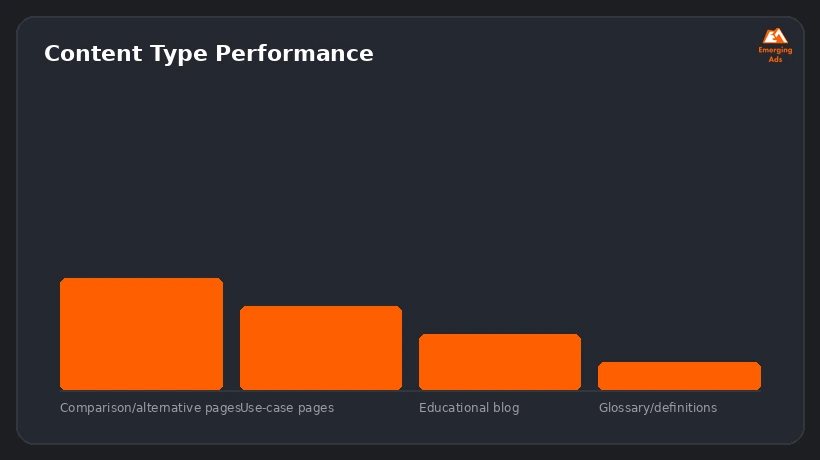
Comparison pages (you vs. a specific competitor) and alternative pages (alternatives to a specific competitor) tend to convert at a meaningfully higher rate than general educational blog content, because the searcher is already evaluating specific solutions. Solid keyword research is what surfaces exactly which comparison and alternative terms are worth building pages for in the first place. These need careful, honest construction to avoid reading as manipulative, but done well they’re some of the highest-converting organic content SaaS companies can build.
Technical SEO Considerations Specific to SaaS
Documentation subdomains often generate substantial organic traffic on their own and need their own indexing and structure strategy, and app subdomains frequently need to be handled carefully to avoid indexing content that shouldn’t be public or wasting crawl budget on non-marketing pages.
Setting Realistic Expectations
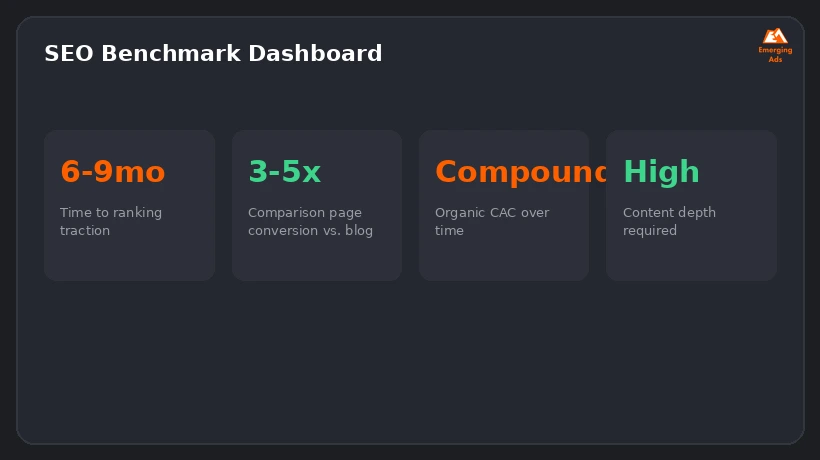
Meaningful ranking traction for competitive SaaS terms commonly takes six to nine months, longer for highly competitive categories. Organic customer acquisition cost compounds favorably over time compared to paid channels, but this is a patience-requiring investment, not a fast-results channel — most companies run LinkedIn Ads alongside it for faster initial signal while SEO builds.
Want us to look at your account?
We’ll audit your setup and tell you exactly where the budget is leaking, free.
Get Your Free Ad AuditFrequently Asked Questions
What’s the difference between SaaS SEO and general SEO?
SaaS SEO involves content types and technical considerations that don’t map cleanly onto general local or e-commerce SEO experience, comparison and alternative pages, product-led content strategy, and technical structures around app or documentation subdomains all require category-specific familiarity. It’s why SEO strategy for SaaS companies needs a genuinely different playbook than a local business or ecommerce site.
Do comparison pages actually work, or do they feel manipulative?
When built honestly, acknowledging genuine competitor strengths alongside your own, comparison pages convert well and aren’t perceived as manipulative, dishonest or one-sided comparisons are what damages trust.
How long does SaaS SEO take to show results?
Commonly six to nine months for meaningful ranking traction on competitive terms, sometimes longer in highly saturated categories.
Should SEO or paid ads be prioritized for an early-stage SaaS company?
Both have a role, paid ads can generate faster initial signal and customer feedback, while SEO builds a compounding, longer-term acquisition channel, most companies benefit from starting both in parallel at modest scale.
What content should a SaaS company prioritize first for SEO?
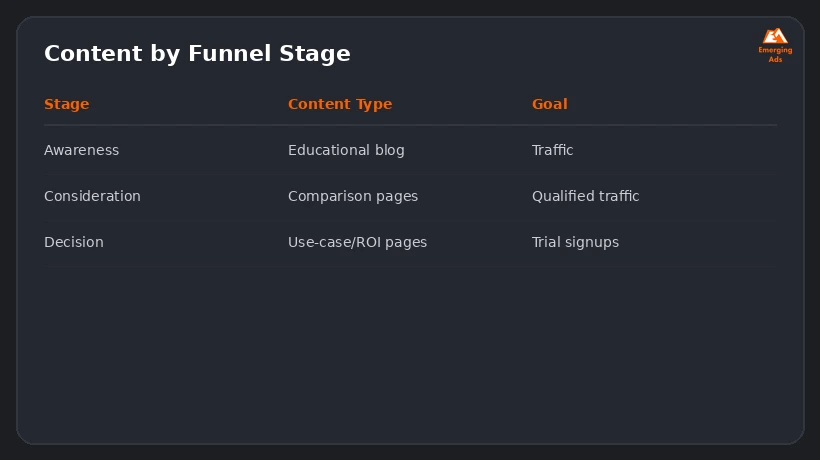
Product-focused content close to purchase intent, like comparison and use-case pages, often delivers value faster than broad top-of-funnel educational content, though both matter over time.
Do documentation pages count as part of SEO strategy?
Yes, documentation often generates meaningful organic traffic on its own and should be included in the overall technical and content SEO strategy, not treated as separate from marketing SEO.
How is SaaS SEO ROI typically measured?
Ideally tied to trial signups or pipeline influence from organic traffic, not just rankings or raw traffic volume, which don’t directly reflect business impact.
Can a small SaaS company compete in SEO against larger, funded competitors?
Yes, particularly with focused, specific content targeting underserved search queries larger competitors haven’t prioritized, rather than trying to compete head-on for the broadest terms.
What’s a reasonable budget range for SaaS SEO?
It varies by competitiveness of your category and content production needs, get a scoped quote based on your specific competitive landscape rather than anchoring to a generic figure.
Should app subdomains be indexed by search engines?
It depends on the content, marketing-relevant pages within an app subdomain may benefit from indexing, while functional or user-account pages generally should not be indexed, this needs deliberate technical planning.