How Much Does Beauty Brand Influencer Marketing Cost?
Key Takeaways
- Most beauty brands spend between $2,000 and $25,000 a month on influencer marketing, the range depends almost entirely on creator tier and whether paid amplification is included
- Nano and micro creators (1K-50K followers) deliver the best cost-per-engagement for beauty brands, often for product-only compensation plus a small flat fee
- Mid-tier and macro creators drive reach and credibility but rarely convert as efficiently unless paired with paid boosting behind the content
- Whitelisting and usage rights, letting the brand run creator content as paid ads, is usually the highest-ROI line item in a beauty influencer budget
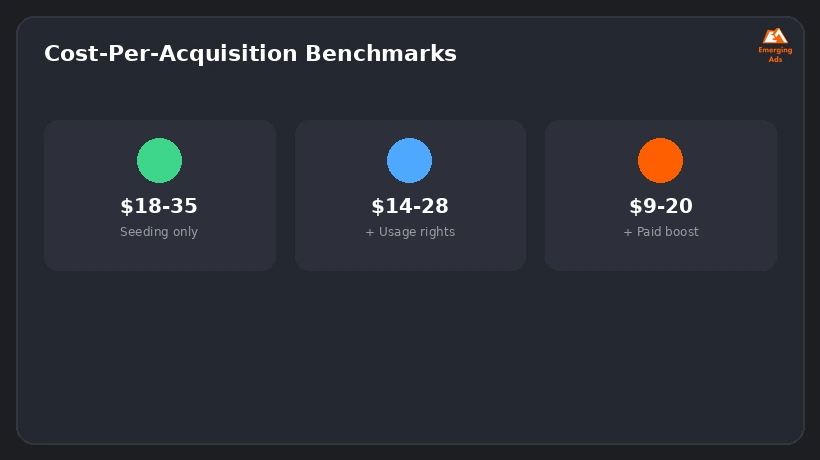
- Building a repeatable seeding pipeline beats one-off campaigns, cost per acquired customer drops noticeably after the third or fourth month of consistent seeding
What Beauty Brands Actually Pay, By Creator Tier
Influencer pricing in beauty is one of the widest ranges in marketing, because the category runs on everything from a $50 product-only nano-creator post to a six-figure macro-influencer campaign with a national retailer tie-in. The number that matters for most small and mid-size beauty brands sits well below the headline-grabbing figures.
| Creator Tier | Follower Range | Typical Rate (per post) |
|---|---|---|
| Nano | 1K-10K | Free product or $50-$150 |
| Micro | 10K-50K | $150-$800 |
| Mid-tier | 50K-500K | $800-$5,000 |
| Macro | 500K-1M+ | $5,000-$25,000+ |
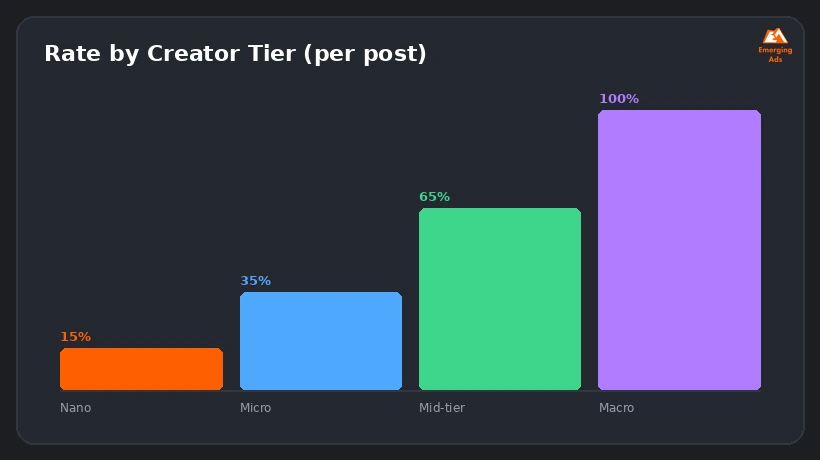
These figures shift by platform too, a TikTok video generally costs less than a comparable Instagram Reel plus feed post combo, since the production expectation is lighter. Skincare and haircare campaigns also tend to run higher than color cosmetics, since longer-format “results over time” content commands a premium.
The Hidden Costs Beyond the Creator Fee
The creator’s fee is rarely the full cost of an influencer program. Brands that budget only for the fee are consistently surprised by the real monthly spend once the campaign is running.
- Product cost: full-size product for seeding, which adds up fast at scale across dozens of creators a month
- Usage rights and whitelisting: often 50-100% on top of the base fee to run the content as paid ads
- Agency or platform fees: influencer marketing platforms typically charge 10-20% on top of creator spend, or a flat monthly retainer if managed by an agency
- Content production support: shipping, sample kits, sometimes a small styling or photography brief to keep creator content on-brand
Usage rights specifically are worth planning for from the start. A $300 micro-creator post with whitelisting rights attached often outperforms a $2,000 organic-only post from a bigger creator, because the brand can then run that content as a paid ad to a cold audience, where it typically converts better than studio-produced ad creative.
Product Seeding vs. Paid Partnerships: What to Use When
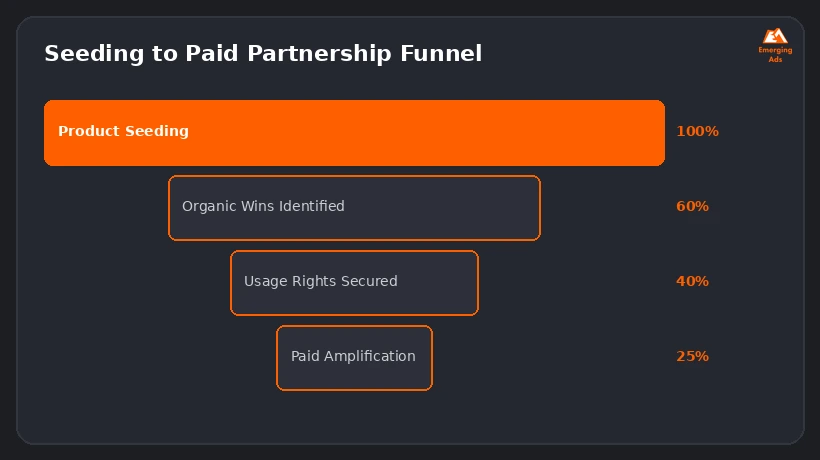
Not every beauty brand needs a paid influencer program on day one. Product seeding, sending free product to a curated list of nano and micro creators in exchange for honest content, is usually the right starting point, especially for a newer brand still building a content library.
When to move from seeding to paid
- You have a repeatable seeding process and a decent hit rate of creators who post quality content unprompted
- You’ve identified a handful of creators whose organic content is already converting well when boosted as an ad
- You need guaranteed content by a specific date, seeding alone can’t promise a post will happen or when
- You’re launching a new product and want coordinated creator content timed to the launch window
How to Budget a First Influencer Campaign
For a beauty brand testing influencer marketing for the first time, we typically recommend starting with a $2,000-$5,000 monthly test budget, split roughly as follows:
| Line Item | Share of Budget |
|---|---|
| Nano/micro creator fees + product | 50% |
| Usage rights for top-performing content | 25% |
| Paid amplification behind that content | 15% |
| Platform/agency management | 10% |
This structure keeps the initial spend concentrated in nano and micro creators, where cost-per-engagement is lowest, while reserving a real budget for turning the winners into paid ads rather than letting good content disappear after one organic post.
What Determines Whether the Spend Was Worth It
Follower count and even engagement rate on a single post are weak predictors of whether influencer spend actually drove sales. The metrics we track for beauty clients instead:
- Cost per link click or discount code redemption, tracked with unique creator codes or UTM-tagged links
- Whether the content performs when boosted as a paid ad, this is the real test of creative quality
- Repeat purchase rate among customers acquired through an influencer code versus other channels
- Content library growth, how much usable UGC the campaign added for future paid creative
Negotiating Rates Without Damaging the Relationship
Beauty brands, especially newer ones, often either overpay because they don’t know what fair market rate looks like, or underpay and quietly damage a relationship with a creator who could have become a long-term brand partner. Both mistakes are avoidable with a bit of structure around how rates get negotiated.
The rate a creator quotes is rarely their true floor, but it’s also not a number to be aggressively lowballed. A more productive approach is to negotiate scope rather than price directly: instead of asking a creator to accept less for the same deliverable, ask what a smaller or larger deliverable would cost at their quoted rate, a single Reel instead of a Reel plus three Stories, for instance, and let them tell you what fits their pricing structure.
- Always ask what’s included in a quoted rate (usage rights, revisions, platform-specific formats) before comparing it to another creator’s quote
- Offer a modest but genuine incentive for repeat partnerships, a small rate increase or added perks for a creator’s second or third campaign, rather than renegotiating down each time
- Be transparent about budget constraints upfront rather than negotiating hard after a creator has already committed time to concepting content
- Track which creators consistently deliver strong performance and prioritize retaining those relationships over chasing the cheapest new option every cycle
How We Structure Influencer Budgets for Clients
For most of the beauty and salon brands we manage influencer programs for, the winning structure is a base of ongoing nano/micro seeding (10-20 creators a month) supplemented with 1-2 higher-tier paid partnerships tied to major launches, plus a standing usage-rights budget so the best organic content can be redeployed as paid creative.
This isn’t a one-size-fits-all number, a brand selling a $200 skincare device will run very different math than one selling a $12 lip product, but the underlying discipline is the same: pay for reach carefully, pay for usage rights aggressively, and let performance data, not follower count, decide where next month’s budget goes.
Want us to look at your account?
We’ll audit your setup and tell you exactly where the budget is leaking, free.
Get Your Free Ad AuditFrequently Asked Questions
How much should a small beauty brand spend on influencer marketing?
Most small beauty brands testing influencer marketing for the first time start with a $2,000-$5,000 monthly budget, weighted toward nano and micro creators, before scaling into higher-tier partnerships once a few clear content winners emerge.
Do nano-influencers actually drive sales for beauty brands?
Yes, often more efficiently than larger creators on a cost basis. Nano and micro creators typically deliver the lowest cost-per-engagement, and their audiences tend to trust product recommendations more than a macro-influencer’s more transactional-feeling content.
What’s a fair rate for a micro-influencer beauty post?
Micro-influencers (10K-50K followers) in beauty typically charge $150-$800 per post depending on platform, format, and whether usage rights are included.
Should beauty brands pay for usage rights on influencer content?
Almost always yes if the content performs well organically. Usage rights let you run that content as paid ads to a cold audience, which is frequently the highest-ROI part of an influencer budget.
Is product seeding enough, or do beauty brands need paid partnerships?
Product seeding is a strong starting point, especially for newer brands, but it can’t guarantee content or timing. Paid partnerships become worth it once you need coordinated content for a launch or want to lock in a proven-performing creator.
How do you measure ROI on beauty influencer marketing?
Track cost per link click or code redemption, whether the content converts when boosted as a paid ad, and repeat purchase rate among influencer-acquired customers, rather than relying on follower count or vanity engagement metrics.
How many creators should a beauty brand work with per month?
We typically recommend 10-20 nano/micro creators per month for an ongoing seeding program, which builds a steady content library while keeping cost per post low.
Do influencer marketing platforms take a cut on top of creator fees?
Yes, most influencer marketing platforms charge 10-20% on top of what you pay creators, so factor that into your total budget rather than just the headline creator rate.
What’s the difference in cost between TikTok and Instagram influencer posts?
TikTok content generally costs less per post than a comparable Instagram Reel plus feed post, since the production bar is typically lighter and the format rewards a rougher, more native feel.
How long before influencer marketing pays off for a beauty brand?
Most brands see cost per acquisition improve noticeably by the third or fourth month of consistent seeding, once the pipeline is built and a few reliable, high-converting creators have been identified.
Ready to fix what’s costing you conversions?
Book a free, no-pressure audit of your ad account or website.
Get Your Free Ad Audit