
Best Food Brand Influencer Marketing Strategy in 2026
Key Takeaways
- Micro-influencers routinely outperform macro-influencers on engagement rate for food and FMCG categories specifically.
- Engagement rate and audience fit matter more than raw follower count when vetting influencer partners.
- Negotiating content usage rights upfront extends campaign value well beyond the influencer’s own posting.
- The purchase funnel from influencer content to actual sale is naturally narrow, plan volume expectations accordingly.
- Ambassador-style ongoing relationships tend to outperform one-off sponsored posts for building genuine trust.
Why Micro-Influencers Often Outperform for Food Brands
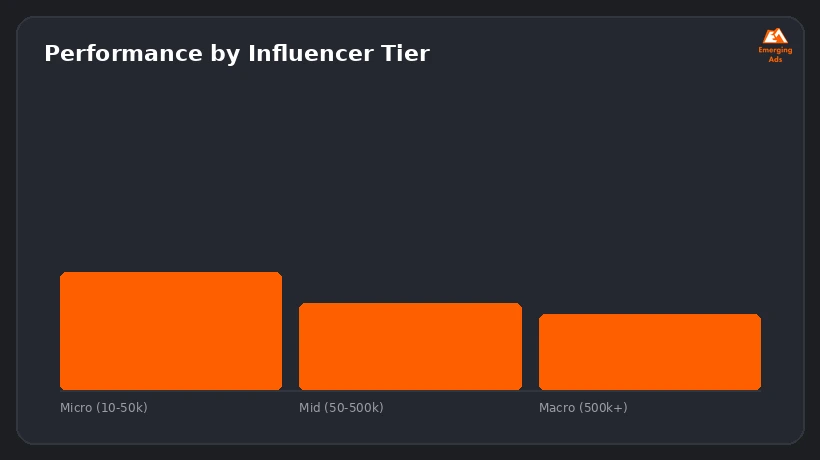
Micro-influencers, generally in the tens of thousands of followers range, consistently post higher engagement rates than macro-influencers with much larger followings, and for food specifically, that engaged, trust-based audience often converts better than raw reach from a bigger but more passive following. This is a pattern we see consistently across the food brand marketing we run.
Vetting Influencers Properly
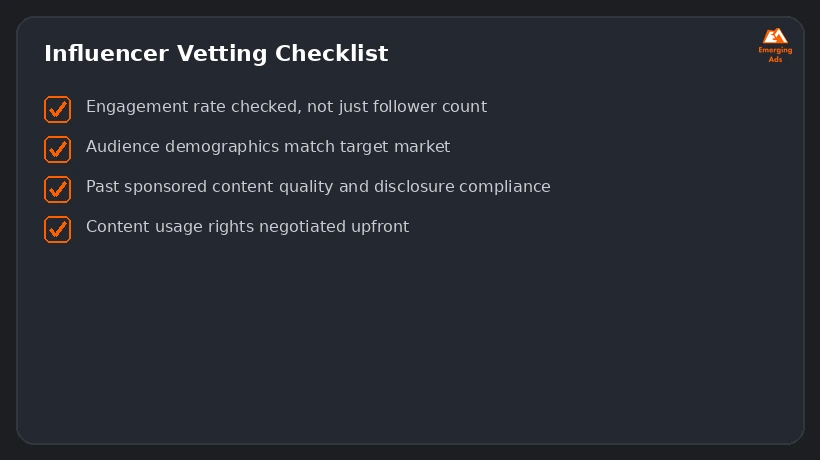
- Engagement rate checked directly, not just follower count
- Audience demographics genuinely matching your target market, not just a loosely adjacent one
- Past sponsored content reviewed for quality and proper disclosure compliance
- Content usage rights negotiated as part of the agreement upfront, not after the fact
Negotiating Usage Rights From the Start
Content usage rights, the ability to repost, run as paid ads, or use in other marketing beyond the influencer’s own channel, significantly extends a campaign’s value. Negotiating this as part of the initial agreement, rather than a costly add-on afterward, is standard practice and worth building into every brief.
Understanding the Realistic Conversion Funnel
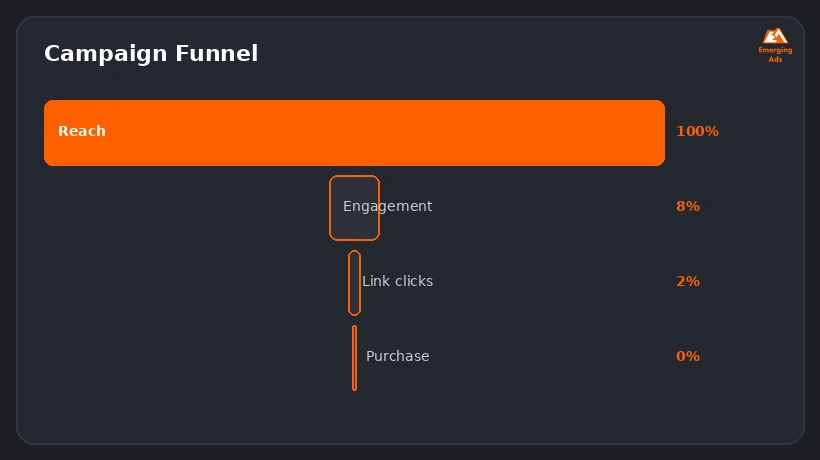
The path from influencer content exposure to an actual purchase is naturally narrow, most viewers engage without immediately buying. Setting campaign volume and budget expectations around that realistic funnel, supported by proper attribution tracking, rather than expecting reach to translate directly into sales at a high rate, avoids disappointment.
One-Off Posts vs. Ongoing Ambassador Relationships
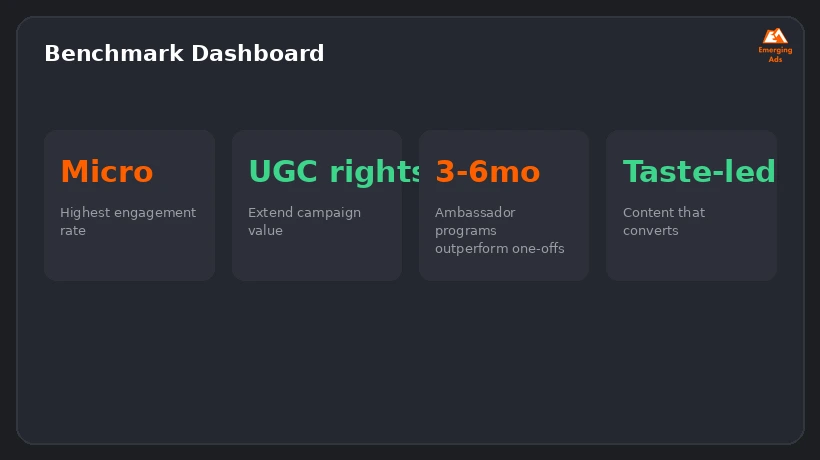
An ongoing ambassador relationship, where an influencer genuinely uses and talks about the product repeatedly over months, builds far more credible trust than a single sponsored post that reads as an obvious one-time transaction to the audience. Pairing that relationship with genuine video content, rather than static posts alone, tends to perform especially well for food.
Want us to look at your account?
We’ll audit your setup and tell you exactly where the budget is leaking, free.
Get Your Free Ad AuditFrequently Asked Questions
Are micro-influencers really better than macro-influencers for food brands?
For engagement rate specifically, generally yes, micro-influencers tend to have more engaged, trust-based audiences, though macro-influencers still add value for broad awareness campaigns.
How do I check if an influencer’s engagement is genuine?
Look at engagement rate relative to follower count, comment quality and specificity, and consistency of engagement over multiple posts, rather than relying on follower count alone.
Should content usage rights always be negotiated upfront?
Yes, it’s standard practice and much easier to include in the initial agreement than to negotiate separately after the content already exists and has value.
What’s a realistic conversion rate from influencer content to sales?
It’s naturally low relative to reach, since most viewers engage without an immediate purchase, plan campaign volume expectations around impressions and engagement rather than expecting direct high-volume conversion.
Is an ambassador program worth the extra cost over one-off posts?
Often yes, for building genuine trust, an ongoing relationship reads as more authentic to an audience than a single obvious sponsored post, and can produce a better return over the full relationship.
How much should a food brand budget for influencer marketing?
It varies by influencer tier and campaign scope, micro-influencer campaigns are generally more accessible for smaller budgets than macro or celebrity-tier partnerships.
Do FTC disclosure requirements apply to food influencer content?
Yes, sponsored content disclosure requirements apply across categories including food, verify influencers are compliant as part of your vetting process.
Should I work with influencers directly or through an agency?
Both approaches work, direct relationships can be more cost-efficient at smaller scale, while an agency adds value for larger campaigns needing broader sourcing and management.
What content format performs best for food brand influencer marketing?
Short-form video showing genuine use or preparation tends to perform particularly well for food specifically, given the category’s visual and sensory nature.
How do I measure influencer marketing ROI for a food brand?
Track a combination of engagement metrics, trackable link clicks or discount code usage, and where possible, incremental sales lift during and after the campaign period.
Ready to fix what’s costing you conversions?
Book a free, no-pressure audit of your ad account or website.
Get Your Free Ad Audit