Best Coaching Business Marketing Strategy in 2026
Key Takeaways
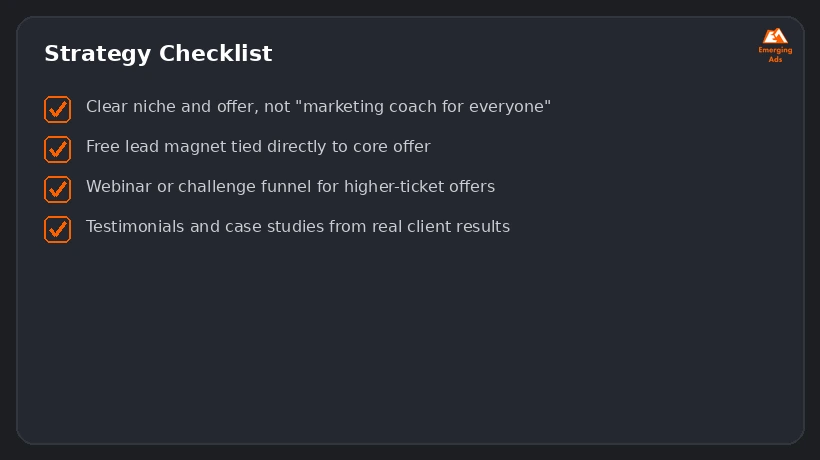
- A clear, specific niche consistently outperforms a broad “coach for everyone” positioning in this category.
- A free lead magnet tied directly to the core paid offer converts better than a generic, loosely related freebie.
- Webinar and challenge funnels remain effective for higher-ticket coaching offers when built around genuine value, not just a pitch.
- Real testimonials and case studies carry outsized weight in a category built on personal trust.
- List-owned channels (email) tend to produce the highest lifetime value relative to acquisition cost over time.
Niche Before Tactics
A coach positioned specifically, for a defined audience with a defined problem, consistently outperforms a broad “life coach” or “business coach” positioning that tries to appeal to everyone. Specificity makes every downstream marketing decision, ad targeting, content topics, offer design, meaningfully easier and more effective — it’s the starting point for every coaching business marketing plan we build.
Building a Lead Magnet That Actually Converts
A free resource tied directly and obviously to the core paid offer, a mini version of the actual transformation being sold, converts into paying clients at a far higher rate than a loosely related generic freebie chosen mainly because it’s easy to produce. This is the foundation of solid email list building for a coaching business.
Webinar and Challenge Funnels Done Right
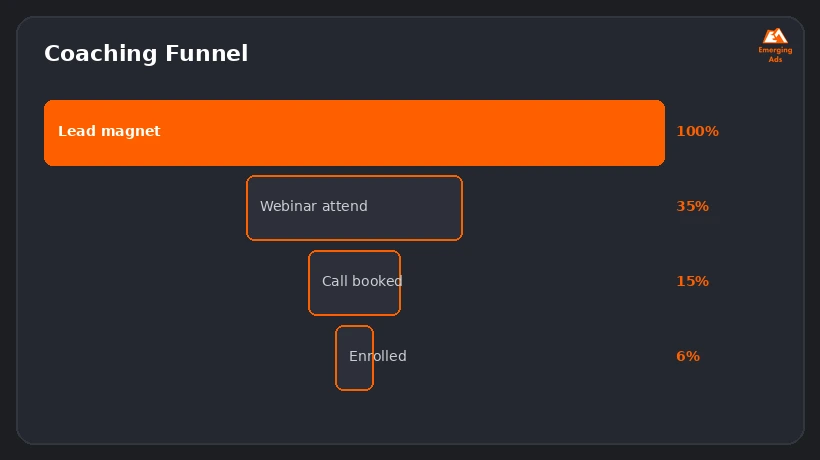
Webinar and multi-day challenge funnels remain effective for higher-ticket coaching offers specifically when the content genuinely delivers value on its own, rather than functioning purely as a extended pitch. Getting the webinar registration and follow-up flow right matters as much as the content itself. Attendees who feel they got real value from the free content trust the paid offer more by the time it’s presented.
Why Testimonials Matter More Here
Coaching is a category built almost entirely on personal trust in the coach’s ability to deliver a transformation, which means genuine testimonials and specific case studies carry outsized weight compared to more transactional categories where the product itself does more of the convincing.
Which Channels Actually Perform
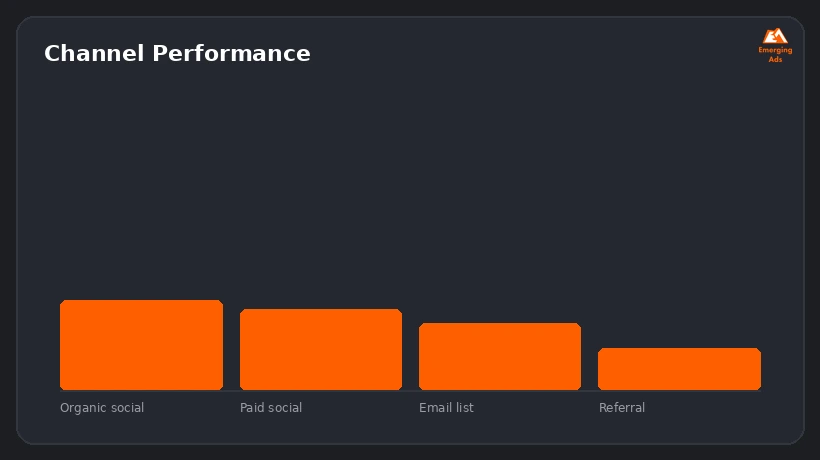
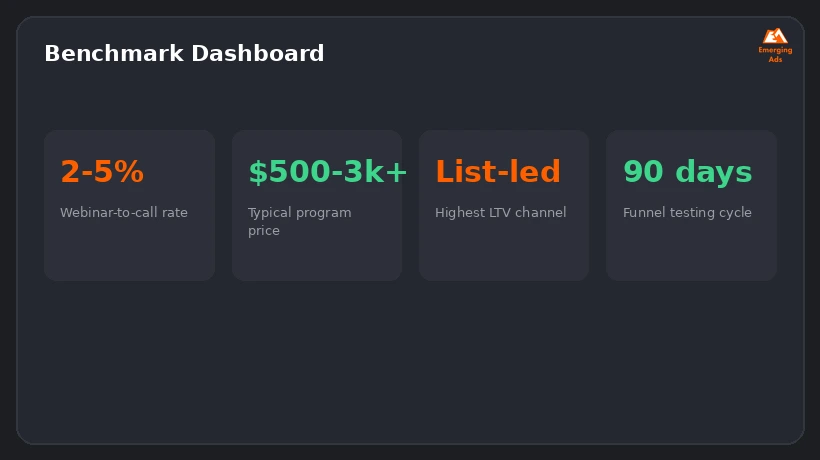
Organic social builds initial trust and audience at low direct cost, paid social scales reach and lead volume once messaging is validated, and the email list tends to produce the highest lifetime value relative to acquisition cost of any channel over time, since it’s the asset you fully own and control.
Want us to look at your account?
We’ll audit your setup and tell you exactly where the budget is leaking, free.
Get Your Free Ad AuditFrequently Asked Questions
How specific should a coaching niche really be?
Specific enough that a prospective client immediately recognizes themselves and their exact problem in your messaging, broader positioning tends to dilute both marketing clarity and perceived expertise.
Do webinar funnels still work in 2026, or are they oversaturated?
They still work well when the webinar genuinely delivers standalone value rather than functioning as a thinly disguised pitch, audiences have gotten better at recognizing low-value webinars and respond accordingly.
What should a coaching lead magnet actually offer?
A focused, tangible piece of the transformation you sell, not a generic checklist or ebook loosely related to the topic, it should feel like a genuine preview of working with you.
How important is email marketing for a coaching business?
Very, the email list is typically the highest lifetime-value channel relative to acquisition cost since it’s a fully owned asset not subject to platform algorithm changes.
Should I run paid ads before I have testimonials?
It’s possible, but testimonials and case studies significantly strengthen ad performance in this trust-dependent category, building even a small set of genuine results first is usually worth the delay.
How much should a coaching business spend on marketing?
It varies by program price point and growth goals, many coaches reinvest a meaningful share of program revenue into marketing during active growth phases, benchmark against your own margins rather than a generic percentage.
What’s the difference between organic and paid social for coaches?
Organic builds trust and audience gradually at low direct cost, paid social scales reach and lead volume faster once your messaging and offer are validated through organic engagement.
Do challenge funnels convert better than webinars?
Both can work well, challenges build engagement over several days which can deepen trust further than a single webinar session, the better format often depends on your specific offer and audience preferences.
How long does it take to build a profitable coaching marketing funnel?
Expect several months of testing and iteration before a funnel consistently converts profitably, treat the first version as a starting point to refine, not a finished system.
Is a large following necessary to succeed with coaching marketing?
No, a smaller, highly engaged and well-targeted audience often converts better than a large but loosely connected following, especially for higher-ticket coaching offers.
Ready to fix what’s costing you conversions?
Book a free, no-pressure audit of your ad account or website.
Get Your Free Ad Audit