How to Improve Results With Email Marketing for E-commerce
Key Takeaways
- Deliverability problems quietly cap results long before creative or offers do, most accounts leave this unchecked.
- The three flows that carry the most weight are welcome, abandoned cart, and post-purchase, in that order of typical revenue per recipient.
- Segmenting by engagement, not just purchase history, keeps your sender reputation healthy.
- Send-time testing against your own list beats copying a generic best-practice time.
- A flow you built once and never revisited is losing revenue to list decay every month, which is why most brands eventually bring in a dedicated email marketing service to keep it maintained.
Fix Deliverability Before You Touch Creative
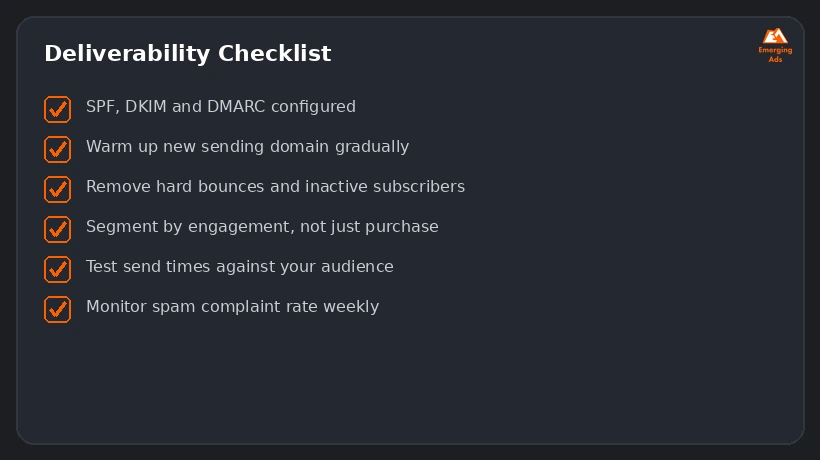
If open rates have been sliding for months and nobody’s checked SPF, DKIM, and DMARC records recently, that’s usually where the real problem is, not the subject lines. Inbox providers are more aggressive about filtering than they were even two years ago, and a domain with a shaky reputation gets throttled into spam before a single word of copy matters. This is exactly the kind of gap a hands-on email marketing service is built to catch before it costs you real revenue.
- Verify SPF, DKIM, and DMARC are correctly configured for your sending domain
- Warm up any new sending domain gradually rather than blasting full volume on day one
- Suppress hard bounces immediately and review soft bounces weekly
- Watch spam complaint rate as closely as open rate, sustained complaints above roughly 0.1% will hurt inbox placement
The Three Flows That Do Most of the Work
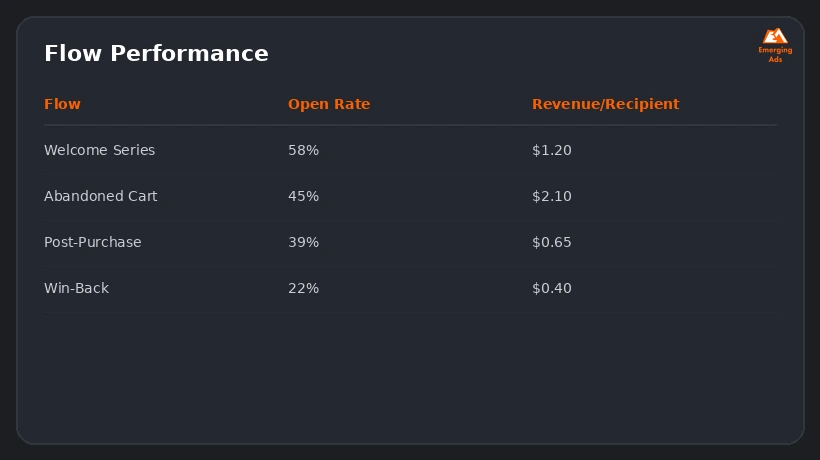
Welcome Series
Triggered on signup, this is the highest-engagement email a subscriber will ever get from you. Two to four emails introducing the brand, setting expectations, and offering a clear first incentive consistently outperforms a single generic welcome email. See our full breakdown of the best welcome email series approach for more on structuring this.
Abandoned Cart
Typically the single highest revenue-per-recipient flow in an e-commerce account. A three-email sequence, first reminder within an hour, a follow-up with social proof, and a final nudge with urgency or a small incentive, covers most of the recoverable revenue without over-discounting.
Post-Purchase
Often skipped entirely, which is a mistake. Order confirmation, shipping updates, and a well-timed review request or cross-sell after delivery keep the relationship active and set up the next purchase.
Segmentation That Actually Protects Your Sender Reputation
Segmenting purely by purchase history misses the deliverability angle entirely. Inbox providers watch engagement signals closely, so a list full of subscribers who haven’t opened anything in six months drags down your sender score for everyone, including your best customers.
- Build an engaged segment (opened or clicked in the last 90 days) and send your highest-value campaigns to it first
- Move unengaged subscribers into a re-engagement flow before you sunset them from regular sends
- Suppress unengaged contacts from broad promotional blasts even if they haven’t technically unsubscribed
Testing: What’s Worth Your Time
Subject line testing gets the most attention but usually moves the needle the least. Send-time testing against your own list’s actual open patterns, and testing the first line of flow copy (the real hook, not the subject), tend to produce bigger, more durable lifts.
Keeping Flows From Going Stale
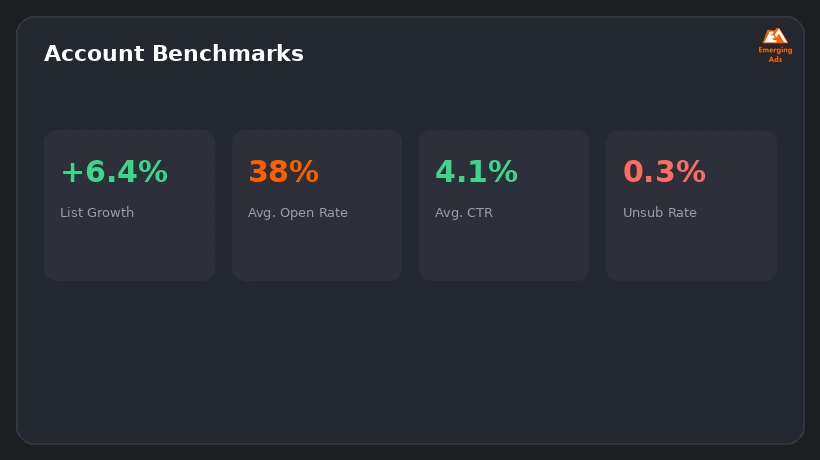
A flow built a year ago with last year’s offers and last year’s product images quietly decays. Review flow content and offers quarterly, and check list growth rate alongside your standard open and click metrics, a shrinking list inflates your engagement percentages while your actual reach and revenue fall.
Want us to look at your account?
We’ll audit your setup and tell you exactly where the budget is leaking, free. Or explore our email marketing service to see how we run this end-to-end.
Get Your Free Ad AuditFrequently Asked Questions
What’s a good open rate for e-commerce email?
It varies by list health and industry, but sustained rates in the high 30s to 40s percent, after suppressing unengaged contacts, are a reasonable benchmark for a well-maintained list.
How often should I email my list?
Enough to stay present without triggering fatigue, most e-commerce brands land between two and five sends per week including flows and campaigns, adjusted based on engagement trends.
Should abandoned cart emails include a discount?
Not always in the first email. Lead with the reminder and product visuals, save the incentive for the second or third email if the first two haven’t converted.
What’s the difference between a flow and a campaign?
A flow is automated and triggered by behavior (signup, cart abandonment, purchase). A campaign is a one-time send to a chosen segment, like a sale announcement.
How long does it take to see results from fixing deliverability?
Inbox providers adjust sender reputation gradually, expect meaningful improvement over two to four weeks of clean sending behavior, not overnight.
Is Klaviyo necessary or can I use a simpler tool?
Klaviyo’s strength is e-commerce-specific data (product views, purchase history) feeding directly into flows. Simpler tools work for basic campaigns but usually can’t match that depth of behavioral triggering.
How many emails should a welcome series have?
Two to four is a common range, enough to introduce the brand and make an offer without overwhelming a brand-new subscriber.
Should I remove unengaged subscribers from my list?
Move them to a re-engagement flow first, then suppress or remove those who still don’t respond, a bloated unengaged list actively hurts deliverability for your whole account.
What causes emails to land in spam even with good content?
Usually authentication issues (SPF/DKIM/DMARC), a damaged sender reputation from past sending behavior, or spammy trigger words and formatting, not the quality of the offer itself.
Can I run email marketing without a dedicated tool like Klaviyo?
Technically yes with a general email platform, but you’ll lose e-commerce-specific behavioral triggers, which is where most of the revenue in flows actually comes from.
Ready to fix what’s costing you conversions?
Book a free, no-pressure audit of your ad account or website.
Get Your Free Ad Audit