What Is WhatsApp Broadcast Campaigns and How Does It Work
Key Takeaways
- A broadcast campaign is a one-to-many message sent to an opted-in list, each recipient sees it as a private 1:1 chat.
- Every broadcast template needs Meta’s approval before it can be sent, and approval hinges on the category you assign it.
- Read rates on WhatsApp routinely beat email open rates by a wide margin, which is exactly why over-sending burns lists fast.
- Consent isn’t optional, WhatsApp enforces opt-in far more strictly than email ever has.
- Segmented broadcasts to a behavior-based list consistently outperform one blast to everyone.
What a Broadcast Campaign Actually Is
A WhatsApp broadcast sends the same message to a list of opted-in contacts, but each person receives it as a normal, private 1:1 chat message, not a visible group. That distinction matters for how people respond to it: it feels personal even at volume, which is part of why engagement on WhatsApp tends to run so much higher than email.
Technically, broadcasts run through the WhatsApp Business Platform (the API), usually via a provider like WATI, not the free WhatsApp Business app, which caps you at much smaller manual broadcast lists.
Templates and Why Meta Has to Approve Them First
Any message sent outside the 24-hour window after a customer last messaged you has to use a pre-approved template. Meta reviews every template against its category: Marketing, Utility, or Authentication, and rejects anything that misrepresents its purpose or reads as spammy.
- Marketing templates cover promotions, launches, and broadcasts, and carry the strictest scrutiny
- Utility templates cover order confirmations, shipping updates, and appointment reminders
- Authentication templates are reserved for OTPs and login codes
Building a List the Right Way
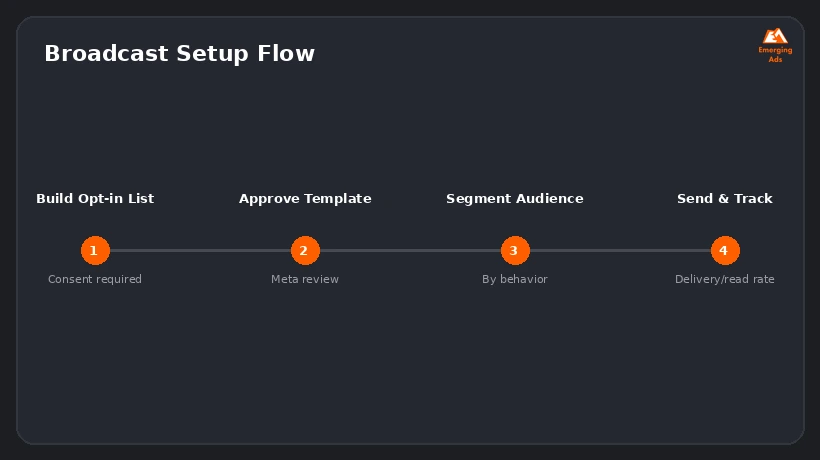
Explicit opt-in is non-negotiable, Meta actively polices this and will restrict or ban numbers that broadcast to people who never consented. The cleanest opt-in sources are a checkbox at checkout, a click-to-WhatsApp ad, or a QR code tied to an in-store or website prompt, each one giving the contact a clear reason they’re now hearing from you.
Segmentation: Sending Fewer, Better-Targeted Broadcasts
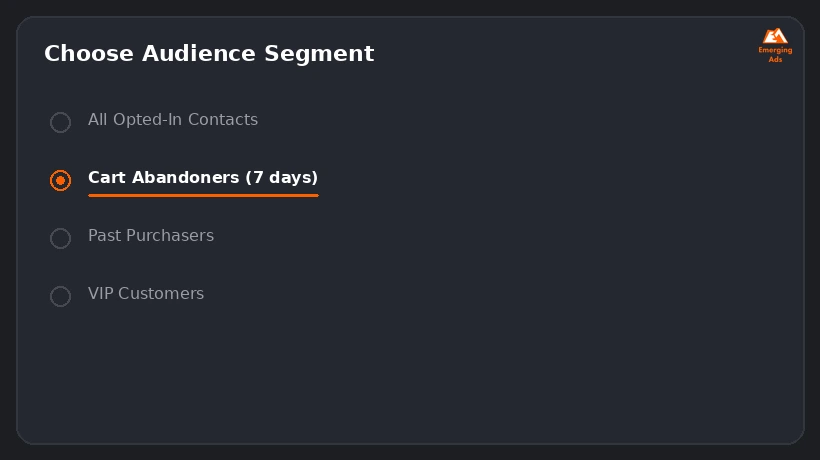
Broadcasting every promotion to your entire list is the fastest way to trigger opt-outs and blocks. Segment by recency and behavior instead, cart abandoners get a different message than VIP repeat customers, and neither should get the same generic blast as someone who opted in eight months ago and never engaged since.
Reading the Numbers That Matter

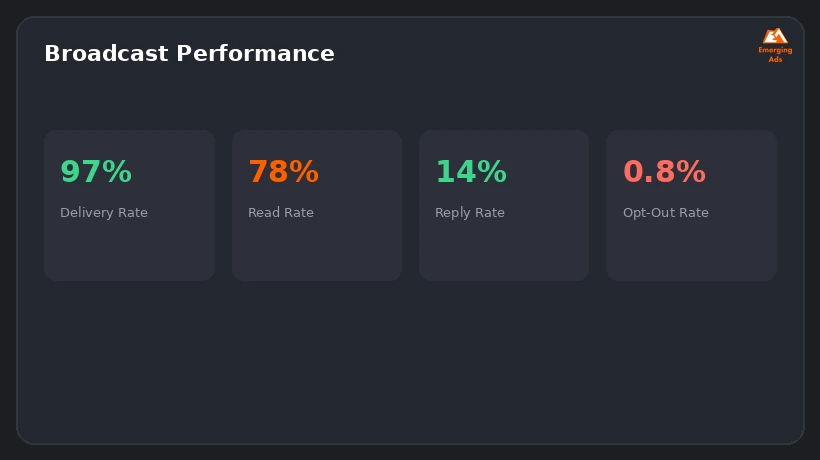
Delivery rate, read rate, and reply rate tell a more complete story than delivery alone. A high delivery rate with a low read rate usually points to send timing or template category mismatch, while a rising opt-out rate is the clearest early warning that broadcast frequency needs to come down.
Want us to look at your account?
We’ll audit your setup and tell you exactly where the budget is leaking, free.
Get Your Free Ad AuditFrequently Asked Questions
Do I need the WhatsApp Business API to send broadcasts at scale?
Yes, the free WhatsApp Business app has a broadcast limit of 256 contacts and requires them to have your number saved. The Business Platform (API), accessed through a provider, removes that ceiling.
How long does Meta take to approve a broadcast template?
Usually within a few hours to a day, though it can take longer if the template’s category or wording is ambiguous and needs a second review.
Can I message someone who hasn’t opted in?
No, and doing so risks your number being restricted or banned. Consent has to be explicit and documented.
What’s the 24-hour window rule?
You can send free-form messages within 24 hours of a customer’s last message to you. Outside that window, only approved templates can be sent.
How is WhatsApp broadcast pricing structured?
Meta charges per conversation (a 24-hour message thread), with rates varying by category (marketing, utility, authentication, service) and country.
What’s a good read rate for a WhatsApp broadcast?
Read rates commonly run well above typical email open rates, though the exact benchmark depends heavily on list quality, segmentation, and send timing.
Can customers reply to a broadcast message?
Yes, and replies open a 24-hour conversation window, which is often where the real conversion happens, in the back-and-forth after the initial broadcast.
How often can I broadcast without hurting opt-out rates?
There’s no fixed number, but sending less often to smaller, well-targeted segments consistently outperforms frequent blasts to an entire list.
What tools manage WhatsApp broadcasts besides the native app?
Providers like WATI, Twilio, and similar Business Solution Providers sit on top of the WhatsApp Business API and add segmentation, automation, and reporting.
Can I automate responses to broadcast replies?
Yes, chatbot flows can be triggered off specific replies or keywords, though a clear handoff to a human for anything beyond simple FAQs matters for trust.
Ready to fix what’s costing you conversions?
Book a free, no-pressure audit of your ad account or website.
Get Your Free Ad Audit