Best Clothing Brand Social Media Strategy in 2026
Key Takeaways
- Product-first feeds underperform in 2026, the accounts that grow pair product with a recognizable creative voice, not just clean flat-lays
- UGC and creator seeding now outperform paid studio content on cost-per-engagement for most apparel brands we manage
- TikTok Shop and Instagram Shopping tags turn organic posts into a direct revenue channel, not just an awareness one
- A weekly content cadence of 4-5 organic posts plus 2-3 Reels/TikToks beats daily posting with weaker creative
- Size-inclusive and styling content consistently gets the highest saves and shares, which is the signal the algorithm rewards most
Why Clothing Brand Social Media Looks Different in 2026
The brands that win on social have a clear point of view, and building one starts with brand identity and content strategy.
Apparel is one of the most visually saturated categories on every platform, which means the bar for a clothing brand’s social presence has moved well past “post the new drop and hope.” The brands we manage that are actually growing right now share one habit: they treat social as a content operation with a clear point of view, not a product feed.
Two shifts drove this. First, shoppable formats (TikTok Shop, Instagram Shopping, Pinterest catalogs) made social a real revenue channel for apparel, not just a top-of-funnel one, so the content has to do double duty: build the brand and move product in the same post. Second, algorithm ranking across every major platform now weights watch time, saves, and shares far more heavily than likes, and flat product photography rarely earns any of the three.
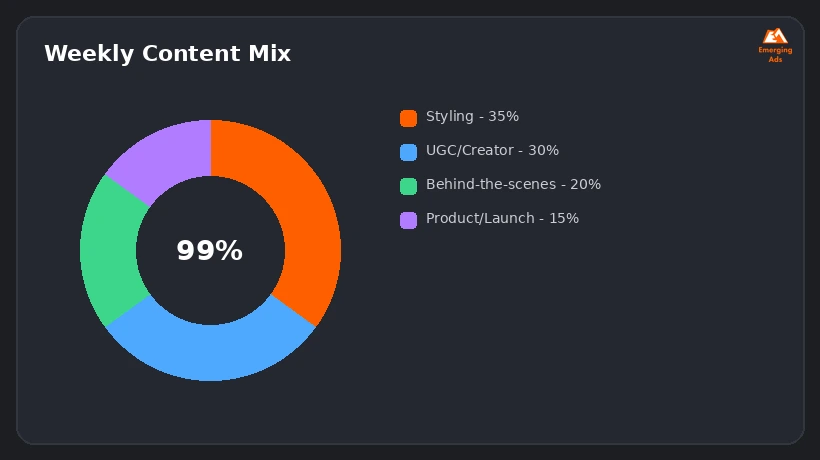
What actually works is a mix of styling content (how to wear it, not just what it looks like on a hanger), founder or team-led behind-the-scenes clips, UGC reposts, and a smaller share of clean product shots reserved for launch days. We’ll break down exact ratios below, but the principle holds across every clothing vertical we’ve run campaigns for, from streetwear to workwear to activewear.
Building the Content Mix That Actually Converts
The single biggest lever for a clothing brand’s social performance isn’t posting frequency, it’s content mix. Brands that post once a day with strong styling and UGC content consistently outperform brands posting twice a day with only studio product shots.
The four content buckets we run for every apparel client
| Content Type | Share of Calendar | Primary Job |
|---|---|---|
| Styling & how-to-wear | 35% | Saves, shares, discovery |
| UGC & creator seeding | 30% | Trust, social proof, conversion |
| Behind-the-scenes / founder | 20% | Community, watch time |
| Clean product / launch | 15% | Direct sell, catalog tagging |
Styling content earns the highest saves and shares of any format we track for apparel, because it answers a real question the shopper has: “how would I actually wear this?” A single carousel showing three outfit combinations from one core piece regularly outperforms a full new-collection product grid on both reach and click-through to the shop tab.
UGC does something different: it lowers the perceived risk of buying clothing online, where fit and fabric feel are the two biggest objections. Reposting real customer content, with permission and proper credit, alongside a short caption on fit (“runs true to size, model is 5’7” in a size M”) consistently reduces return-driven refund requests for the clients we track this on.
Platform-by-Platform: Where to Spend Your Time
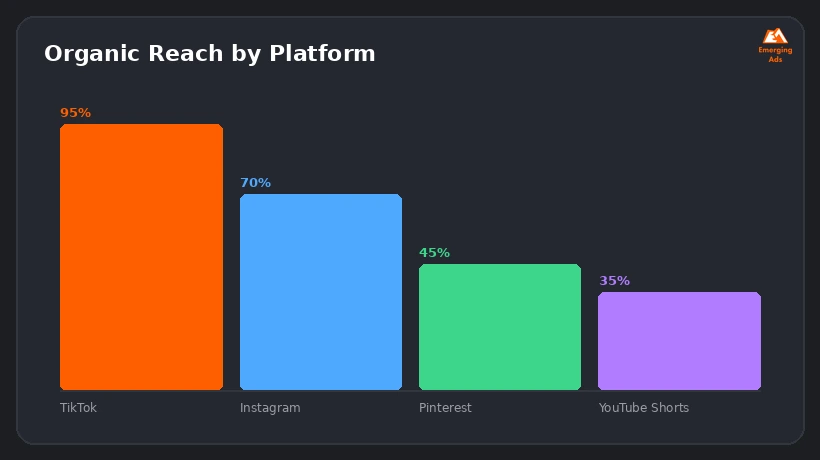
Not every platform deserves equal effort, and spreading a small team thin across five channels is the fastest way to produce weak content everywhere instead of strong content somewhere.
- TikTok: best for discovery and trend-driven styling content, and now a direct sales channel through TikTok Shop for brands with the right creator pipeline
- Instagram: the retention and community layer, Reels for reach, Stories for daily engagement, and the grid as a styled lookbook shoppers browse before buying
- Pinterest: underrated for apparel, strong for evergreen search-driven traffic on seasonal and occasion-based outfit content
- YouTube Shorts: growing fast for haul, styling, and try-on content, worth testing if you already have vertical video assets from TikTok/Reels
A common mistake is treating every platform the same, cross-posting the identical clip everywhere. TikTok and Reels reward native-feeling, slightly rougher content; Pinterest rewards clean, well-lit, keyword-titled pins. The same asset rarely performs equally well in both formats without at least light editing.
Turning Followers Into a Sellable Audience
Growing a following is only half the job, the other half is building the infrastructure that turns that audience into revenue on demand: an email list captured through a social-exclusive offer, a retargeting pixel warmed by video view audiences, and a UGC library tagged by product so paid ads can pull from it later.
The retargeting flywheel we set up for apparel clients
- Organic content (styling, UGC, BTS) drives video views and profile visits at low cost
- A video-view custom audience is built from anyone who watched 50%+ of a Reel or TikTok
- That audience is retargeted with a UGC-style ad featuring the exact product shown organically
- Purchasers are excluded and rolled into a loyalty/email flow instead of continued prospecting spend
This is where social media strategy and paid media strategy stop being separate conversations. The organic content that performs best organically is almost always the strongest-performing paid creative too, because it already proved it holds attention before a dollar was spent behind it.
A 30-Day Content Calendar Template
Here’s a simplified version of the cadence we start most apparel clients on, adjusted up or down based on team capacity:
| Week | Focus | Post Count |
|---|---|---|
| Week 1 | Styling series + UGC seeding kickoff | 5 posts, 3 Reels |
| Week 2 | Behind-the-scenes + customer spotlight | 5 posts, 2 Reels |
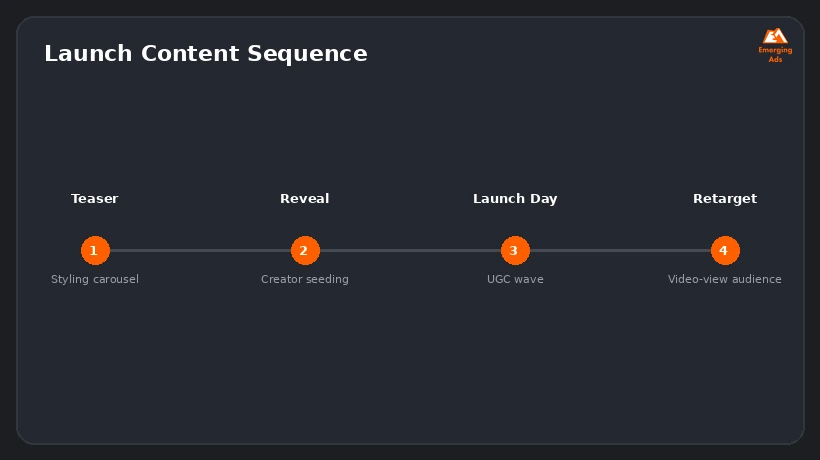
| Week 3 | New drop teaser + styling carousel | 6 posts, 4 Reels |
| Week 4 | Launch day + UGC repost wave + retarget audience build | 6 posts, 3 Reels |
Building a Creator and UGC Pipeline That Doesn’t Run Dry
The single biggest operational failure point for clothing brand social media isn’t strategy, it’s supply. Brands run out of fresh styling and UGC content within a few weeks of a launch and fall back on reposting the same handful of assets, which the algorithm and the audience both notice quickly. Building a pipeline that consistently refills the content well is what separates brands with steady month-over-month growth from ones that spike around a launch and go quiet.
A reliable pipeline usually has three parallel tracks running at once: an always-on nano-creator seeding program (send product, ask for honest content, no strings beyond a usage-rights agreement), a monthly customer-content sweep (searching branded hashtags and tagged posts for repostable content, then reaching out for permission), and a lightweight in-house shoot, even a phone and natural light, dedicated to filling specific content gaps the first two tracks don’t cover, like a new fit or fabric close-up.
A simple weekly cadence for keeping the pipeline full
| Day | Task |
|---|---|
| Monday | Review weekend UGC/tags, request usage rights on the best 3-5 pieces |
| Wednesday | Send product to 2-3 new nano/micro creators from the outreach list |
| Friday | Log which creators actually posted, update the tracking sheet, flag repeat performers for a bigger ask next cycle |
This doesn’t need to be complicated software, a shared spreadsheet tracking creator name, product sent, date, whether they posted, and how that post performed is enough to run a pipeline that reliably produces 15-20 pieces of usable content a month without the brand team having to produce all of it themselves.
Mistakes We See Clothing Brands Make Repeatedly
A few patterns show up again and again in accounts we’re brought in to fix:
- Posting only when there’s new inventory, which starves the account of content during slow production weeks and kills consistency
- Ignoring comments and DMs, which is often where the highest-intent buyers are asking sizing and shipping questions
- Treating influencer seeding as a one-off instead of an ongoing pipeline with a simple tracking sheet
- No clear visual identity across posts, so the grid reads as random product photos instead of a recognizable brand
Fixing these is rarely about spending more, it’s about building a repeatable system: a content calendar, a UGC intake process, and a simple weekly review of what saved and shared best so next month’s calendar leans into it. That system is what separates apparel brands that grow steadily from the ones stuck reposting product shots to a flat follower count.
Want us to look at your account?
We’ll audit your setup and tell you exactly where the budget is leaking, free.
Get Your Free Ad AuditFrequently Asked Questions
How often should a clothing brand post on social media in 2026?
For most apparel brands, 4-6 feed posts and 3-4 Reels/TikToks per week is a sustainable cadence that supports the algorithm’s preference for consistency without burning out a small creative team.
Is TikTok Shop worth it for a small clothing brand?
If you already have a pipeline of creator or UGC content, TikTok Shop is usually worth testing, since it turns organic reach directly into checkout without sending shoppers off-platform. It performs best paired with a few seeded creator videos rather than brand-only content.
Should a clothing brand use paid ads alongside organic social?
Yes, the two work best together, the organic content that earns the highest saves and shares is typically the strongest-performing paid creative, since it’s already proven to hold attention.
What’s the biggest mistake apparel brands make on Instagram?
Posting only clean product photography. Styling content, UGC, and behind-the-scenes clips consistently outperform studio shots on saves, shares, and ultimately reach.
How do you handle sizing concerns in social content?
Pair UGC and styling posts with specific fit notes in the caption (true to size, runs small, model’s height and size worn). This is one of the highest-leverage small changes for reducing return-driven refunds.
How many creators should a small apparel brand work with monthly?
We typically start clients with 5-10 micro or nano creators a month, seeded with free product plus a small flat fee, before scaling to a larger paid creator program once a few clear winners emerge.
Does Pinterest still matter for clothing brands?
Yes, it’s often underused. Pinterest drives evergreen, search-intent traffic to seasonal and occasion-based outfit content long after the original post, unlike the short shelf life of a TikTok or Reel.
How do you measure social media ROI for a clothing brand?
Track saves and shares as leading indicators of content quality, then tie video-view retargeting audiences to actual purchase attribution in your ad platform and analytics, rather than relying on vanity metrics like follower count alone.
What should a 30-day content calendar include for a clothing brand?
A mix of styling series, UGC reposts, behind-the-scenes content, and a launch week sequence, ideally mapped against your actual production and drop schedule rather than a generic template.
Can a clothing brand grow on social without paid ads?
Organic growth is possible but slower and increasingly capped by algorithm reach limits. Most brands we work with pair strong organic content with a modest retargeting budget to convert the audience organic content builds.
Ready to fix what’s costing you conversions?
Book a free, no-pressure audit of your ad account or website.
Get Your Free Ad Audit